






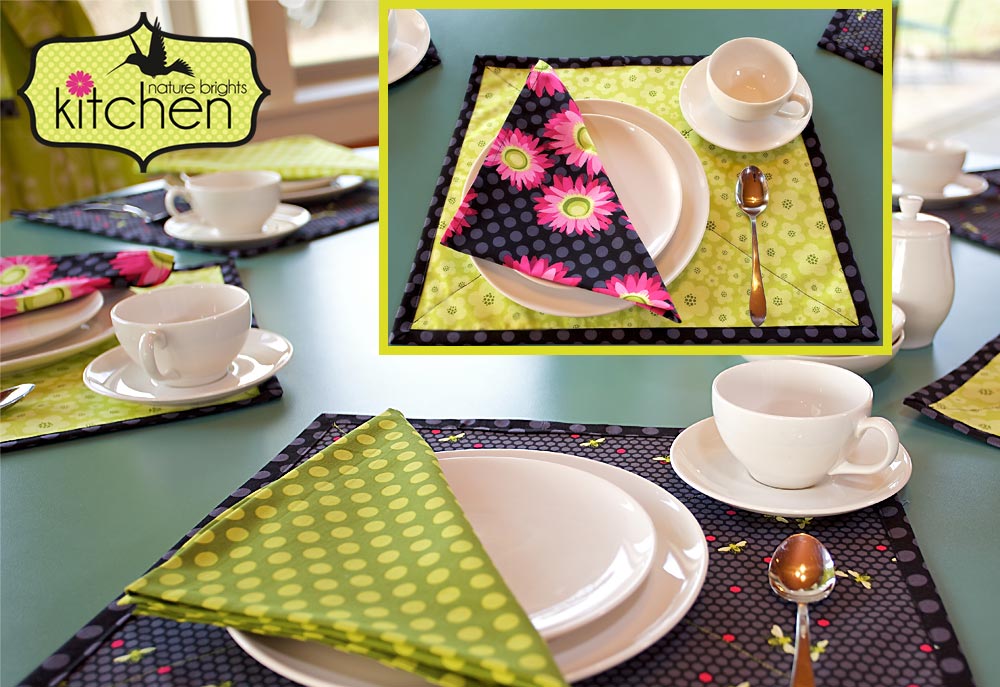
Here’s a new take on the standard rectangular placemat. These have a slightly trapezoidal shape (okay … I just gotta say, Trapezoidal sounds like a character from Fiddler on the Roof … dontcha think??). The unique shape allows them to fit nicely around a round kitchen table. And, they’re reversible, so you can spill breakfast on one side, then flip them over to spill lunch on the other. You could also alternate sides around the table for a fun and colorful look. The coordinating binding ties them all together.
Click to find instructions for the super-simple napkins shown above as well as a set of matching no-slip chair cushions.
Our placemats were originally made with fabric from the Flora & Fauna collection by Patty Young. This is an older grouping that can be hard to find. But because we’ve specified quilting cotton for all the elements, your choices are endless – from your own stash or brand new from your favorite in-store or online retailer.
Sewing Tools You Need
- Sewing machine and standard presser foot
Fabric and Other Supplies
- Fabric for side A of placemat: ½ yard of 44″ wide fabric should yield two placemats
- Fabric for side B of placemat: ½ yard of 44″ wide fabric should yield two placemats
- Fabric for binding: ¼ yard of 44″ wide fabric should yield binding for two placemats
- 1 yard of 20″ wide lightweight, fusible interfacing (see the Hints & Tips below); should yield two placemats
- All purpose thread in colors to match binding fabric
- Contrasting all purpose thread for center ‘X’
- See-through ruler
- Fabric pencil
- Lightweight paper
- Iron and ironing board
- Scissors or rotary cutter and mat
- Seam guage
- Seam ripper
- Straight pins
Getting Started
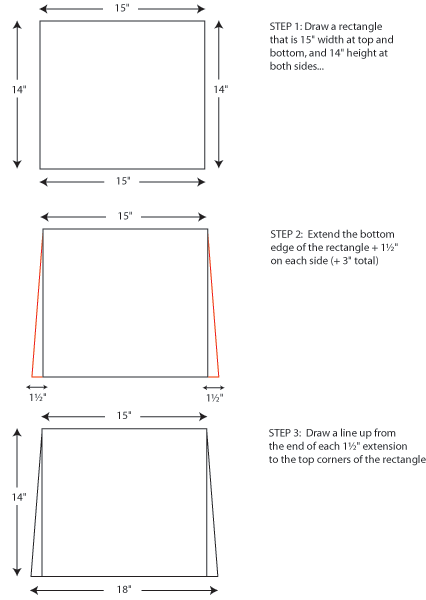
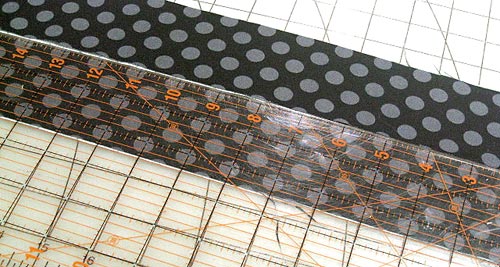
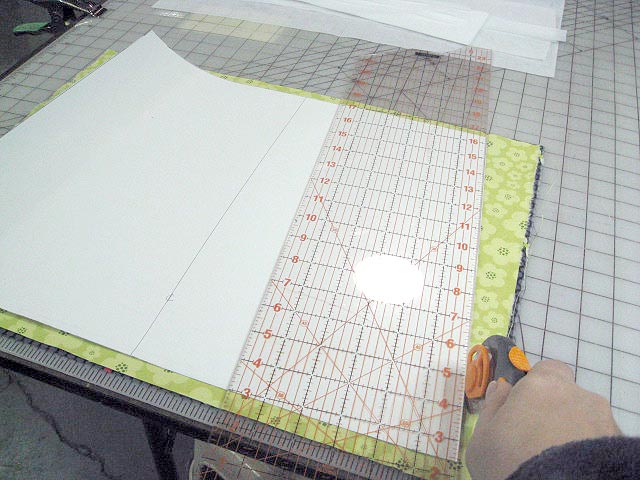
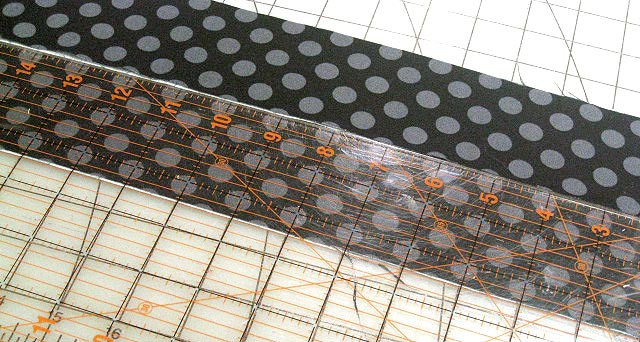
- Using your see-through ruler and pencil, draw a trapezoid shape onto a sheet of lightweight paper.
NOTE: Our suggested finished measurements for a 60″ diameter round table are: 15″ wide at the top edge, 18″ wide at the bottom edge, and 14″ high. The steps for drawing a trapezoid are shown below. Because we are binding the raw edges, you do NOT need to account for a ½” seam allowance.
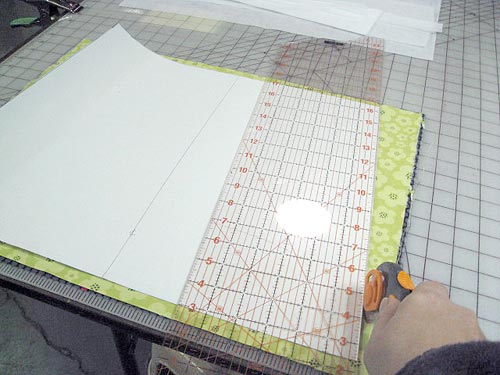
- Cut out the trapezoid shape along the outside drawn lines. This is your placemat pattern.
- Lay your finished pattern on your table and move it around to make sure you can fit the number of placemats you want to make. Our table was set for six.
- Using the placemat pattern, cut the number of placemats you need from each fabric and the interfacing. In our case, we cut: six fronts, six backs, and six interfacing panels.
NOTE: To save time, you can layer your fabrics and cut them all at the same time, just be sure to pin your layers well. If anything shifts, you could end up with inaccurate pieces you can’t use … that would be sad.
- Following manufacturer’s directions, fuse the interfacing to the wrong side of one of the placemat fabrics – only one side. We fused our interfacing to the wrong side of our Lime Blossoms side. Set aside.
- Cut TWO 2” x width-of-fabric strips from your binding fabric for EACH placemat. We cut 12 strips 2” x 44” of Black Ta-Dot . Set aside.
At Your Sewing Machine & Ironing Board
- Layer the two sides of the placemat WRONG sides together (right sides facing out).
- Thread your machine with the contrasting thread.
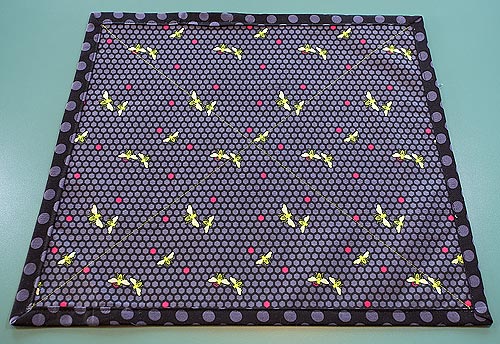
- Using a straight stitch, stitch an ‘X’ through the center to hold the two pieces together. Press well.
NOTE: If needed, you can use your ruler to mark your fabric with an erasable fabric marking pen so you have drawn lines to follow as you stitch the ‘X’. Also – our picture below shows you the ‘X’ as it looks on the FINISHED placemat. Of course, you are actually stitching the ‘X’ BEFORE any binding is done.
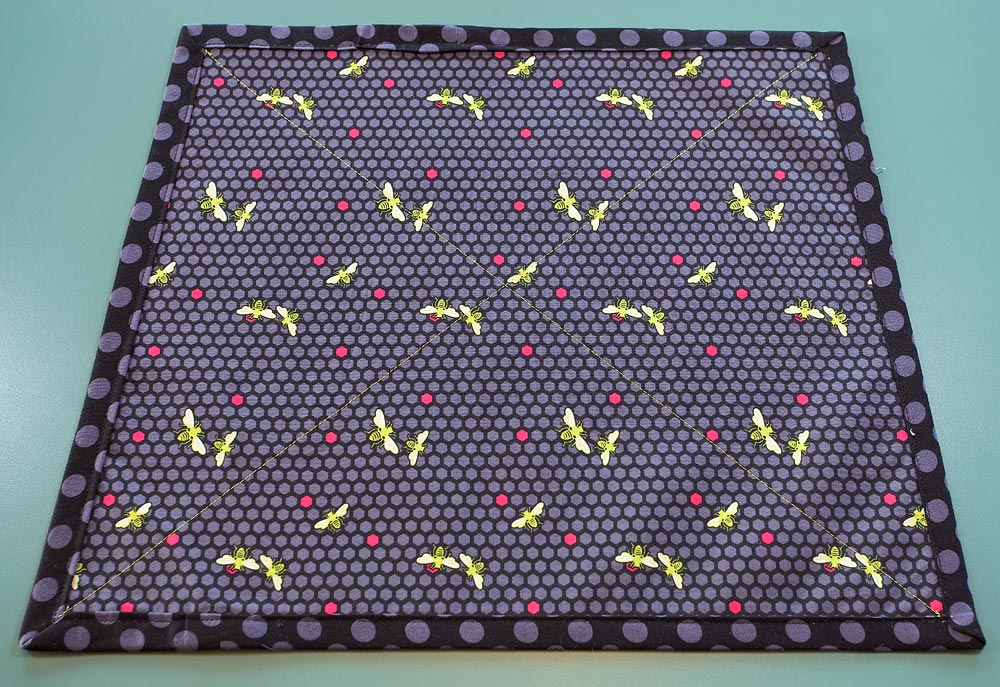
Faux mitered binding
- Re-thread your machine with thread to match the binding.
- Sew two binding strips end to end to create one long strip for each placemat.
- Repeat for all remaining sets of two strips.
- Fold and press each binding strips in half lengthwise
- Open the binding strip and fold raw edges to the center fold. Press again.
NOTE: If you’re new to making binding, read our tutorial, Bias Tape: How To Make It & Attach It . Although we used straight-of-grain binding, the basic steps in this article still apply. - Starting in the middle of one side of the placemat, unfold your bias tape and slip it over the the raw edge. If you have a choice, work on the side that has the most contrast between binding and placemat so you can most easily see your work. We worked from the Lime Blossoms side. Be very careful that your middle fold is right on the placemat’s edge and your binding is even on both sides. Pin from starting point to first corner.
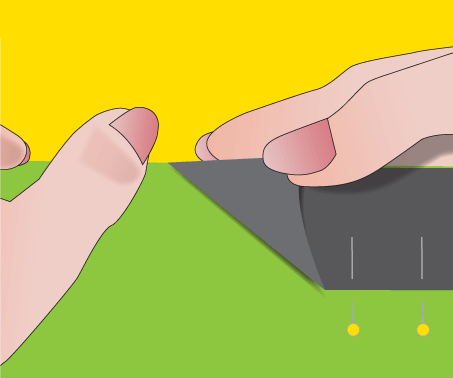
- Bring your placemat to your machine and starting in the middle (where you started pinning), stitch binding to placemat, staying as close to the edge of the binding as you can.
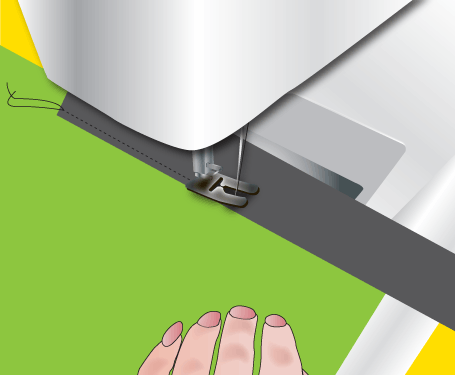
- Sew to the corner and stop. Back-tack to lock your seam.
- Remove the placemat from under the needle and clip your threads, but do not cut your binding.
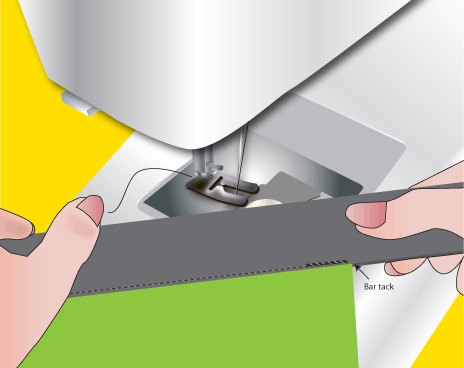
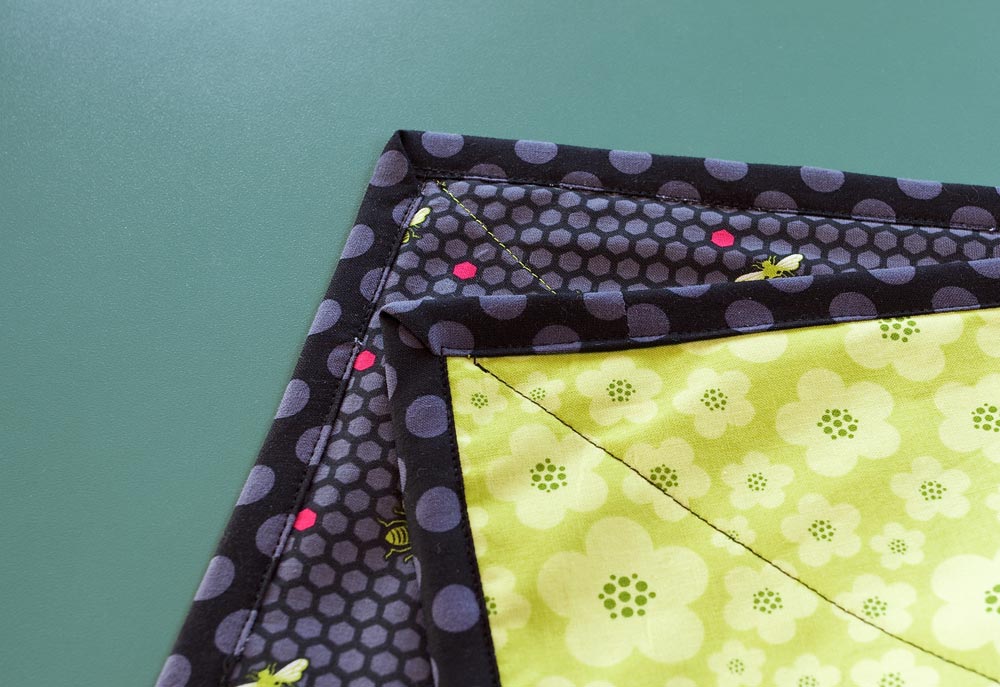
- Fold a pleat in the corner to make a 45˚ angle. Pin. Encase the new side’s raw edge with the binding, working your way to the next corner. Press and pin in place.
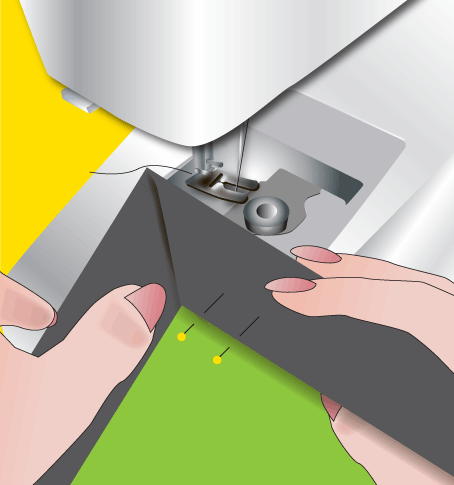
- Return to your machine, and matching your first line of stitching, edgestitch around the corner and down the side to the next corner. Stop at the corner and back-tack.
NOTE: By ‘around the corner’ I mean you should drop your needle in at the end of your original line of stitching, stitch into the corner, pivot, and then stitch down the new edge. This way, your line of stitching around each corner will appear uninterrupted.
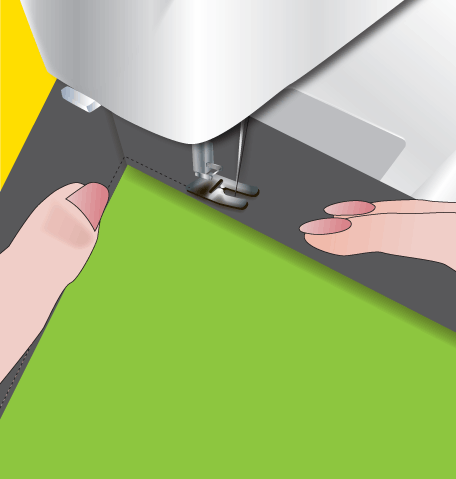
- Repeat these same steps at each corner.
- When you return to your starting point, tuck under the raw edge of the binding and match the bottom edges on both sides. Stitch down, matching your your original stitching line, to finish. Press.
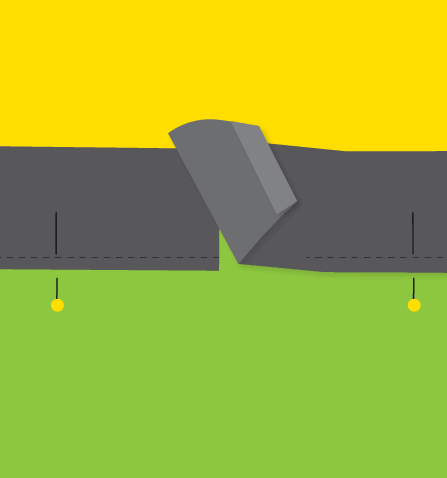
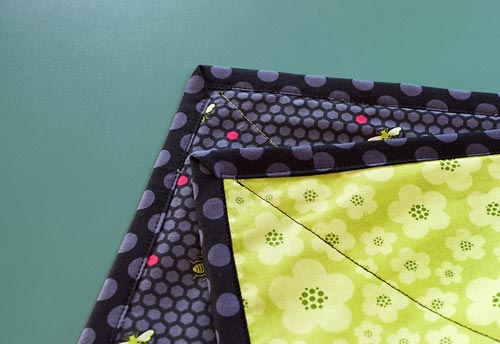
- Repeat for each placemat. If you’d prefer a more traditional binding method, as mentioned above, you can check out our full bias binding tutorial and can even take a look at our Mitered Corners tutorial.
Hints and Tips
Making a fusing block
In our similar tutorial, Round-Table Wedge Placemats, we showed you how to make a Fusing Block. If you have a pattern piece that needs to be backed with fusing, it is wise to fuse a piece of the fabric that is larger than the pattern piece, then cut your pattern piece out of this larger fused block of fabric and fusing. The process of heating the fusing to melt the glue and adhere it to your fabric can sometimes minimally shrink the fabric. By making a larger fused fabric block, you allow any shrinking that my occur to happen and then cut out your pattern piece(s) from this pre-shrunk block. Otherwise, you risk ending up with one size for your plain fabric piece and a slightly different size for the fused fabric piece. When you put the two pieces together to sew, they won’t match up as nicely as they should.
Project Design: Alicia Thommas
Sample Creation: Kathy Andrews, What Sew Ever