






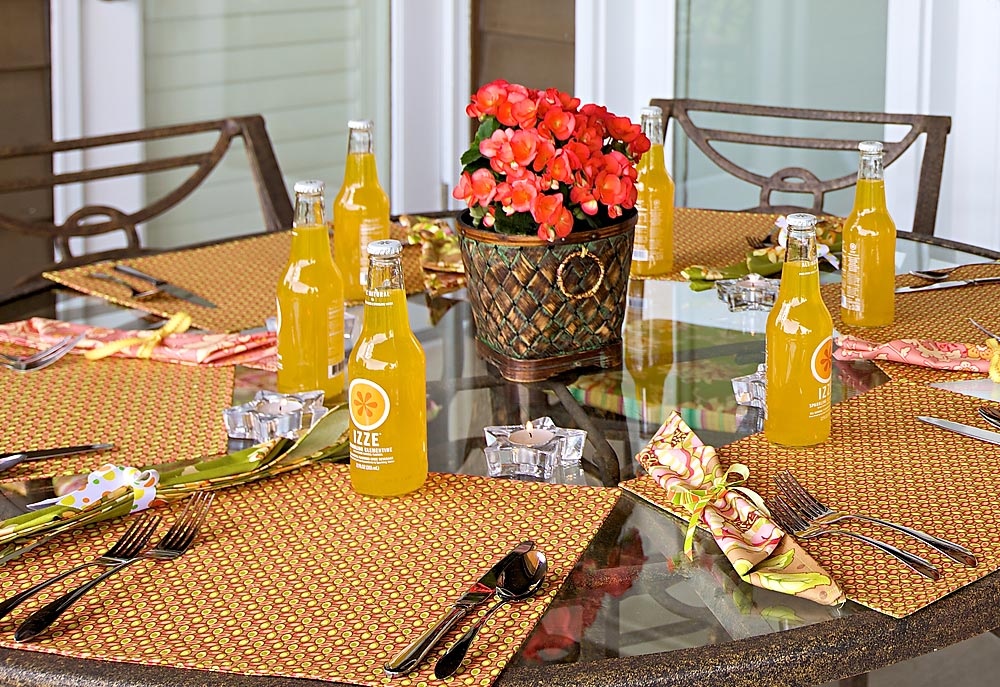
Rectangular placemats fit great on a square or rectangular table. But a lot of outdoor furniture sets feature round tables. This is one of those “square peg in a round hole” problems. Our project will help you make trapezoidal placemats, which fit nicely together when placed around a circular table. The sewing is the same as a rectangular placemat, but the shape gives a beautiful effect for each place setting. Your guests will be impressed – especially your seventh grade math teacher who knew you’d use geometry in the real world.
Lightweight interfacing gives these placemats the body they need to sit and stay. We added a simple topstitched “X” to hold all the layers together.
Our samples were originally made using the fabrics from Heather Bailey’s Freshcut collection. This is an older grouping that can be hard to find. But because we’ve specified quilting cotton, your choices are endless – from your own stash or brand new from your favorite in-store or online retailer.
Sewing Tools You Need
- Sewing machine and standard presser foot
Fabric and Other Supplies
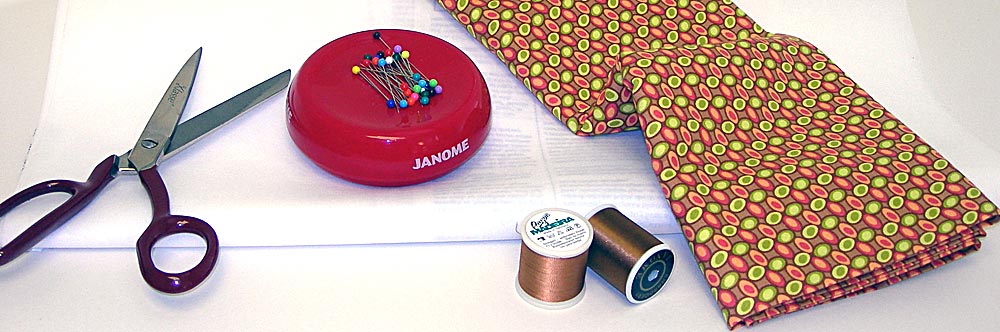
- Fabric for placemat tops: ½ yard of 44″ wide fabric will yield two placemat tops
- Fabric for placemat bottoms (can be same as top): ½ yard of 44″ wide fabric will yield two placemat bottoms
- Lightweight fusible interfacing: most lightweights are 20″ wide, so each placemat you need one 20″ x 16″ panel – for our two-placemat-scenario, that means 1 yard would be needed
- All purpose thread
- Contrasting color all purpose thread for topstitching
- See-through ruler
- Two sheets of lightweight paper (at least 20″ x 20″ each)
- Pencil
- Iron and ironing board
- Scissors
- Seam gauge
- Seam ripper
- Straight pins
Getting Started
- Using your see-through ruler and pencil, draw a trapezoid shape onto a sheet of lightweight paper. Our suggested measurements for an approximately 55″ diameter round table are: 16″ wide at the top edge, 19″ wide at the bottom edge, and 15″ high. If you dozed off during geometry, the steps for drawing a perfect trapezoid are shown below.
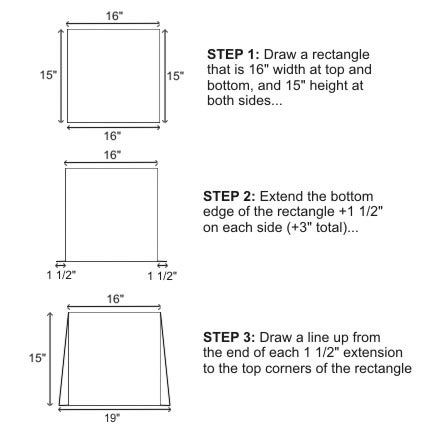
- Cut out this trapezoid shape along the outside drawn lines. Label as PLACEMAT PATTERN and set aside.
- Using your see-through ruler and pencil, draw a rectangle onto a sheet of lightweight paper that is 20″ wide x 16″ high. Label as FUSING BLOCK and set aside.
- Smooth out the fusing with your hands to get it as flat as possible. Note: Use your hands NOT an iron.
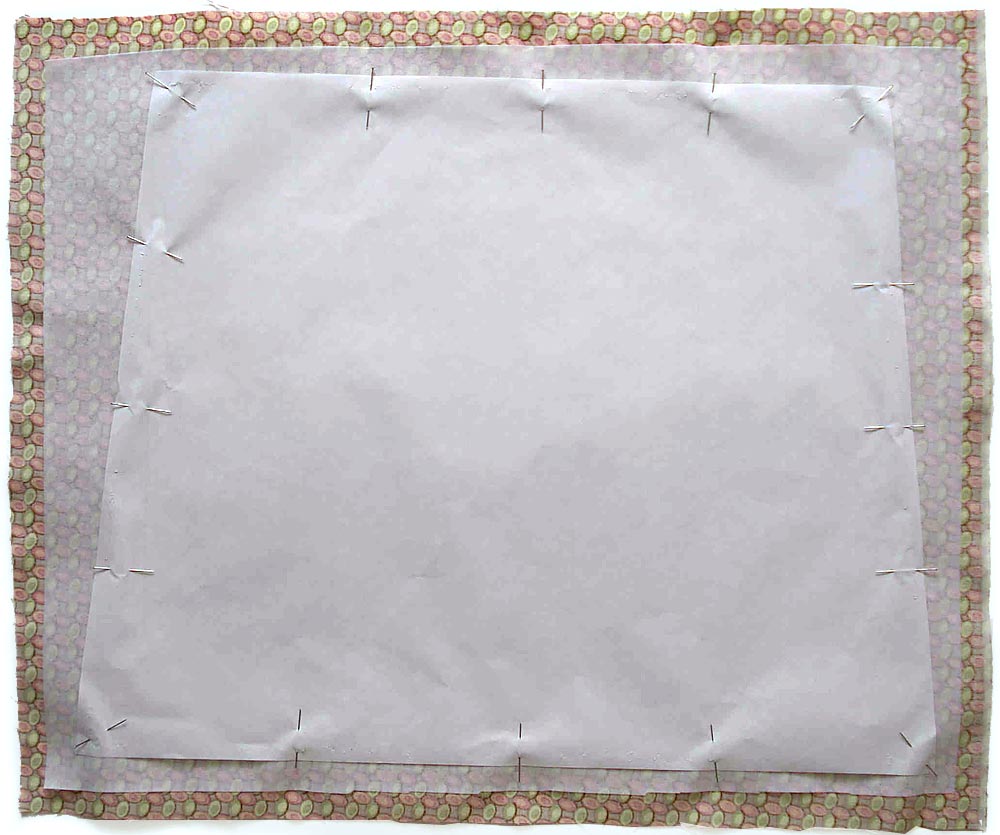
- Pin the FUSING BLOCK pattern piece you made above onto the lightweight fusing and cut around pattern edges. Cut ONE piece of fusing per placemat.
- Cut and approximate 22″ x 18″ panel from the fabric for your placemat top. We simply cut the suggested half yard of fabric in half.
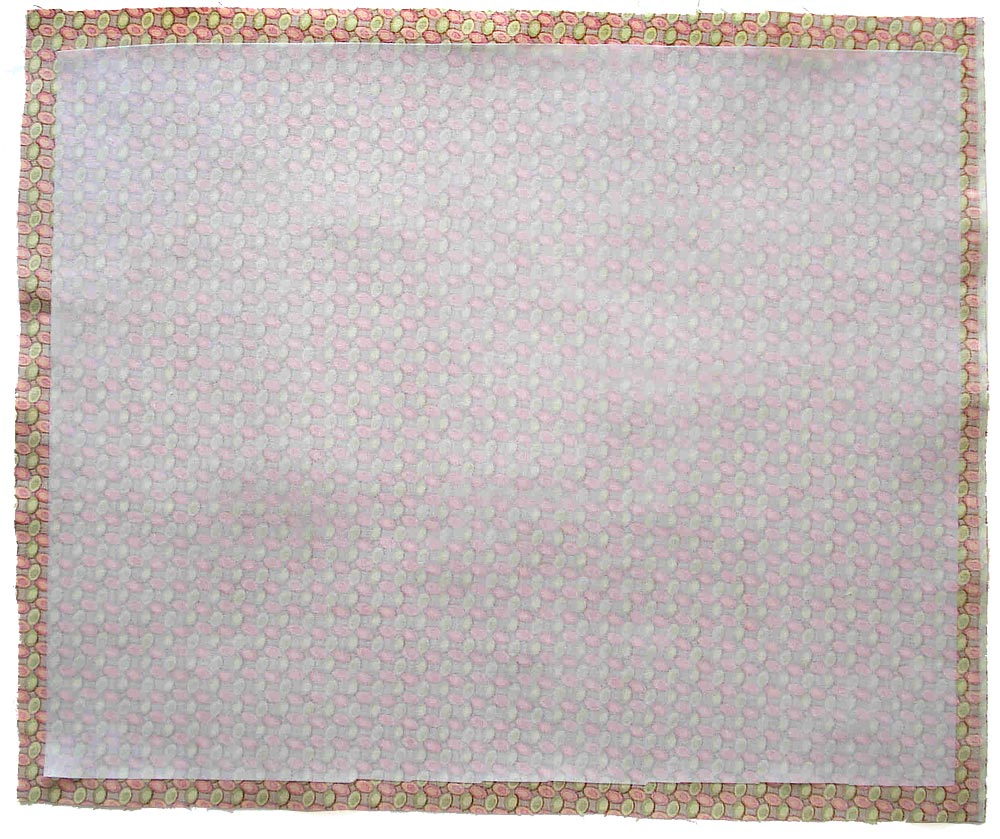
- With your iron on LOW HEAT, adhere the cut fusing panel to the wrong side of one placemat top fabric piece, centering the fusing side to side and top to bottom. You have now created one FUSED FABRIC BLOCK. You will need one fused fabric block for each placemat you intend to make. Repeat as many times as needed for your number of finished placemats. (The Hints and Tips section at end of this article explains why we do this.)
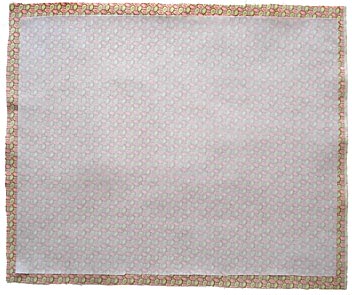
Note: If the fusing does not adhere to the fabric, turn the heat on the iron up just a bit, but be careful not to make it too hot, otherwise the fusing can melt! You can test a small piece of fusing on a scrap of your placemat fabric to get the correct iron temperature. - Pin the PLACEMAT PATTERN piece you made above on top of one FUSED FABRIC BLOCK, and cut out along pattern edges. This will be your placemat top.
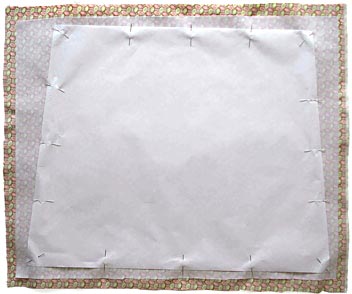
- Pin the same PLACEMAT PATTERN piece on top of the fabric you are using for the bottom of the placemats, and cut out along pattern edges. This will be your placemat bottom.
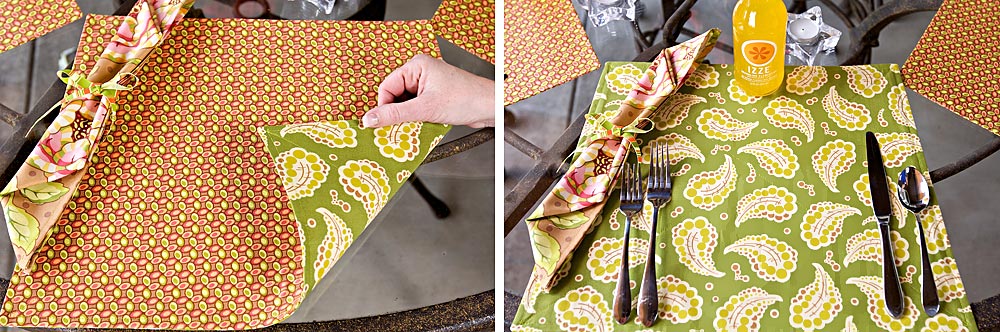
- Our placemats used the same fabric for both the top and bottom. But they would also be very cute, and reversible, if you used different fabrics for the top and bottom. Below is a photo of one we made with Jelly Bean-brown on the top and Dotted Paisley-green on the bottom.
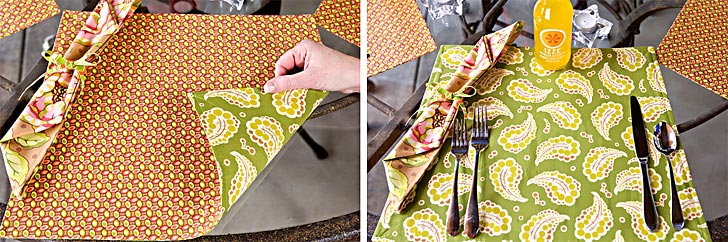
- Pin the placemat top to the placemat bottom, right sides together, lining up all raw edges.
At Your Sewing Machine & Ironing Board
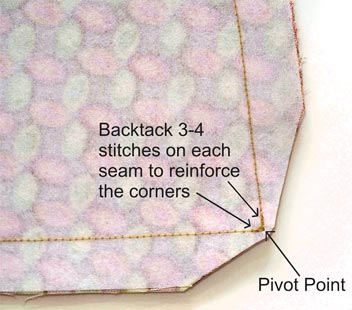
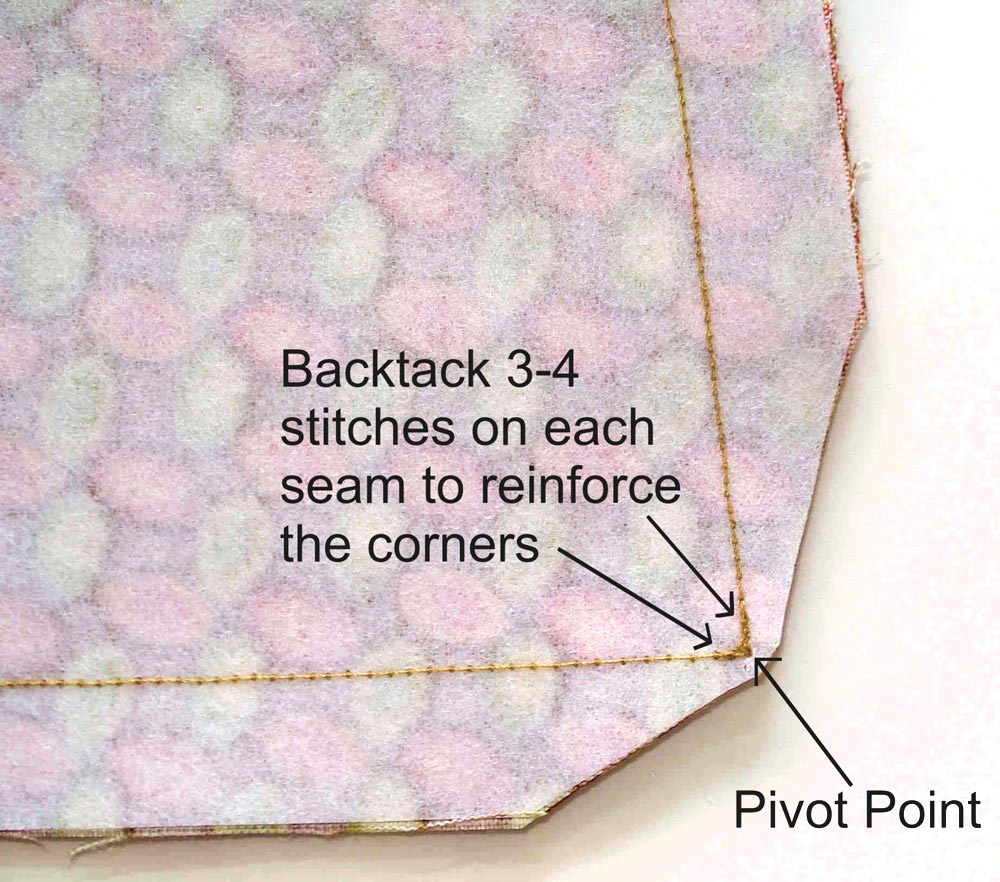
- Using a ½” seam allowance3, stitch around the perimeter of the pinned placemat top and bottom, leaving a 6″ opening near the middle of the bottom edge. Remember to secure the start and end of your seam by back-stitching or lock-stitching.
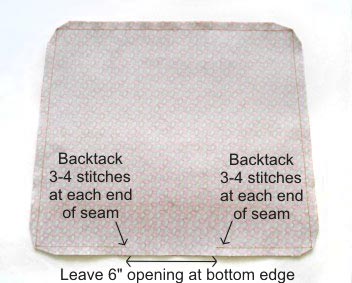
- Trim all four corners of the seam allowance.
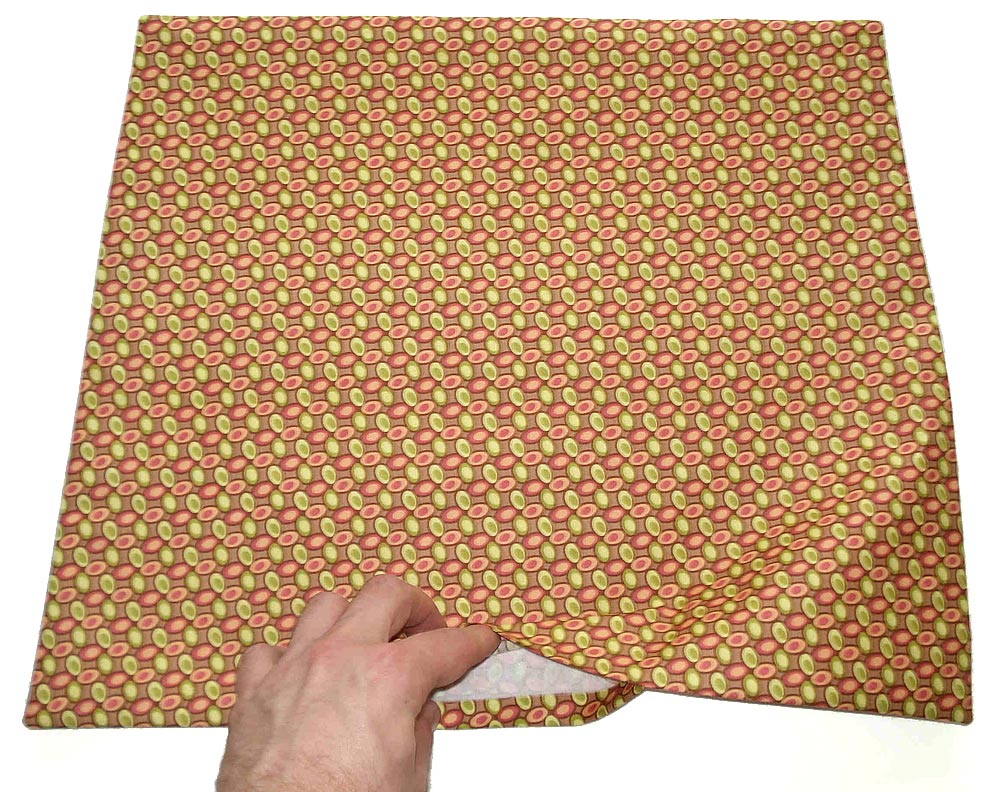
- Using the 6″ opening you left along the bottom of the placemat, turn the sewn placemat right side out. Be sure to push out each corner with your finger or the blunt point of a chopstick, knitting needle or point turner so it is flush and square to the outside.
- Press flat around all four edges and four corners of the placemat. Press under the seam allowances at the opening so they are flush with the sewn seam.
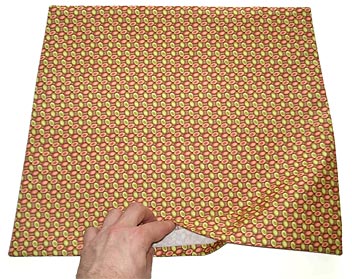
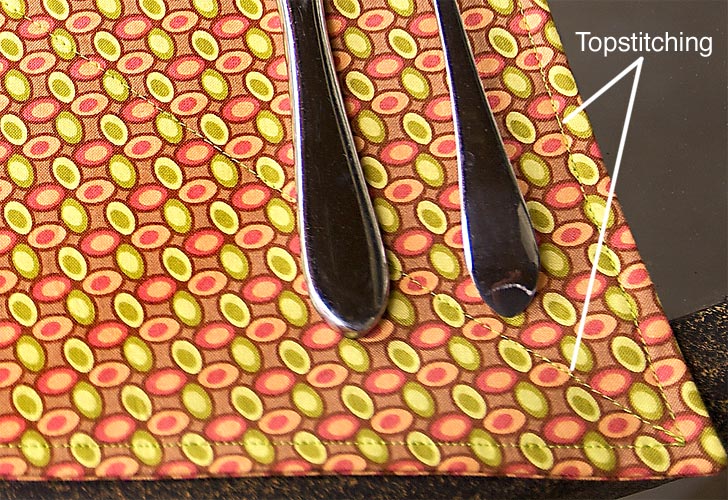
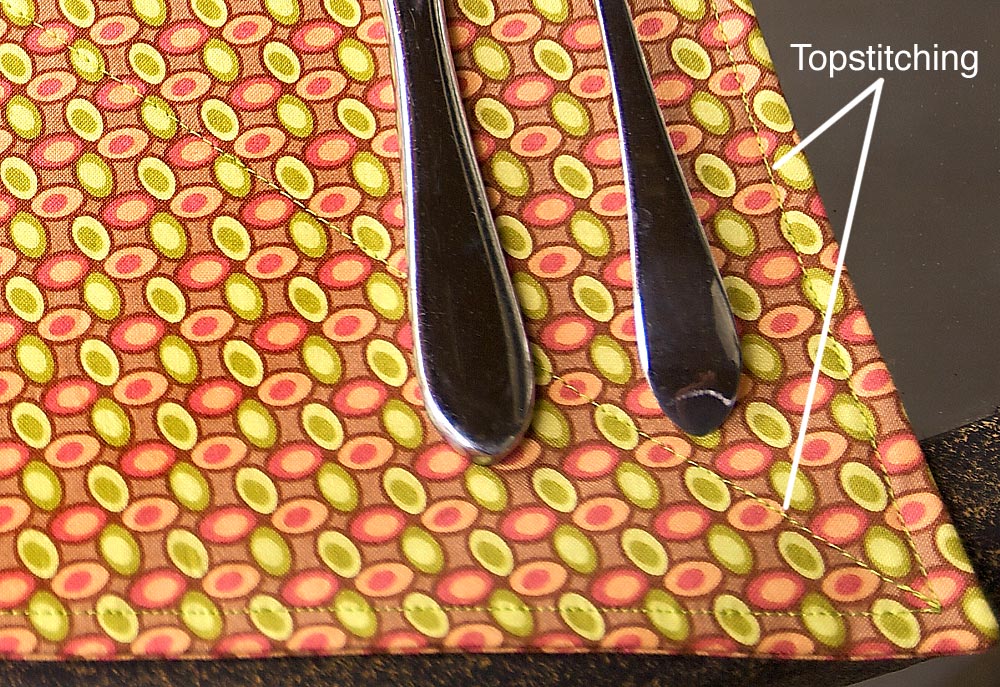
- Topstitch ¼” all around four edges of placemat. If desired, sew a topstitch from top right corner to bottom left corner, and also top left corner to bottom right corner, to create an “X” pattern on the placemat. This insures the layers won’t shift.
Hints and Tips
You use interfacing in sewing projects to give the finished piece extra stability. Think about a button down shirt. The collar, cuffs and buttonholes needs to be stiffer than the rest of the shirt, so interfacing is sewn between the layers of fabric to make these parts stand up. We’re adding interfacing in this project to stiffen the placemat.
Why should I make a fused fabric block?
So your fused and non-fused sets of pattern pieces are an exact match.
If you have a pattern piece that needs to be backed with fusing, it is wise to fuse a piece of the fabric that is larger than the pattern piece, then cut your pattern piece out of this larger fused block of fabric and fusing. The process of heating the fusing to melt the glue and adhere it to your fabric can sometimes minimally shrink the fabric. By making a larger fused fabric block, you allow any shrinking that may occur to happen, and then you can cut out your pattern piece(s) from this pre-shrunk block. Otherwise, you risk ending up with one size for your plain fabric piece and a slightly different size for the fused fabric piece. When you put the two pieces together to sew, they won’t match up as nicely as they should.
Project Design: Alicia Thommas
Sample Creation & Instructions: Gregory Dickson
This isn’t a wedge. You can see the bottom corners do not curve into the round table top. What would be better is rounded corners at the elbow area.
Hi JF – a wedge at its most simple is wider on one end than the other, like these placemats. Rounding the corners could certainly be a great alteration to best fit your table top – and super easy to do.