






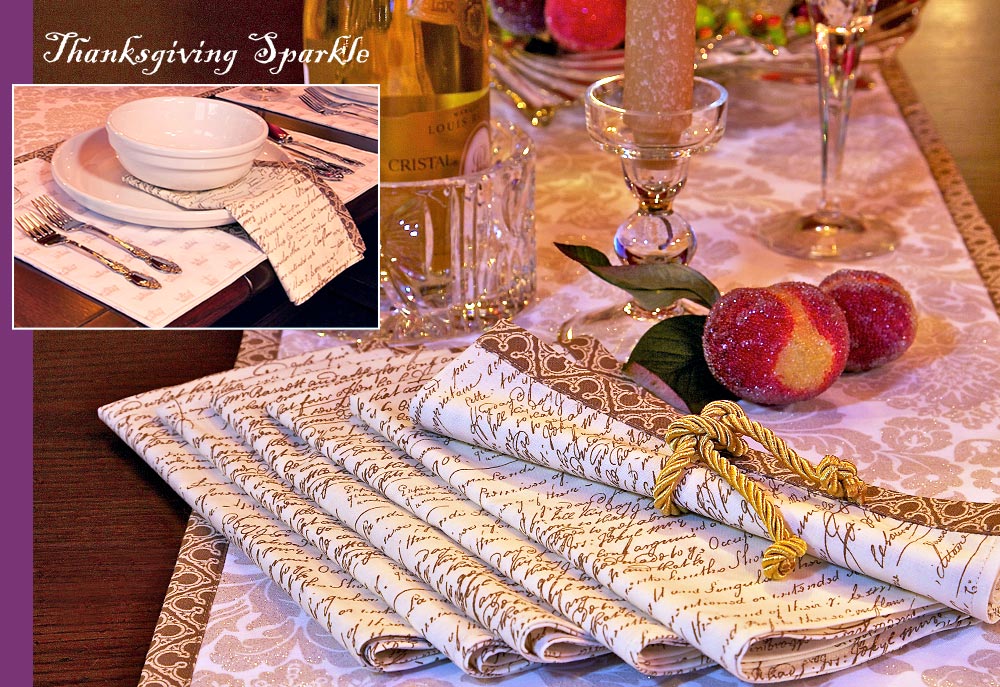
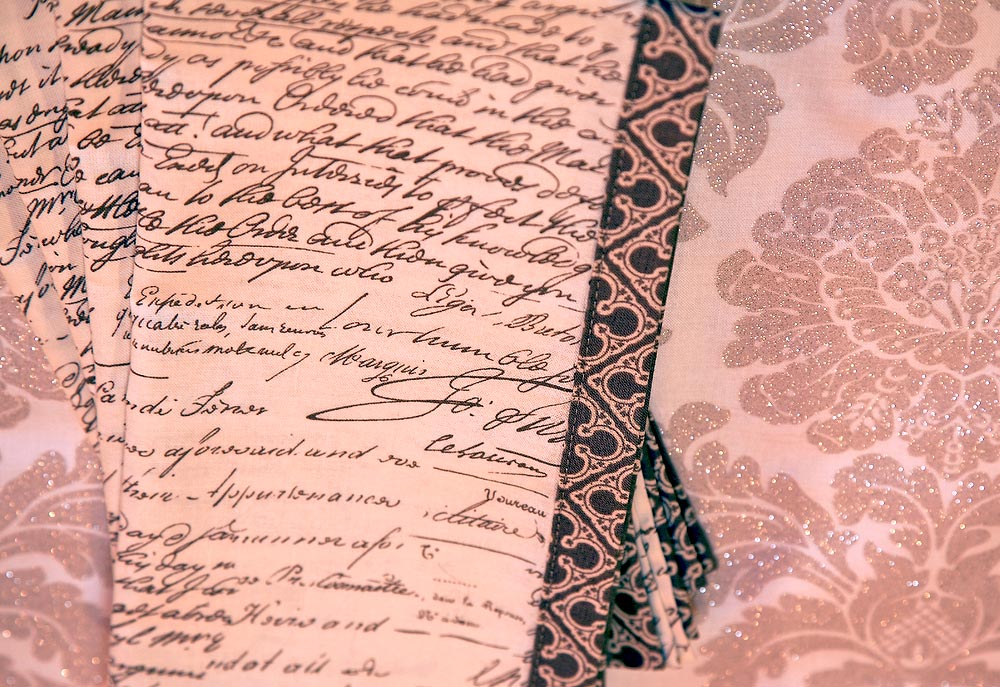
We love cloth napkins, and this bound-edge variety is a very easy yet elegant designs. It got us wondering about the ubiquitous napkin. Turns out the modern day table linen has quite a history, dating back as far as the Romans, who used a larger cloth called a mappae, which was spread over the edge of a couch to protect it while dining in typical Roman reclining position. Jump forward to France in the 1700s; the napkin had evolved to an important part of the formal table, and the French court’s elaborate codes of etiquette included such important social rules as: “It is ungentlemanly to use a napkin for wiping the face or scraping the teeth, and it is a most vulgar error to wipe one’s nose with it.” I think this still holds true today!
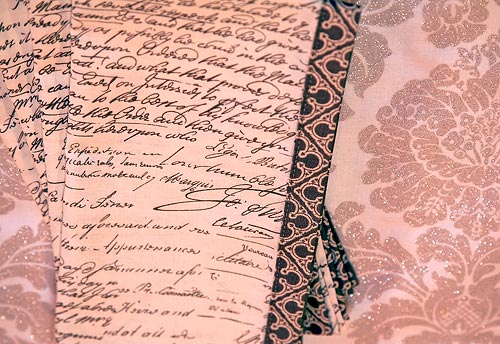
The vintage script decorating this Antiquity fabric is quite lovely, and as an added bonus, if the conversation at the table starts to drag, you can always start reading your napkin out loud.
The yardage shown below is based on SIX napkins, each with a finished size of 20″ x 20″, standard for a dinner napkin. You can certainly cut smaller or larger squares to best fit your table. If you need more or fewer napkins, the easiest thing to remember is: ¾ of a yard will make two 20″ x 20″ finished napkins; 1¼ yards makes a matching set of four napkins. As we show below, 2 yards results in six napkins; go to 2¾ yards for eight napkins, and so on and so on… until you run out of chairs.
We originally used the Antiquities collection by Michael Miller Fabrics, which featured sparkling metallic accents. This is an older collection that is no longer available, but quilting cottons with metallic accents continue as a popular trend. Search with the term “metallic” at your favorite fabric outlet.
If you’d like to make an entire table top, check out our Kitchen Linens category for numerous suggestions. Or link directly to the table runner and placemats with a center panel shown in our photos.
Sewing Tools You Need
- Sewing machine and standard presser foot
Fabric and Other Supplies
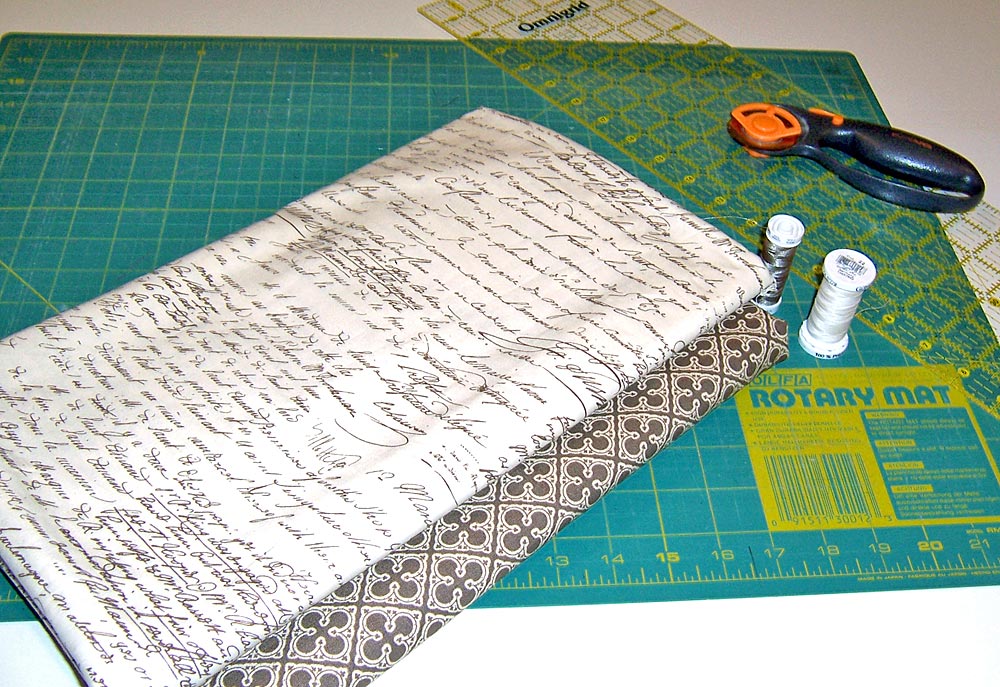
- 2 yards of 44″+ wide quilting weight fabric for the main body of the napkins: we originally used Antiquity in Brown Old Script by Michael Miller Fabrics
- ⅝ yard of 44″+ wide coordinating quilting weight fabric for napkin binding: we originally used Antiquity in Linen Quartrefoils by Michael Miller Fabrics
- All purpose thread to match fabric
- Embroidery thread for accent stitching: we used rayon embroidery thread in taupe
- See-through ruler: a 2″ wide ruler would be best
- Hand sewing needle and thread for basting
- Fabric marker, pen or chalk
- Straight pins
- Seam ripper
- Seam gauge
- Scissors or rotary cutter and mat
- Iron and ironing board
Getting Started
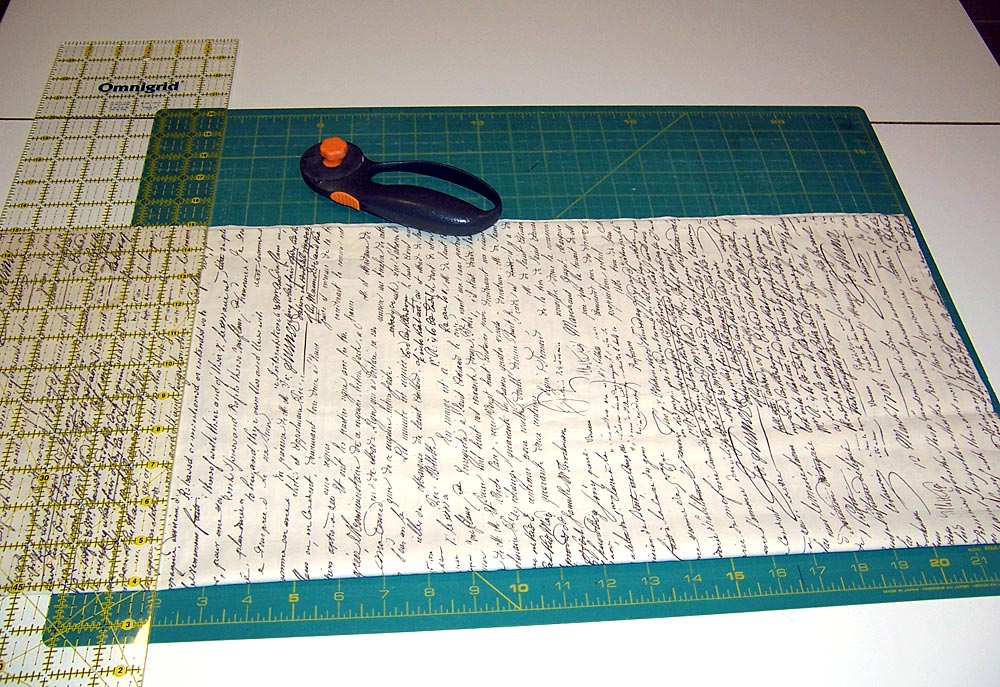
- Using your see-through ruler and a rotary cutter and mat (if possible – you can use scissors; just be careful you cuts are smooth and straight), cut SIX 20″ x 21″ napkins from main print fabric (Antiquity in Brown Old Script in our sample).
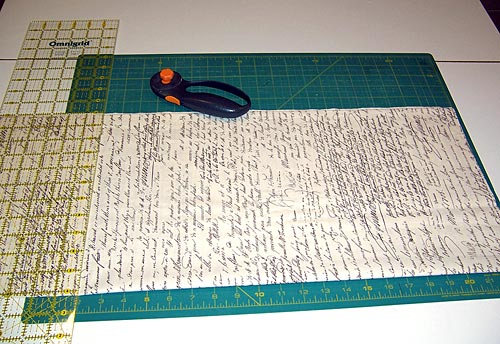
NOTE: If you use a directional print as we did, make sure you cut each 20″ x 21″ napkin with your motif running the same direction. For our napkins, we made sure our script was right side up and horizontal. - From the accent fabric (Antiquity in Linen Quartrefoils in our sample),
At Your Sewing Machine & Ironing Board
Napkin body
- Create a narrow ½” double-turn hem around THREE edges of the napkin, leaving the right hand side of the napkin un-hemmed. To hem the three sides, fold the raw edge of the fabric under ¼” along all three sides and press. Fold under another ¼” and press again. If you are new to hemming, read our tutorial on simple hems.
- For super neat corners like ours, read our tutorial on narrow hems with clean corners.
Right hand bound edge
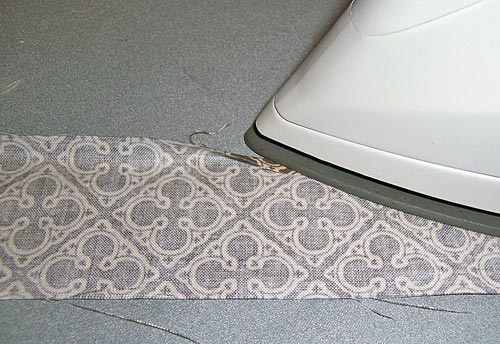
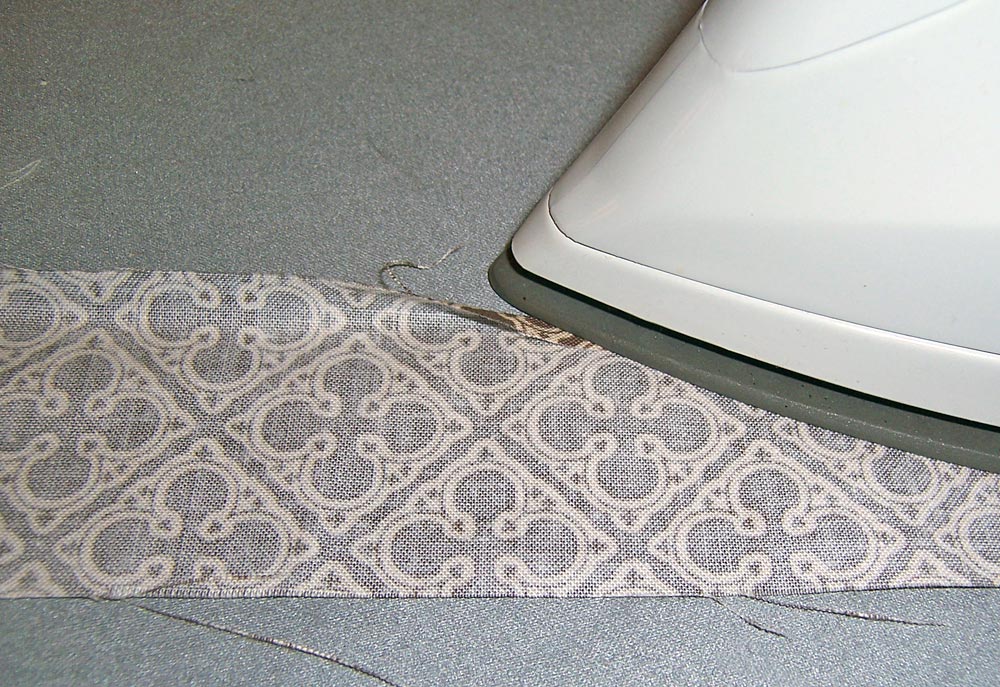
- Fold in one long edge on all SIX binding strips ¼” and press.
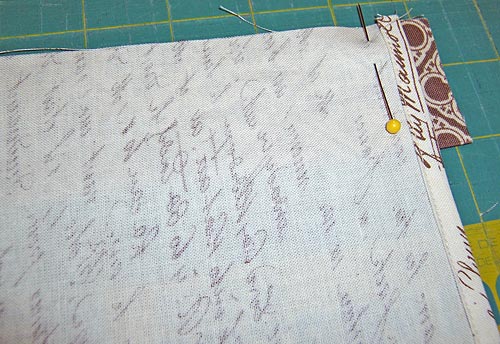
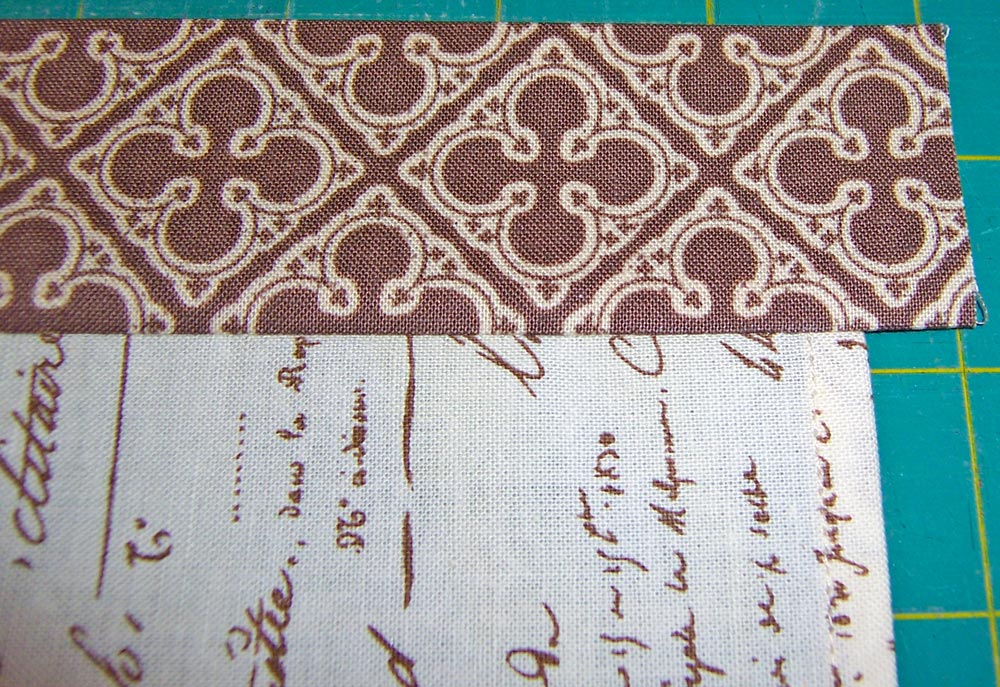
- Align the raw edge of a binding strip along the remaining raw edge of a napkin, right sides together. Center the binding strip along the edge so there is ½” extending at each end. Pin in place.
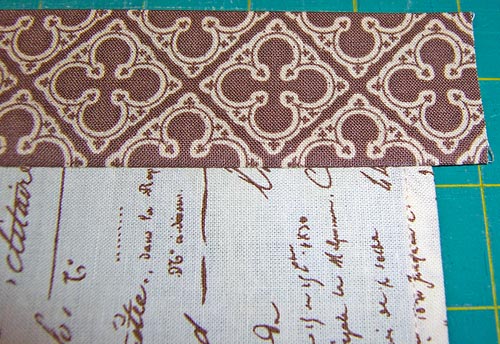
- Sew the binding strip to the napkin, using a ¼” seam allowance. Press the seam toward the binding strip and press the binding strip away from the napkin.
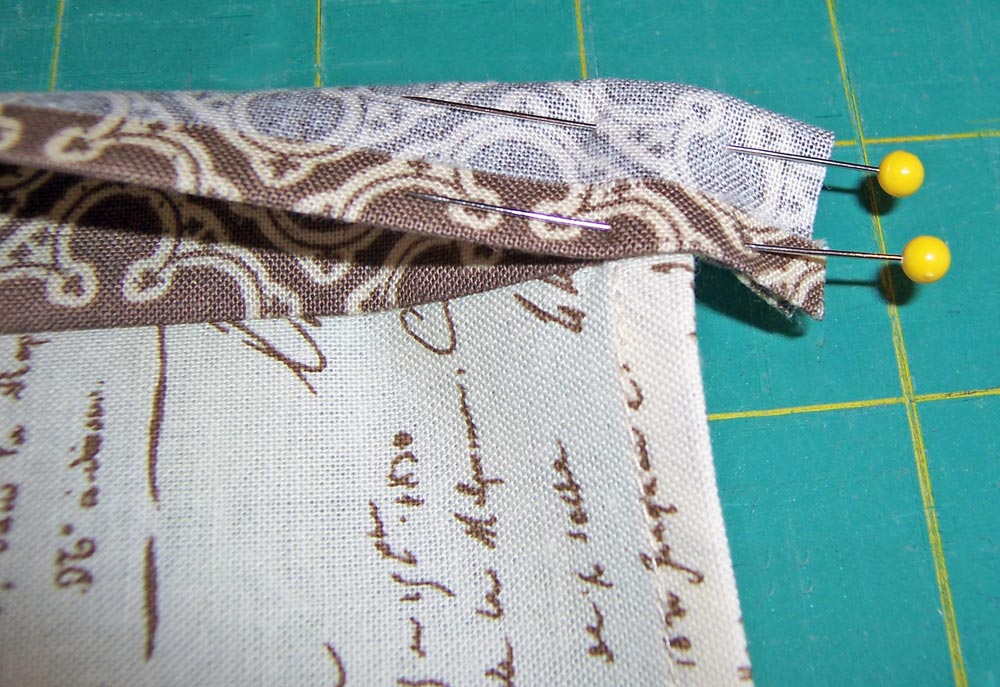
- Fold the binding strip in half, right sides together, and stitch across the short ends, using a ½” seam allowance, which should be flush with the finished edge of the napkin. Adjust the width of the seam allowance as needed to insure the seam is flush with your hemmed edges. Trim the seam allowance close to the stitching.
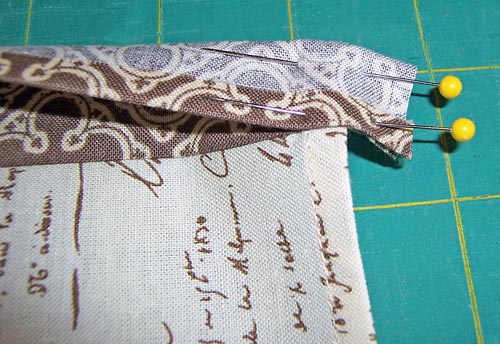
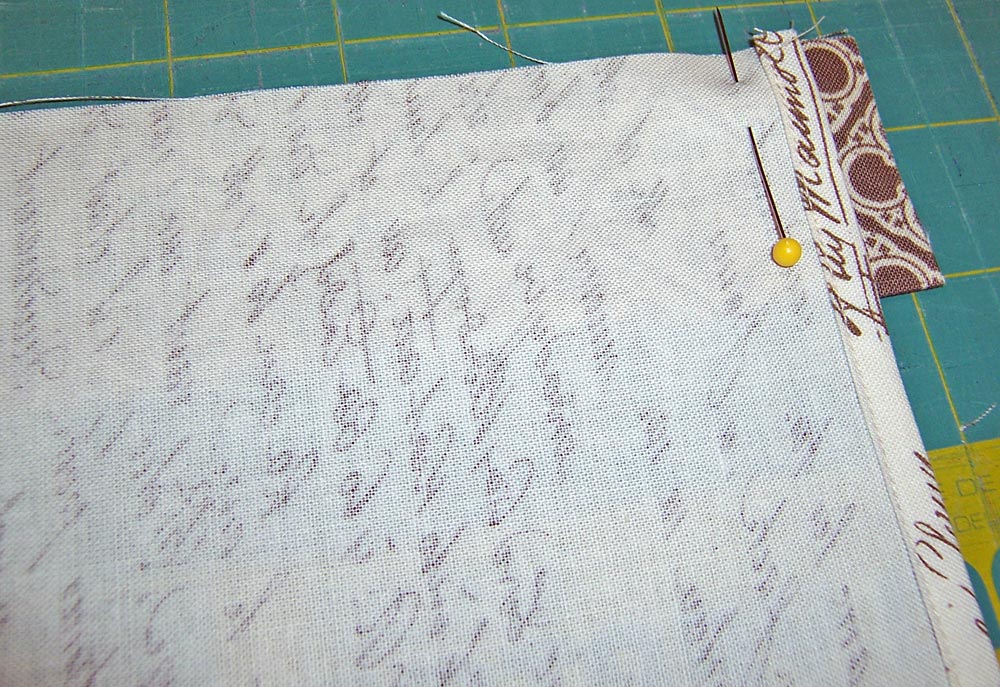
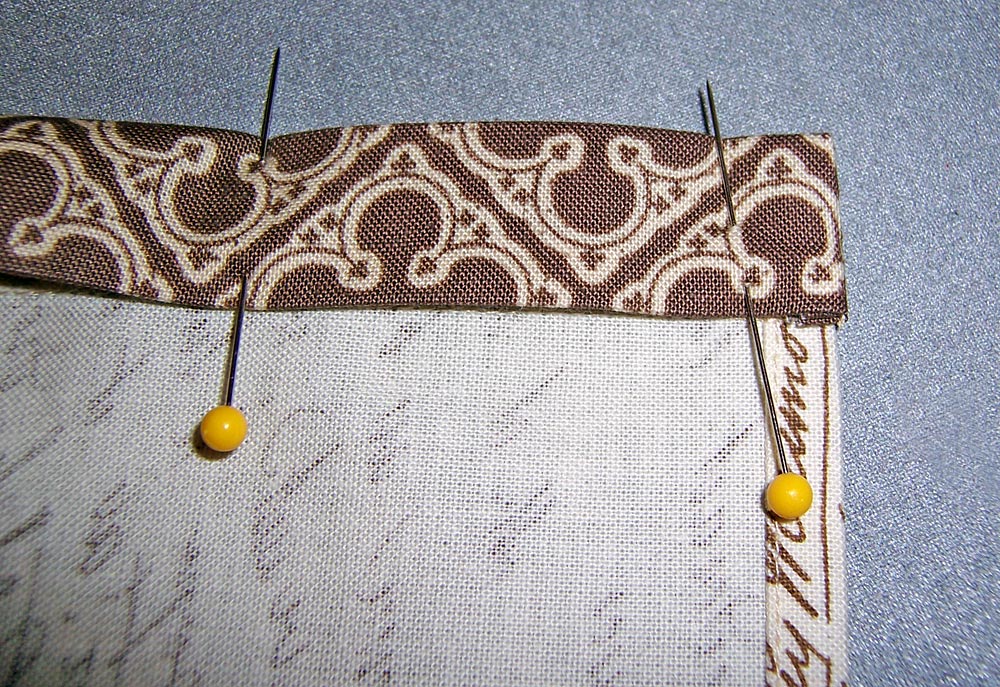
- Turn the binding ends right side out and wrap the binding over to the wrong side of the napkin, covering the raw edges.The pre-folded edge of the binding should cover the line of stitching on the back and extend beyond it just slightly. Pin in place.
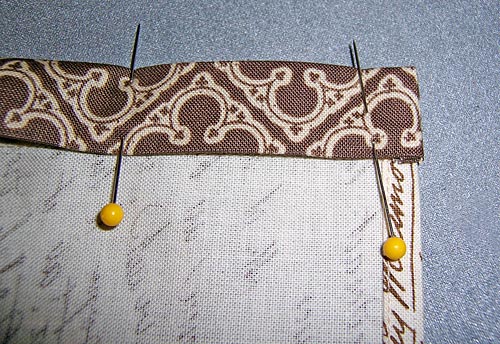
- Re-thread your machine with topstitching thread in both the top and bobbin. We used rayon embroidery thread in a taupe color to add some shine to the stitching. You may want to lengthen your stitch for a nicer look.
- Working on the right side of the napkin, edgestitch along the binding through all layers. Do not ‘stitch in the ditch;’ you should stay as close to the binding/napkin seam as possible, but still keep your stitching on the binding.
Project Concept: Alicia Thommas
Sample Creation and Instructional Outline: Michele Mishler