






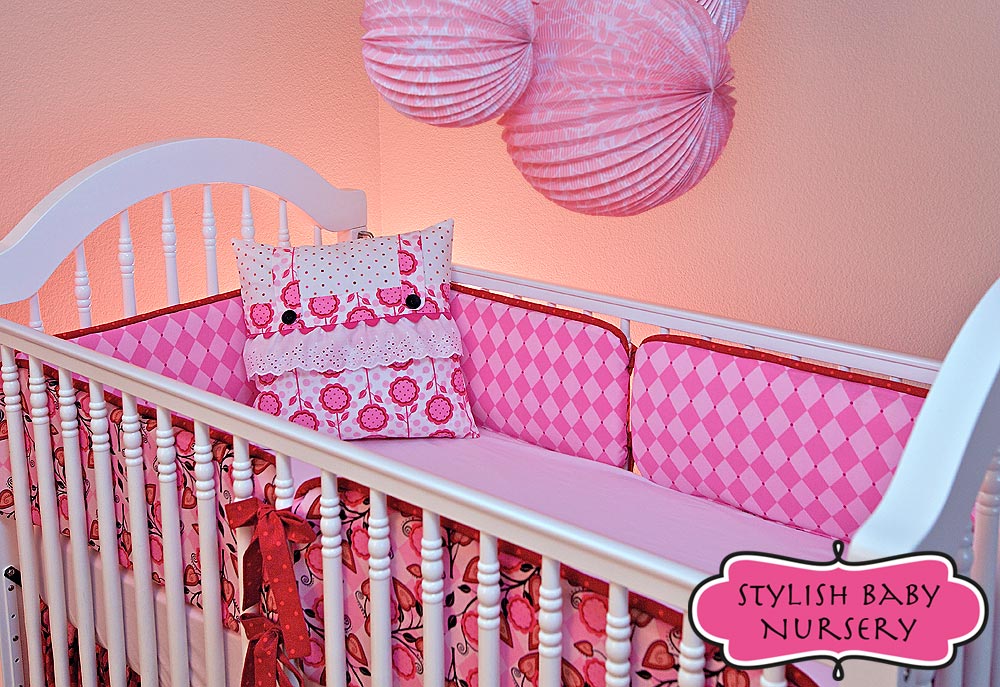
A note to all our S4H friends and fans: choosing to add bumpers to your crib linens is a personal decision. There have been safety concerns circulating for years regarding “fluffy” pillows of any kind in cribs. We made sure our bumpers followed the best-practices guidelines for construction, length, and number of ties used to secure the bumpers, and the use of flat and dense padding rather than puffy batting. The final choice, as always, is yours.
Padded bumper pads for your crib are beautifully decorative, and they can keep your little darlin’ from bonking her pretty little head. We chose a strong, graphic pattern for the inside of the bumpers, because the baby experts say that’s what babies love to look at.
We used a standard piping around just the top edge of our bumpers, which is a look we love. However, if you want more dimension, we have another crib bumper pattern that uses all-around jumbo piping. You can check it out here.
Our design is based on using standard Fairfield Baby Bumper Pads and a standard crib mattress that measures. 28″ x 52″.
Sewing Tools You Need

- Sewing machine and standard presser foot
- Zipper foot
Fabric and Other Supplies
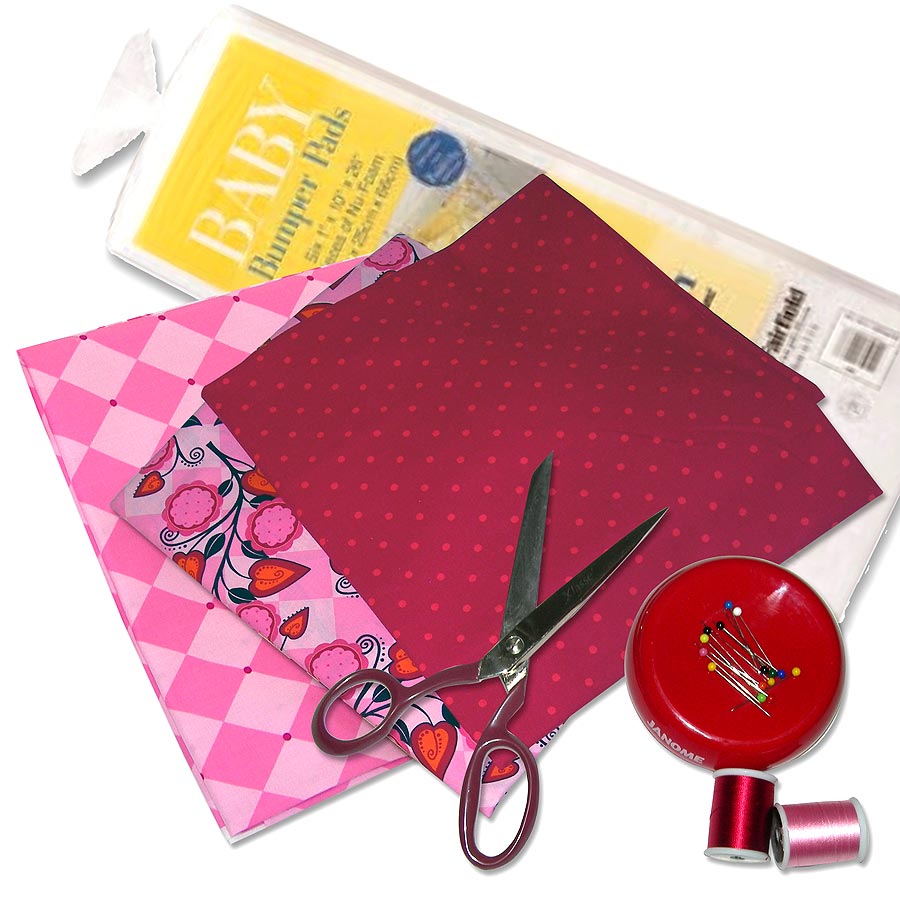
- Fairfield NU Foam® Baby Bumper Pads – package of six, each measuring 10″ x 26″ x 1″
- 2½ yards of 44″+ wide solid fabric for the inside of the crib bumpers: we originally used Patty Young’s Andalucia in Petal Jester.
- 2½ yards of 44″+ wide print fabric for the outside of the crib bumpers: we originally used Patty Young’s Andalucia in Petal Flora
NOTE: To make sure the amount of fabric suggested is sufficient, cut horizontally across the 44″ width of the fabrics, and do not leave more of a 1″ gap between the cuts. Of course, if you are worried about your cutting precision or have a specific directional motif, you will need additional fabric. - 1½ yards of 44″+ wide print fabric for the piping around the bumpers and the corner ties:: we originally used Patty Young’s Andalucia in Fire Tiny Dots
- 6 yards ⅜” diameter cotton cording
- All-purpose thread in colors to match fabrics
- Iron and ironing board
- See through ruler
- Tape measurer
- Fabric marking pen or chalk pencil
- Scissors or rotary cutter and mat
- Seam ripper
- Seam gauge
- Straight pins
Getting Started and Template Download
Cut your fabric and trims
- Download and print the Crib Bumper Corner Template.
IMPORTANT: This PDF file is one 8½” x 11″ sheet. You must print the file at 100%. DO NOT SCALE to fit the page. Print horizontally (landscape). - Cut out the template along the solid line.
NOTE: Because you will be cutting through thick and/or multiple layers, you might want to trace the template onto a piece of cardboard or template plastic. This heavier/thicker option will be a bit easier to work with and cut around than plain paper. - Cut SIX 27″ x 11¾” pieces of fabric from both the outside and inside fabrics (six pieces from each fabric).
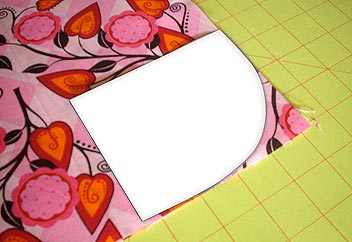
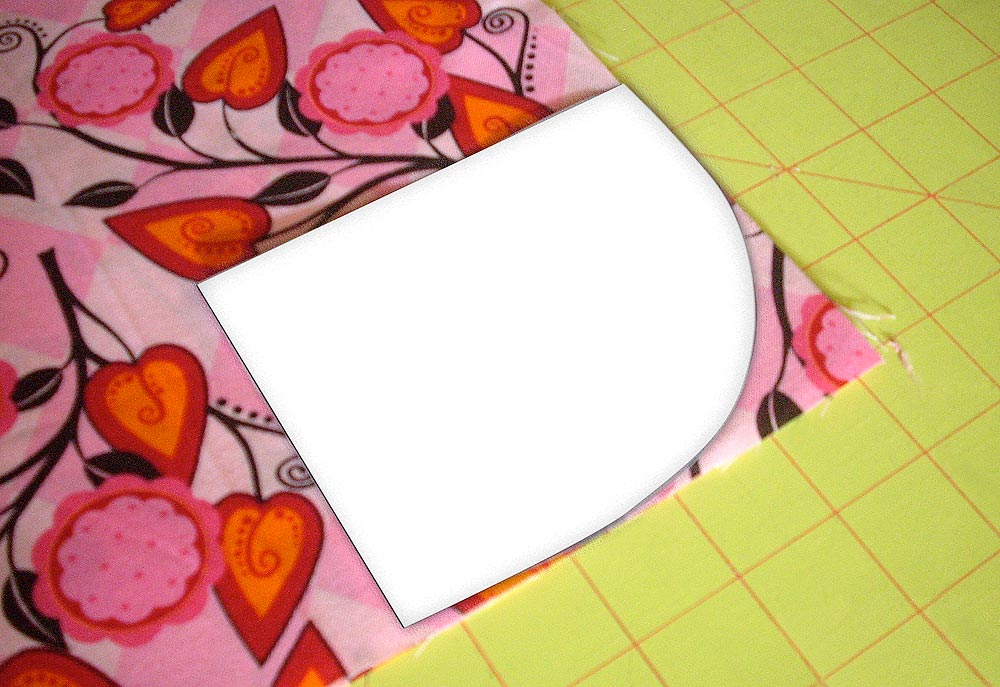
NOTE: To make this amount of fabric sufficient, we cut our 11¾” pieces along the 45″ edge of the fabric. - Using the template you made, mark a rounded edge on each corner of each 27″ x 11¾” piece of fabric. Cut the rounded corners. Using the original template pattern (the paper), transfer the markings (the dots) onto your fabric using the fabric marking pen. We like to make a tiny hole with a pin right in the middle of the dot, then line up the pattern on the fabric and make a mark with the fabric pen through that hole.
- For the ties, cut TWENTY FOUR 15½” x 2½” pieces.
- Cut SIX 30″ lengths from cording.
- Cut SIX 2¼” wide bias strips according to the instructions below. Each will need to be about 30″ long.
Cut your bias strips
- On your cutting surface, lay your fabric out flat, right side up, with the selvage running along one side.

- The selvage is the woven edge of your fabric where it was originally attached to the loom. The fabric’s pattern does not continue onto the selvage, but there is likely to be some information printed there that identifies the manufacturer or designer.
- Fold the fabric back diagonally so a straight edge is parallel to the selvage.
- Press the fold and use this crease as a guide to mark your parallel lines.
- Use a straight edge to make continuous parallel likes 2¼” apart.
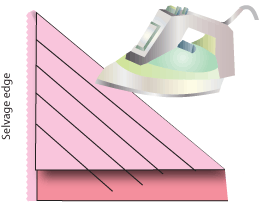
- Cut along these lines with good, sharp scissors or a rotary cutter and straight edge.
At Your Sewing Machine & Ironing Board
Join bias strips
- You may need to join two strips to make one that is the necessary 30″ long. To do this, take two of your strips and place them right sides together at right angels to each other.
- Stitch straight across.
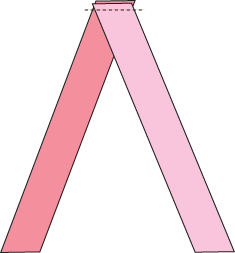
- Lay flat, press the seam open and trim off the overlapping edges.

- Repeat until you have one long fabric strip.
Insert the cord
- Place one 30″ bias strip right side down on a large flat surface.
- Lay a 30″ length of cord in the center.
- Fold the fabric over the cord, keeping the cord centered and matching the raw edges of the fabric.
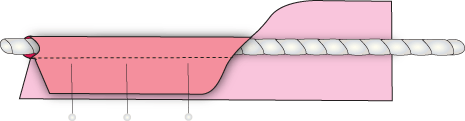
- Pin to hold in place.
- Carefully move to your sewing machine and adjust the piping so the raw edges line up on your seam allowance marking and cord pokes out to the left of your foot.
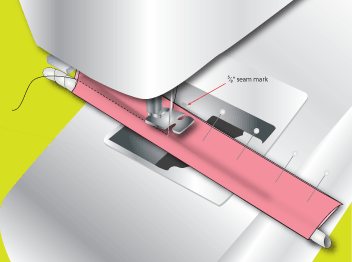
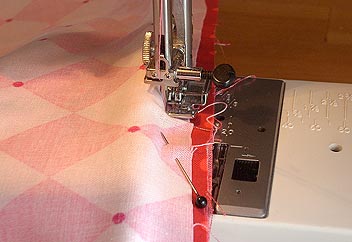
- Using a Zipper Foot, stitch slowly staying close to the cord and keeping your seam allowance consistent. Remember to remove your pins as you go so you don’t sew over them.
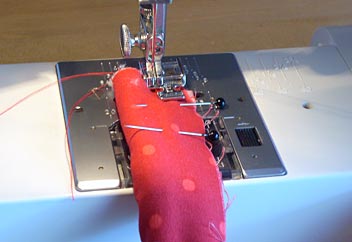
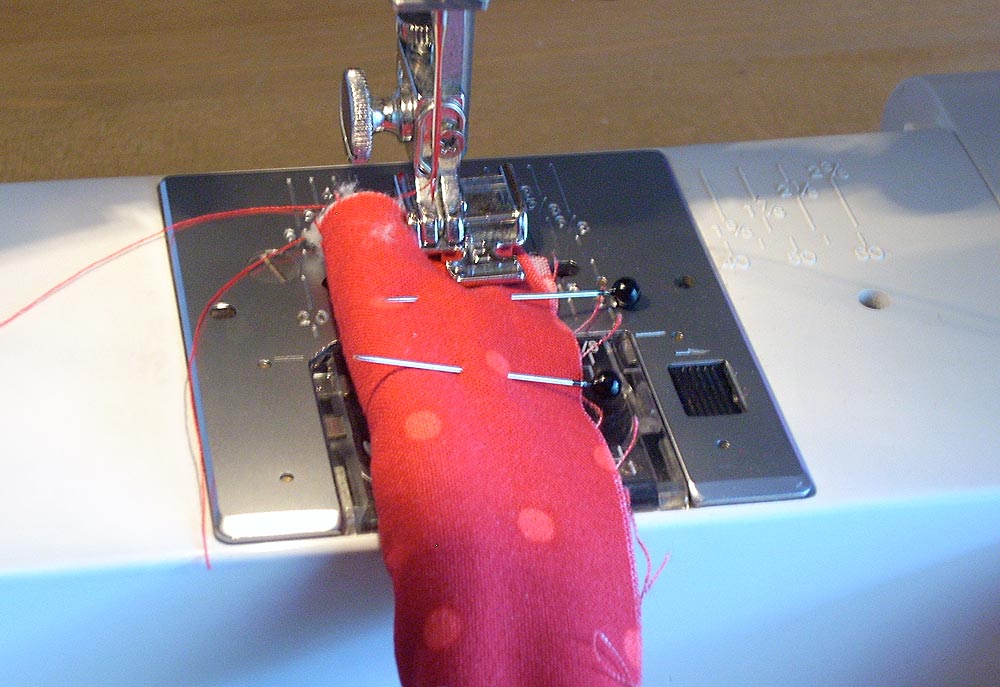
Stitch cording to bumper fabric
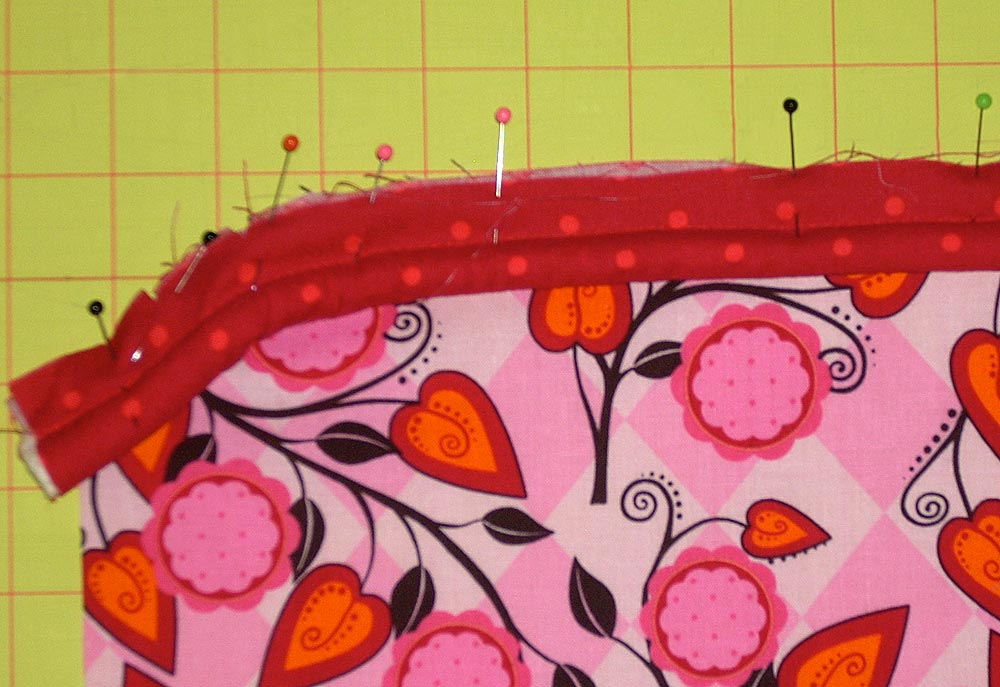
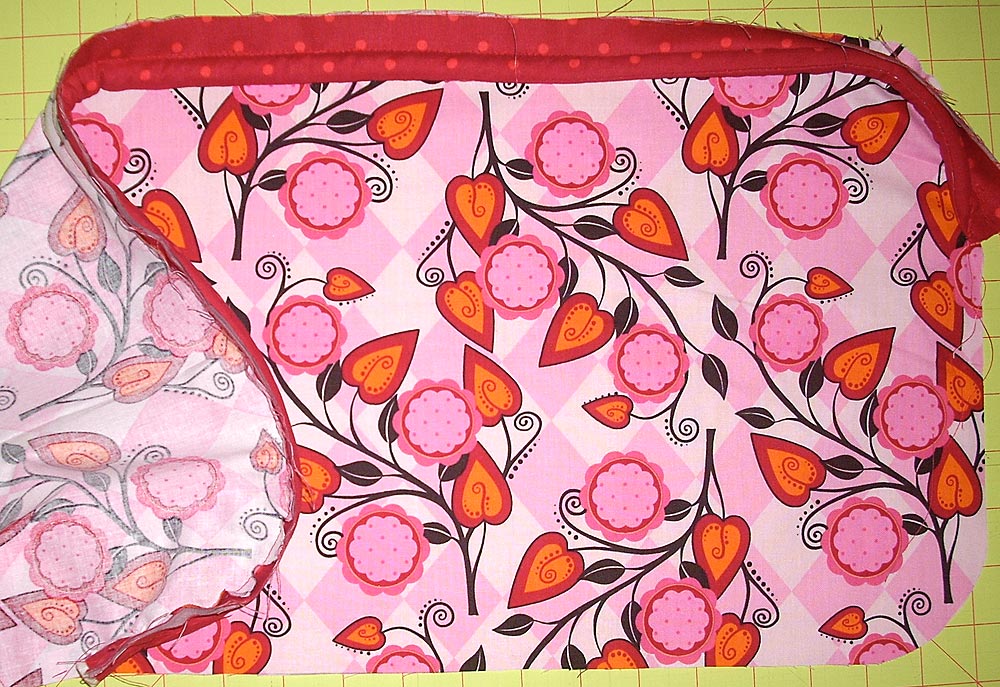
- Pin cording to the right side of a 27″ x 11¾” piece of outside fabric (Petal Flora in our sample). Using the dots you made with the template, start pinning the cording at the large dot in the center of left curved edge, stretching along the 27″ straight side, and ending in the center of the curved edge at the large dot on the right side. Be sure to match the raw edges of the piping insertion fabric and the base fabric. Your cording should be centered between the dots.
NOTE: At each curved corner, you can clip into the seam allowance to make the fabric lay flat. Clip up to the line of stitching, but not through it. Clip as you go, making as many clips as you need to create a smooth curve. This is called “ease” – the little cuts give the otherwise rigid line the flexibility to curve.
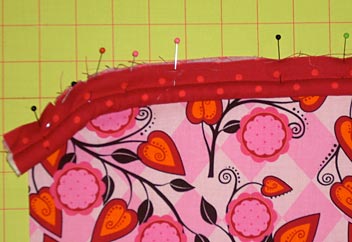
- Stitch in place using the Zipper foot. Remember, you are stitching around a curve, so you’ll need to gently ease the fabric as you go. This means it might ripple slightly. That’s okay.
NOTE: If you are brand new to working with piping, we have a full tutorial you can review prior to starting.
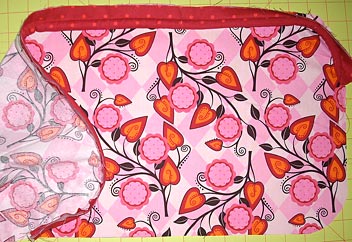
- Repeat to add cording in this same manner to all six 27″ x 11¾” Petal Flora pieces.
NOTE: To allow the piping to blend more easily into the final seam allowance, at each end, At the each end of the piping, use a seam ripper to open up the fabric and clip back the piping cord about ½”. This will allow a flatter end for a smoother finish.
Make the ties
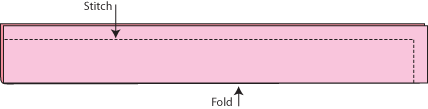
- With right sides together, fold a 15½” x 2½” fabric strip in half lengthwise.
- Stitch ¼” in from the edge along the long edge and across one end. Stop with your needle down at the corner, lift your presser foot, and pivot 90˚ to make a nice clean angle.
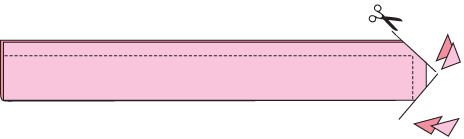
- Trim the corners, being careful not to clip into your seam.
- Press the long seam open.
- Turn the strip right side out. You’ve made a fairly narrow little tube, so you’ll need a little help turning it. Our favorite tiny tube turner: a pair of hemostats. Check out our tutorial on this great idea.
- Push out the corners with a long, blunt-end tool, like a knitting needle, chopstick or point turner.
- Press the tie so the seam runs nice and straight along one long edge. That same tutorial about the hemostats also has a great tip for how to perfectly iron narrow tubes. You gotta check it out!
- Repeat to finish all twenty-four ties in the same manner.
Finish the bumpers
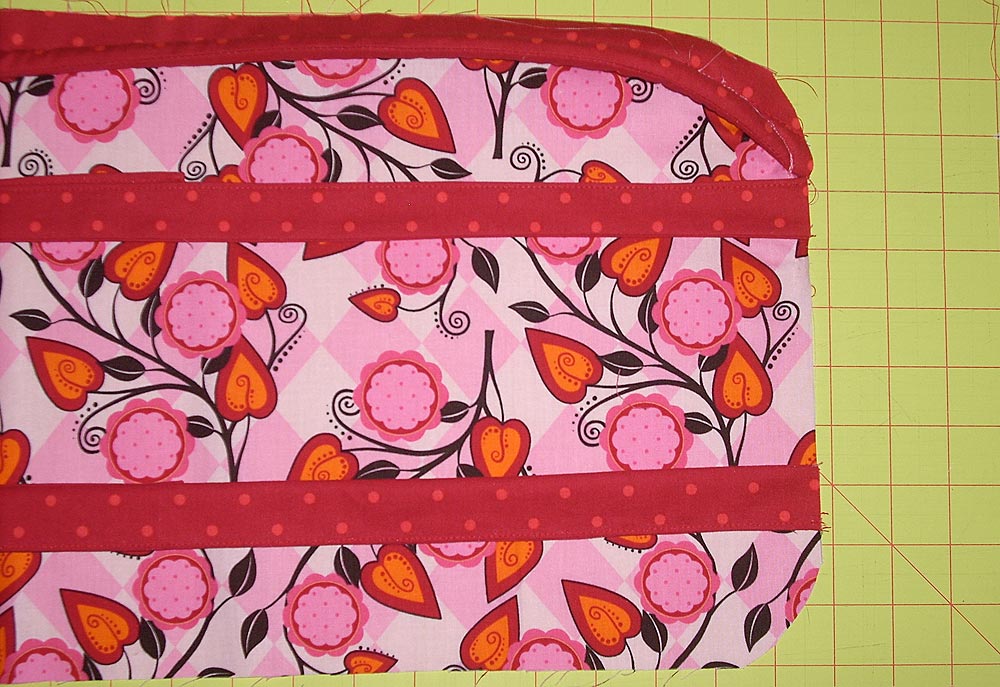
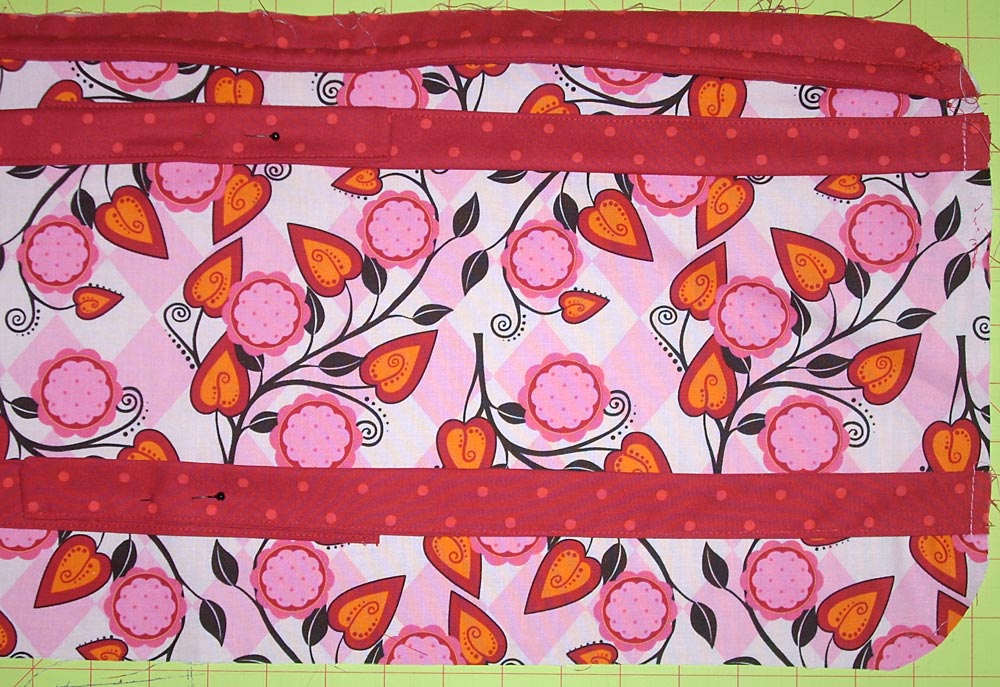
- With the right side of the fabric facing up, pin two ties along each end of one outside panel. Use the template to determine where to put them – you will pin them just below the small dot on the upper corners and just above the small dot on the lower corners. Pin in place with the raw end of the tie flush with the raw edge of the fabric.
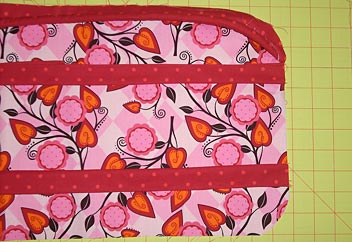
- Machine baste the ties in place.
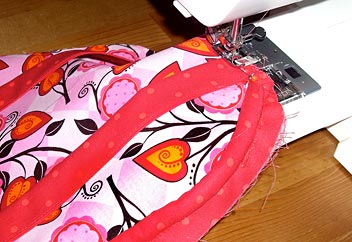
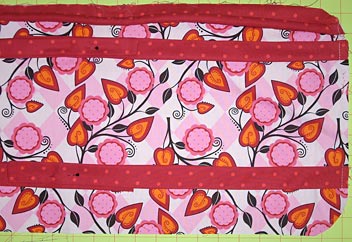
- Repeat on the remaining FIVE outside panels.
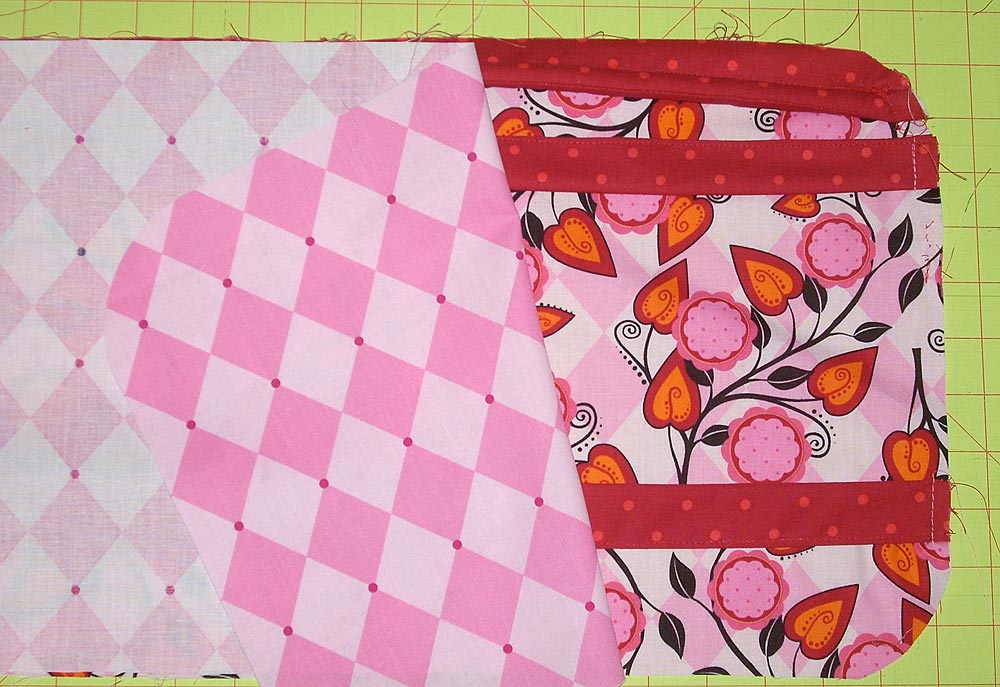
- With right sides together, the edges flush all around, and the ties and piping sandwiched on the inside, pin a outside panel to and inside panel. It’s very important you make sure your ties are all facing in and free of the seams. You can even pin them in place in the center of the panels.
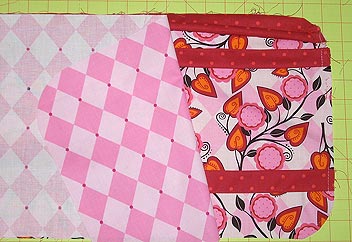
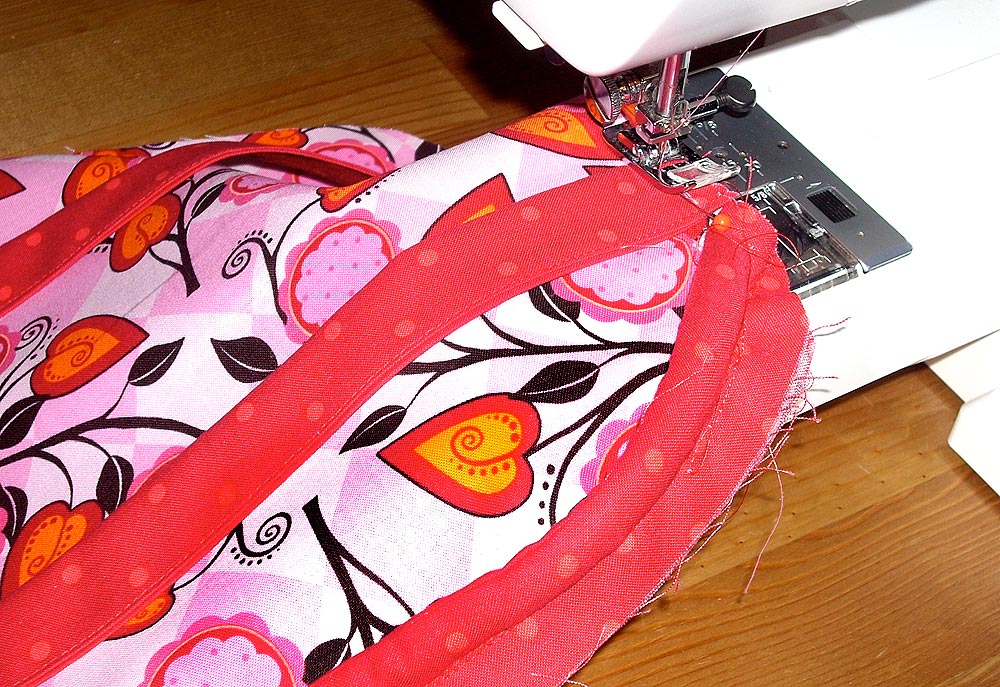
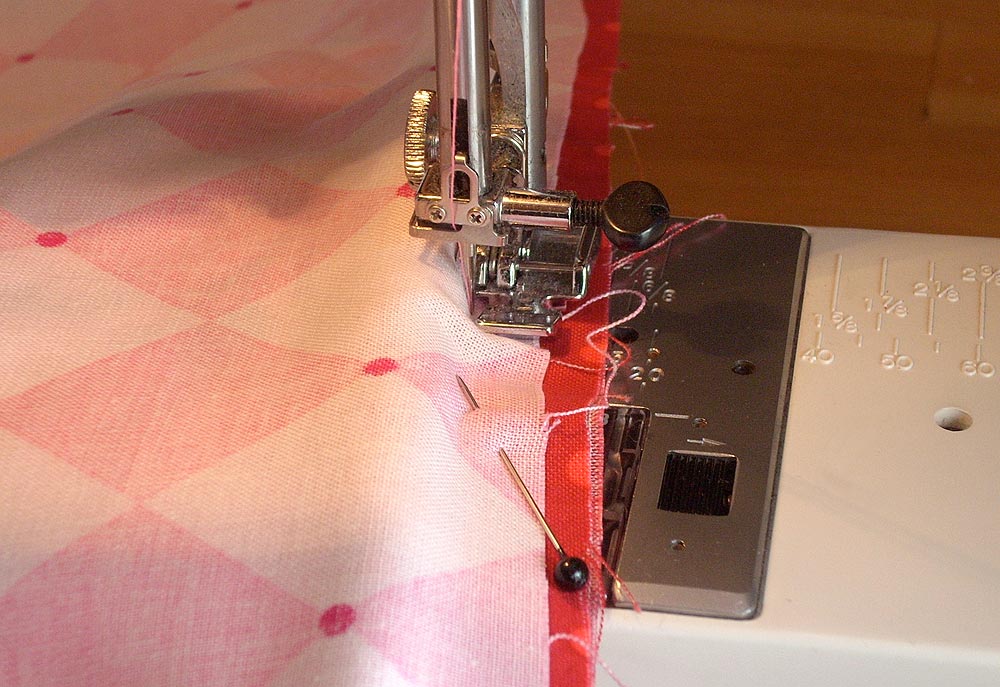
- Stitch along THREE sides, using a Zipper foot: both long sides and one short end. Along the top side with the piping, stitch slowly and as close to the piping cord as possible. On the edges without cording stitch using a standard ½” seam. You may change to a regular foot if you are more comfortable sewing with this on these non-piped edges.
- Start your stitching just below the corner curve on one end, stitch around the corner, across the top edge, along the end, across the bottom edge, and around the corner curve of the end where you started, leaving a 5″ – 6″ opening between the two corner curves on this end. Lock your stitch on either side of the opening.
- Trim the seam allowance back to ¼” all around EXCEPT at the opening. Leave the seam allowance at the opening a full ½”.
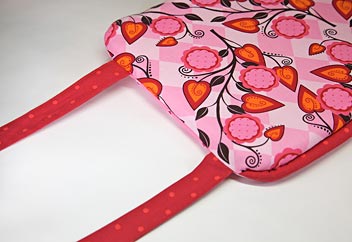
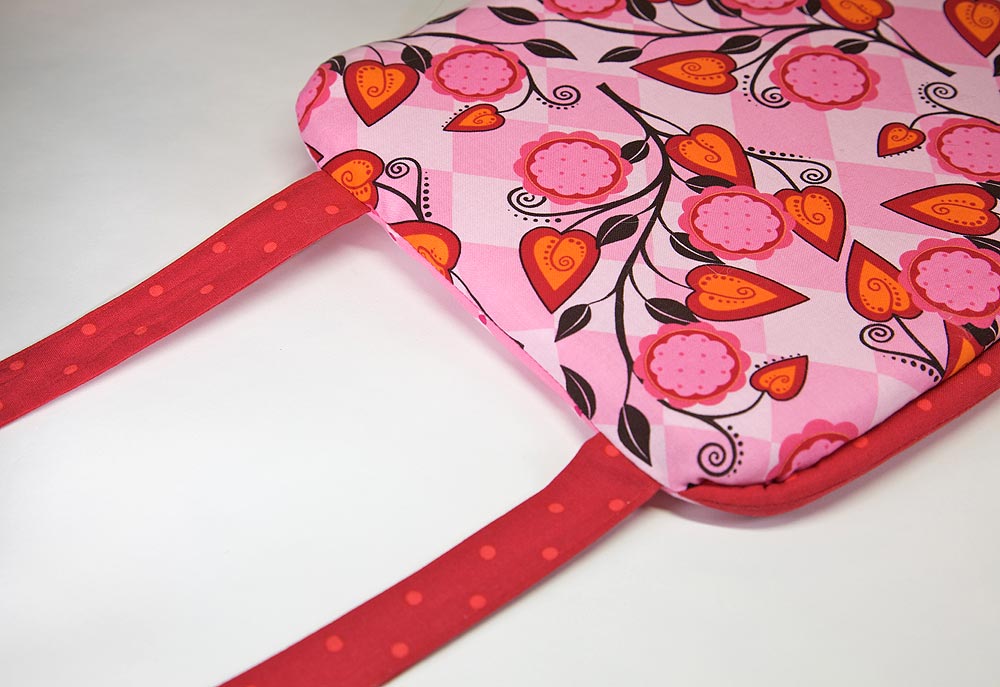
- Turn the cover right side out so the cording and ties pop out… ta-da!
- Insert bumper pads into the cover.
NOTE: It will help give you a nice snug fit if you used the corner template to round the corners of the foam just as you did with the fabric panels. - Turn under the ½” seam allowance at the opening so it is flush with the sewn seam.
- Slip stitch the opening closed.
Project Design: Alicia Thommas
Sample Creation: Aimee McGaffey