






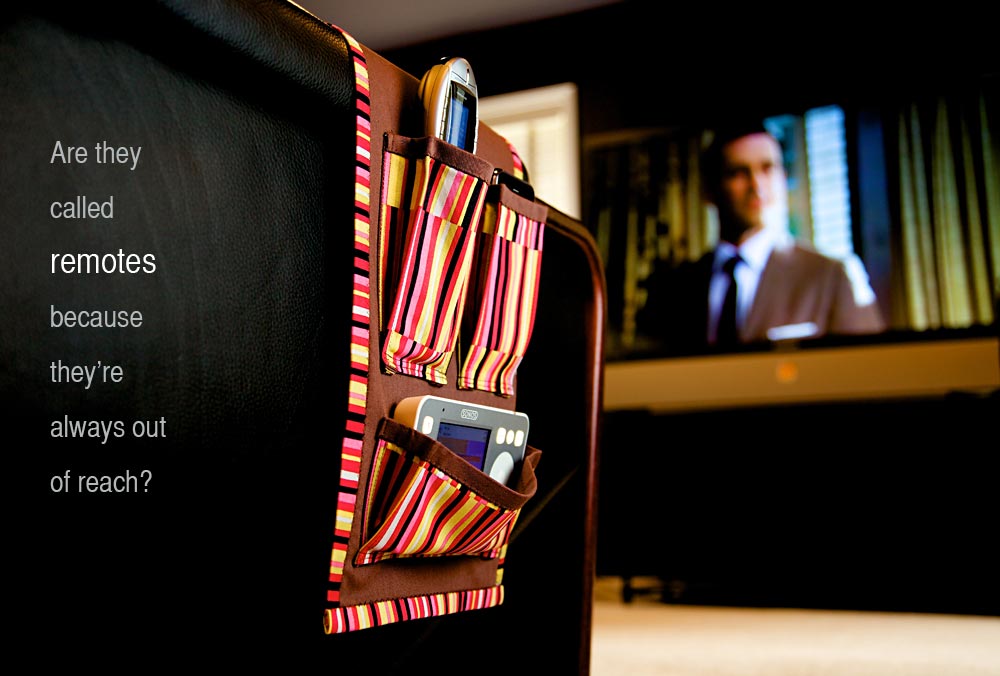
Sometimes, I think my TV remote has a mind of its own. Nine times out of ten, it’s not where I want it when I sit down. I figure it must get up and leave when I’m not looking. Same thing goes for all my other controls … never around when I need them (much like gas stations). This cool sofa caddy keeps everything right at my fingertips. The pockets all have the perfect expandable gusset: big enough to easily slide stuff in and out, but not so big that things topple out.
Side gussets in all the pockets allow the flexibility to hold a variety of devices.
We recommend the extra heft of a decorator weight fabric for both strength and stability.
The finished caddy measures approximately 10″ x 44″ and we include detailed notes on sizing below so you can adjust as needed to best fit your chair and your devices.
Sewing Tools You Need
- Sewing machine and standard presser foot
Fabric and Other Supplies
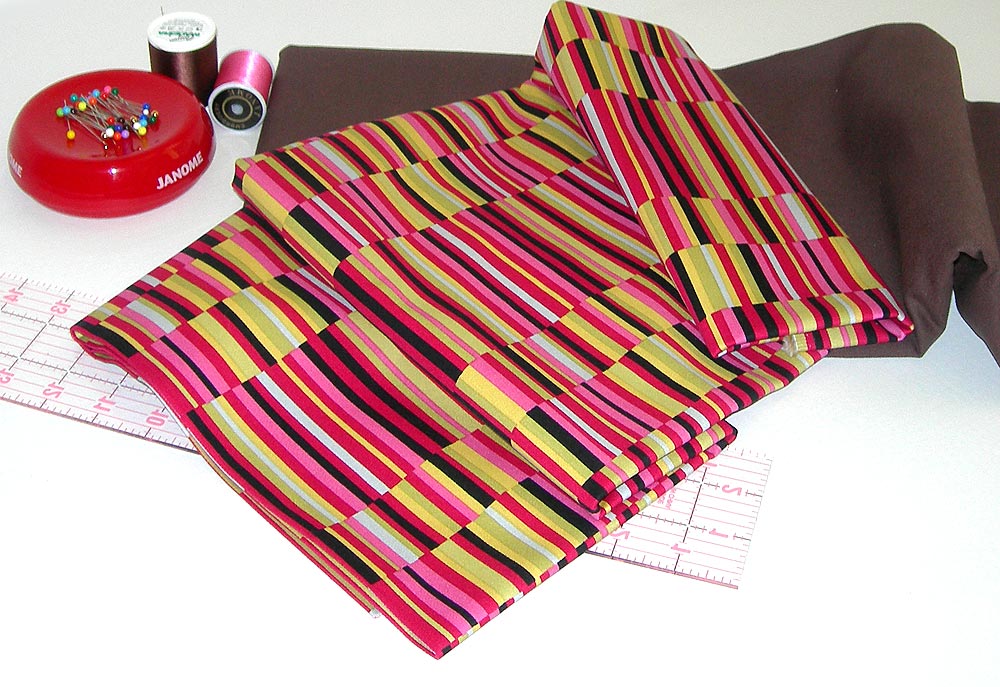
- Fabric for base: 1 yard of 54″ decorator weight fabric: we originally used Amy Butler’s Decorator Solids in Brown
- Fabric for binding and pockets: ½ yard of 54″ decorator weight fabric: we originally used Vicki Payne’s Bark Home Decor in Bars – Bark
- Gripper fabric: one piece apx 20″ x 4″
NOTE: this is like the traction fabric used on the bottom of feetie pajamas – it can be found in stores and online under the names Slipper Gripper and Jiffy Grip - All purpose thread to match fabrics
- See-through ruler
- Fabric pen or pencil
- Seam gauge
- Seam ripper
- Scissors
- Rotary cutter and mat
- Iron and ironing board
- Straight pins
Getting Started
Some important notes on sizing
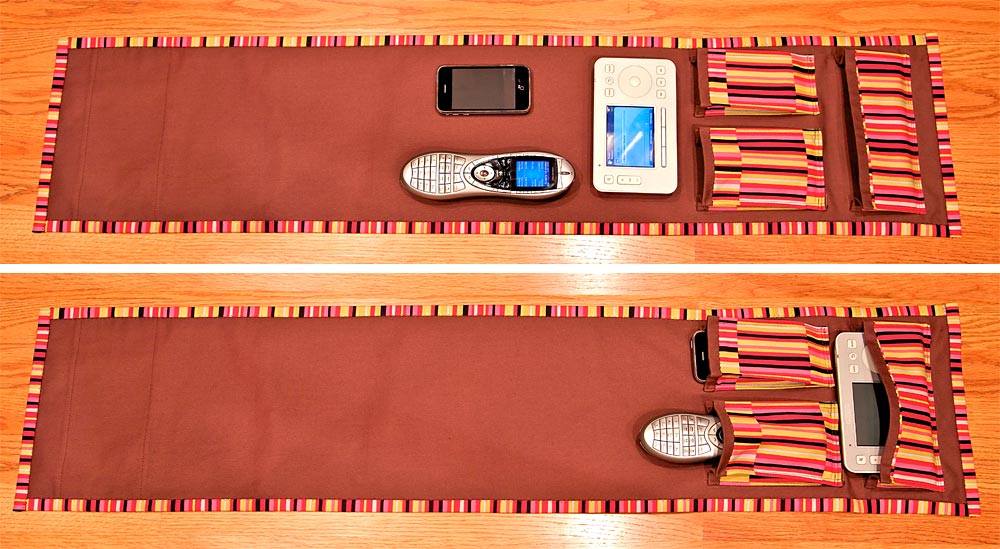
Our pocket sizes were determined based on the things we wanted to store; you’ll have different stuff, and you can change the pocket sizes to get the best fit. Remember, the pockets can go horizontally or vertically. Do whatever works best in your space.
Chairs vary a lot, especially the style of their arms. So before you decide our measurements are going to be perfect for your chair and your arm, we recommend grabbing your cloth tape measure, a note pad and a pencil, and heading on over to the chair for which you’re making this chair caddy. Lift up the chair’s cushion and insert the end of the tape measure about half way under (make sure you insert the 1″ end). Drop the cushion back into place, then continue measuring up and over the arm, finally letting the other end of the tape measure fall to the floor. Sit in the chair, but do not start watching TV! Instead, place your arm over the arm of the chair and gauge a comfortable reach for the pockets. Grab the tape measure at the points you think are good for the pockets, note these measurements on your pad of paper. Finally, get out of the chair (I know …. bummer!) and pick your bottom point. How long you make the caddy will depend on how many pockets you want; it’s totally up to you and your chair (you two talk it over). My only note: it doesn’t usually look good to have it go all the way to the floor.
Now it’s time to cut
- Lay out base (solid) fabric and measure, draw and cut a rectangle 10″ wide x 44″ high, adjusting as necessary based on the sizing test detailed above.
- All the pockets have side gussets for expansion and an inside lining for stability. The lining fabric folds over the top to mimic binding. This means 3½” must be added to the finished width and ¼” to the finished height for the outside or printed fabric. And, 3½” must be added to the finished width and 1¼” to the finished height for the inside or solid fabric.
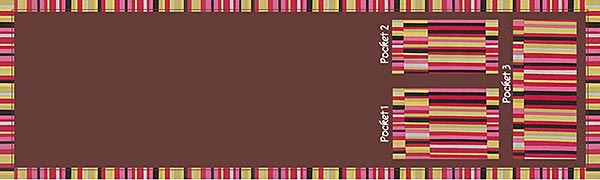
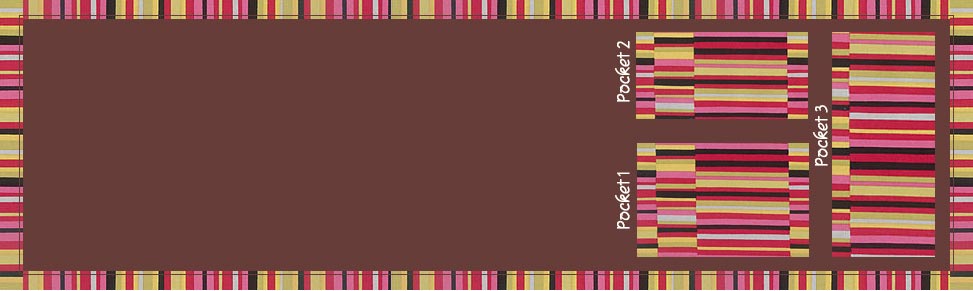
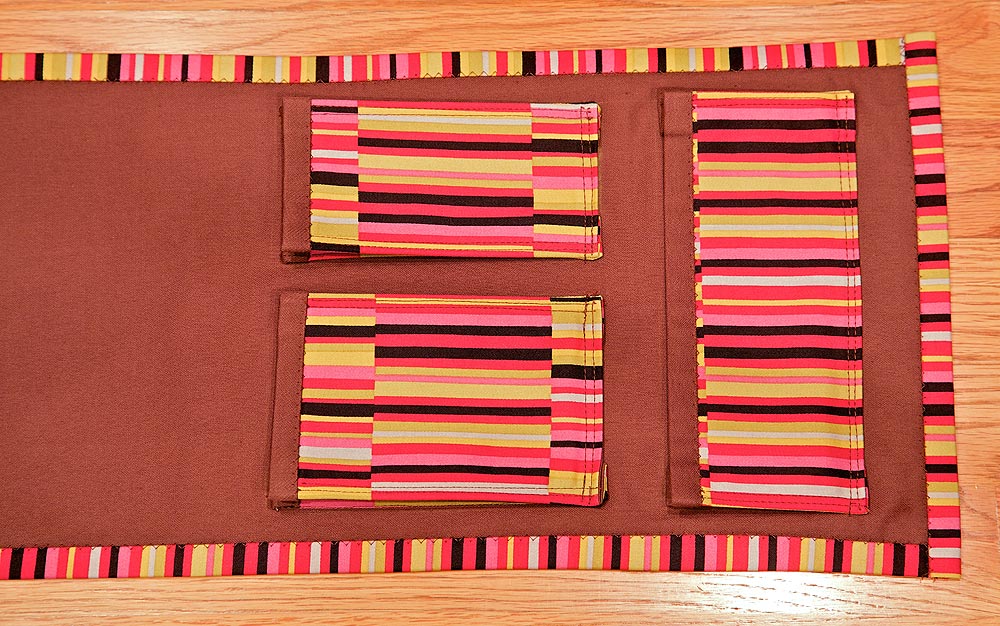
- For our sample, we chose two tall pockets and one wide pocket.
Pocket 1: Finished size needed to be 4″ wide x 6″ high. From the printed fabric we cut a rectangle 7½” wide and 6¼” high. And from the solid fabric we cut a rectangle if 7½” wide and 7¼” high.
Pocket 2: Finished size needed to be 3″ wide x 6″ high. From the printed fabric we cut a rectangle 6½” wide and 6¼” high. And from the solid fabric we cut a rectangle if 6½” wide and 7¼” high.
Pocket 3: Finished size needed to be 8″ wide x 3½” high. From the printed fabric we cut a rectangle 11½” wide and 3¾” high. And from the solid fabric we cut a rectangle if 11½” wide and 4¾” high. - For the edge binding, cut two strips of the printed fabric 2″ wide x 11″ long and two strips of printed fabric 2″ wide x 45″ long. As mentioned above, these lengths may need to be adjusted based on the starting side of your base panel. In general, you need 1″ more than your actual length measurement as well as 1″ more than your actual width measurement.
NOTE: You’ll need to cut these pieces across the width of your 54″ decorator fabric. - Cut a strip of gripper fabric 10″ wide x 4″ high (again adjusting the width to fit your base panel if necessary). Finish the raw edges with pinking shears or a pinking rotary cutter. You could also serge the edge or fold under ¼” and edge stitch. This gripper fabric will help make your caddy extra resistant to slipping.
At Your Sewing Machine & Ironing Board
Constructing the base
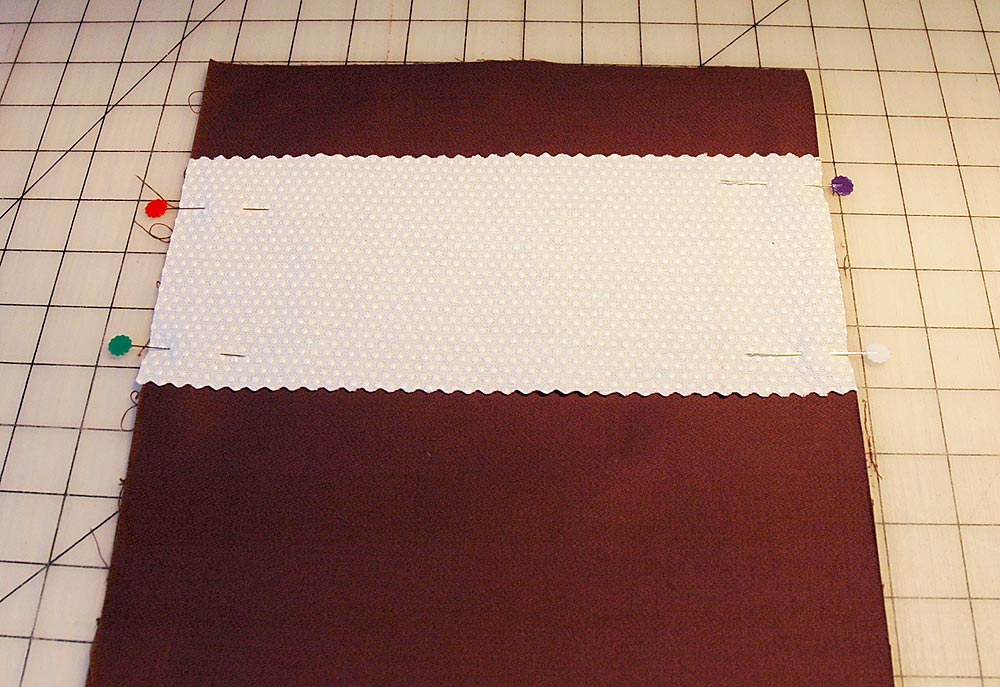
- Place the 10″ x 4″ gripper fabric against the back side of the base fabric, positioning it 4″ from the top edge and edge-to-edge across the width. Pin in place.
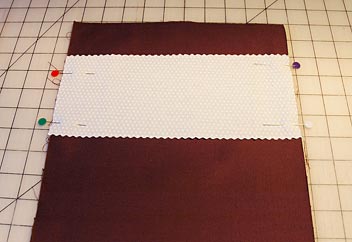
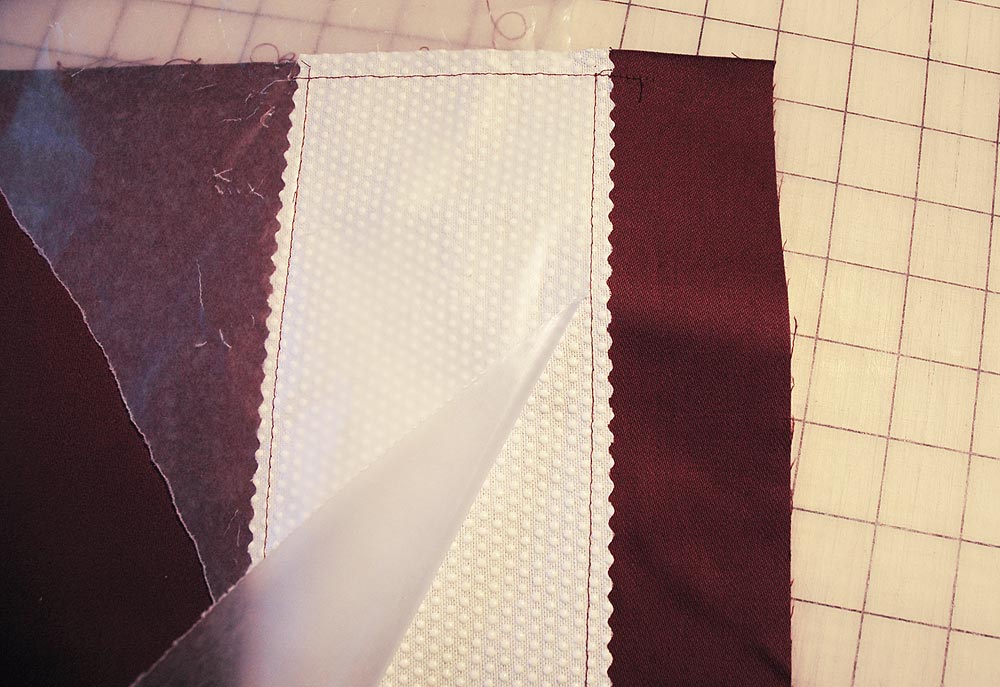
- Edgestitch in place.
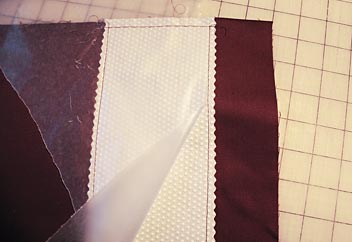
- If gripper fabric does not slide freely under your machine’s presser foot, place a sheet of wax paper over the gripper fabric and stitch on top of the wax paper. The wax paper tears away from the stitching easily when finished. You could also use a Teflon® type foot such as Janome’s Ultra Glide foot.
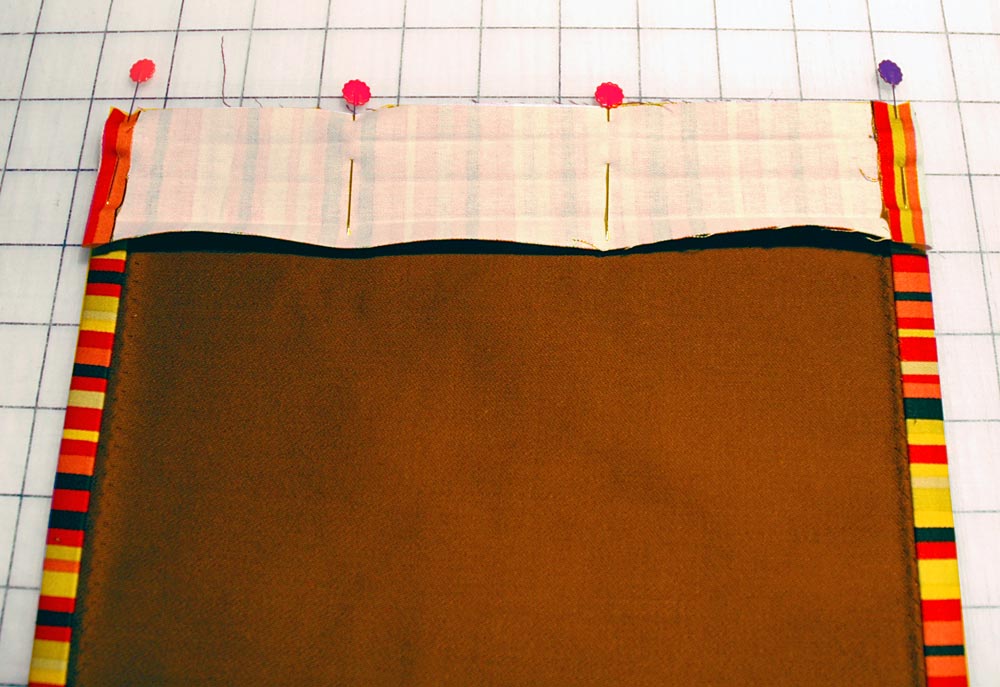
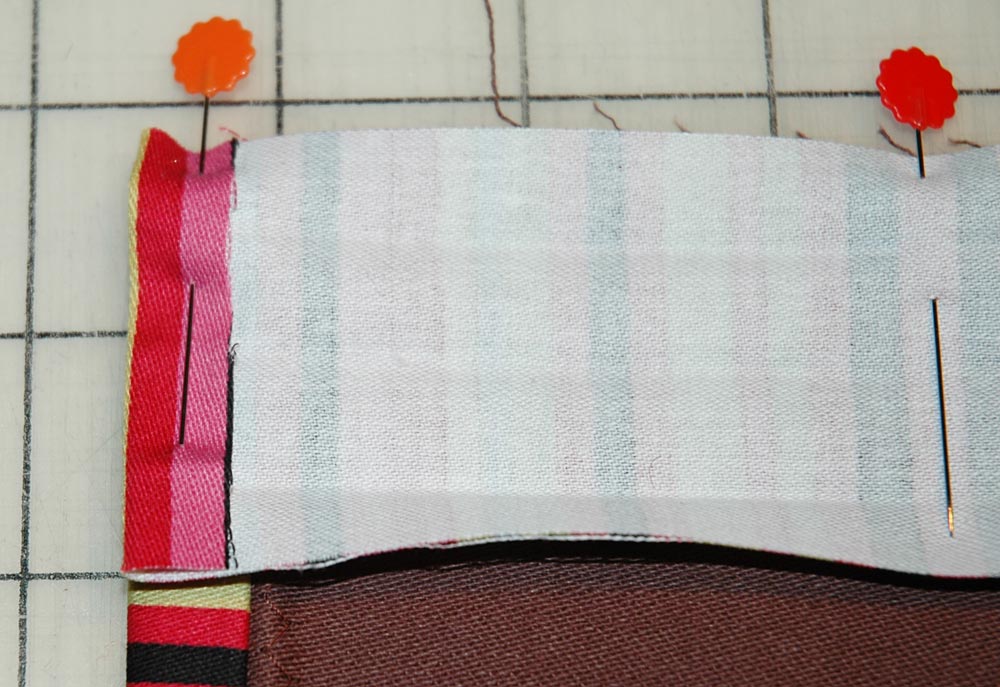
- Take your four pieces of binding fabric and create double fold binding. To do this, fold each strip in half, wrong sides together and press well to set a crease line. Open wrong side up so the crease line is visible and fold each edge in to meet at the crease line. Press both new folds, then fold in half again along the original center crease, and press once more. This will create two strips of binding ½” x 11″ and two strips ½” x 45″. If you are new to creating binding, read our tutorial, Bias Binding: The Basics and Beyond.
- Open up the longer lengths of binding and attach each side of the base fabric.
- Then sew the shorter lengths of binding to the top and bottom edges, overlapping the side bindings at each corner with a folded, finished edge.
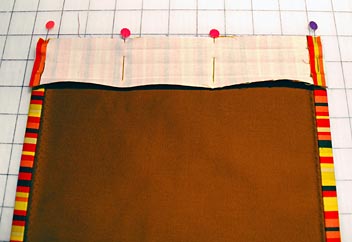
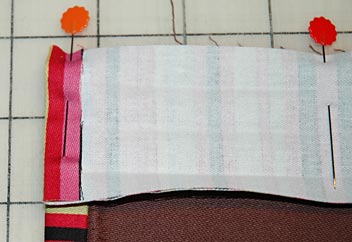
- Again, for step-by-step help attaching binding, see our tutorial, Bias Binding: The Basics and Beyond.
- Set your completed base panel aside.
Constructing the pockets
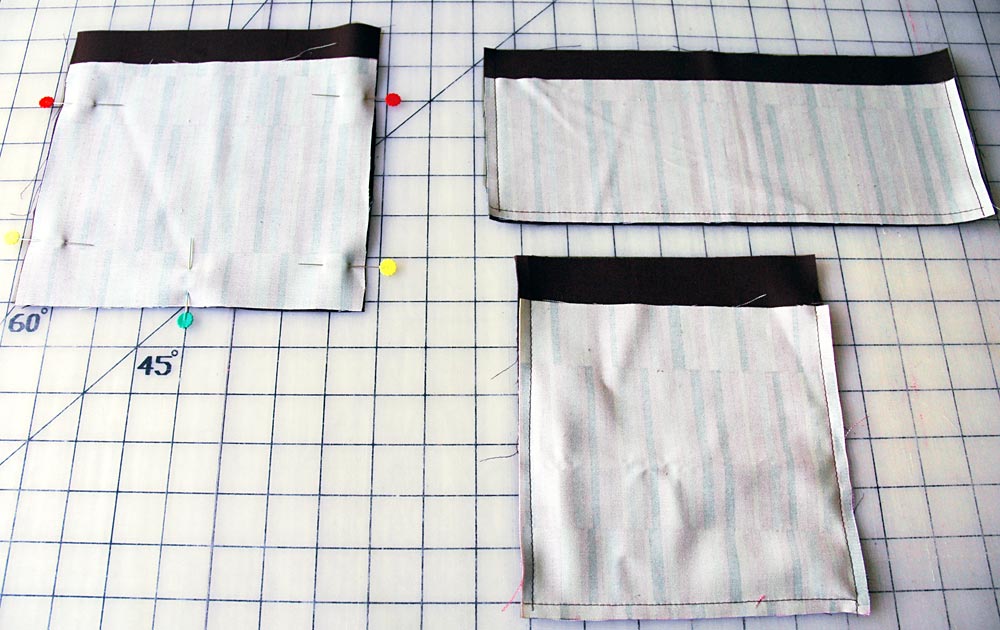
- Lay out all your printed and solid pocket pairs with right sides together. Line up the bottom edges of the solid and printed fabrics. The top edge of the solid fabric should extend 1″ above the top edge of the printed fabric.
- For EACH pair: pin together, and using with ¼” seam allowance, stitch the two sides and the bottom edge. Leave the top edge open.
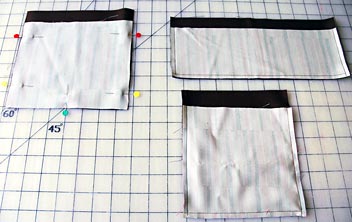
- Trim the bottom corners diagonally ( to make a cleaner point) and turn all the pockets right side out and press. Using a long, blunt tool, gently push out the bottom corners of each pocket. A long knitting needle, chopstick or point turn are all good options.
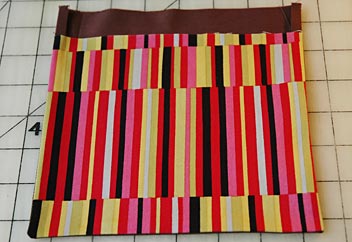
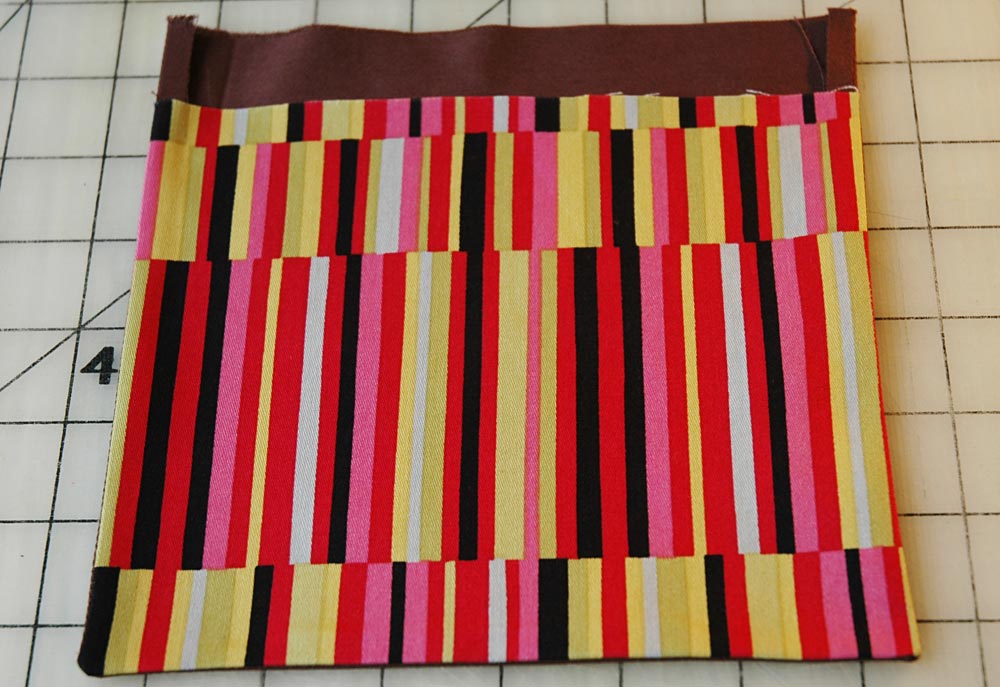
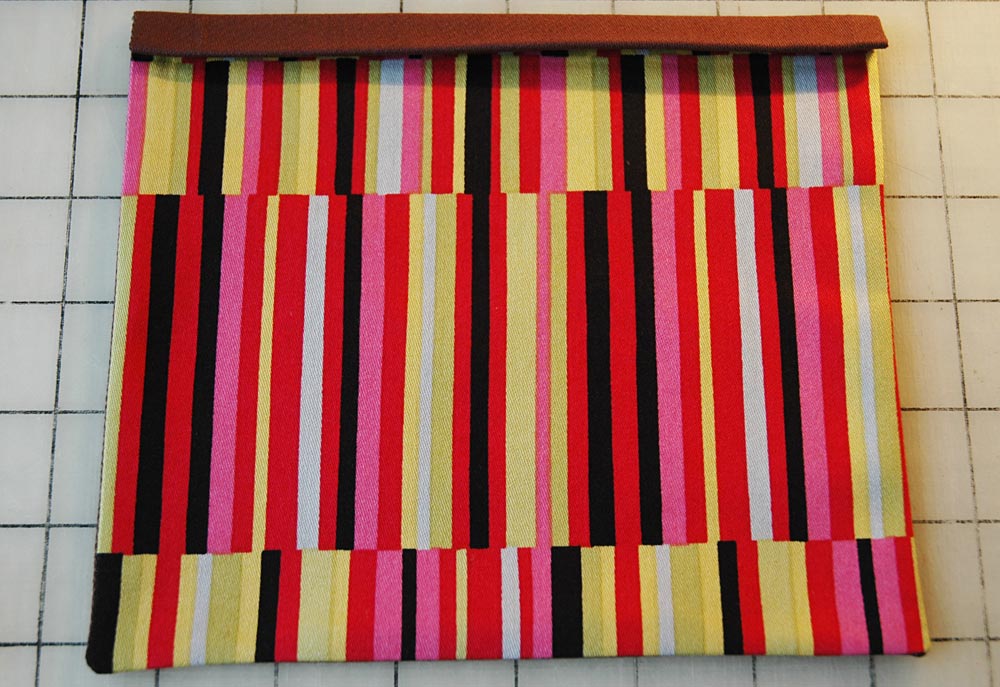
- Take one pocket. Fold down the solid fabric top edge ½” and press. Fold it down another ½” to cover the top raw edge of the printed fabric. Press.
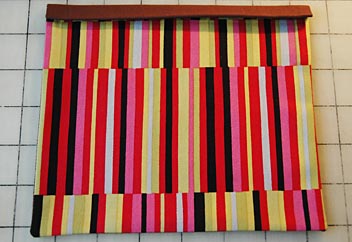
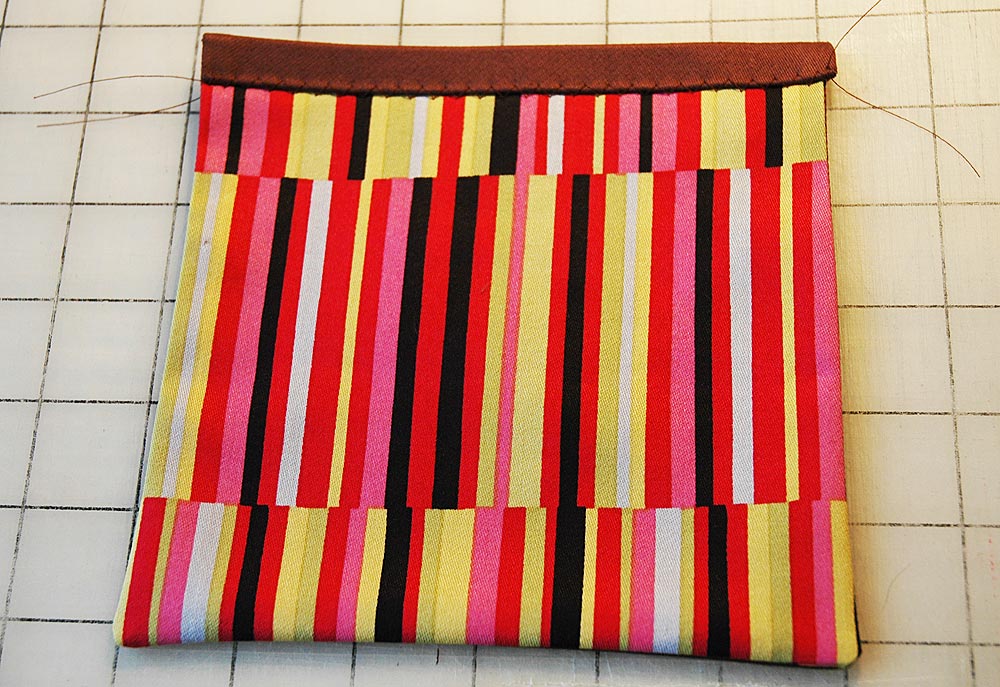
- Stitch along the edge of this folded ‘faux binding’ with a straight or zig-zag stitch in thread to match the solid fabric. We chose a zig zag stitch.
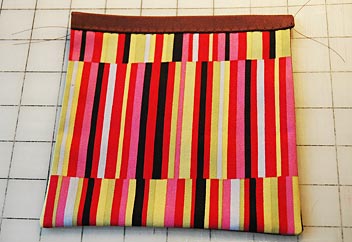
- Repeat with remaining three pockets.
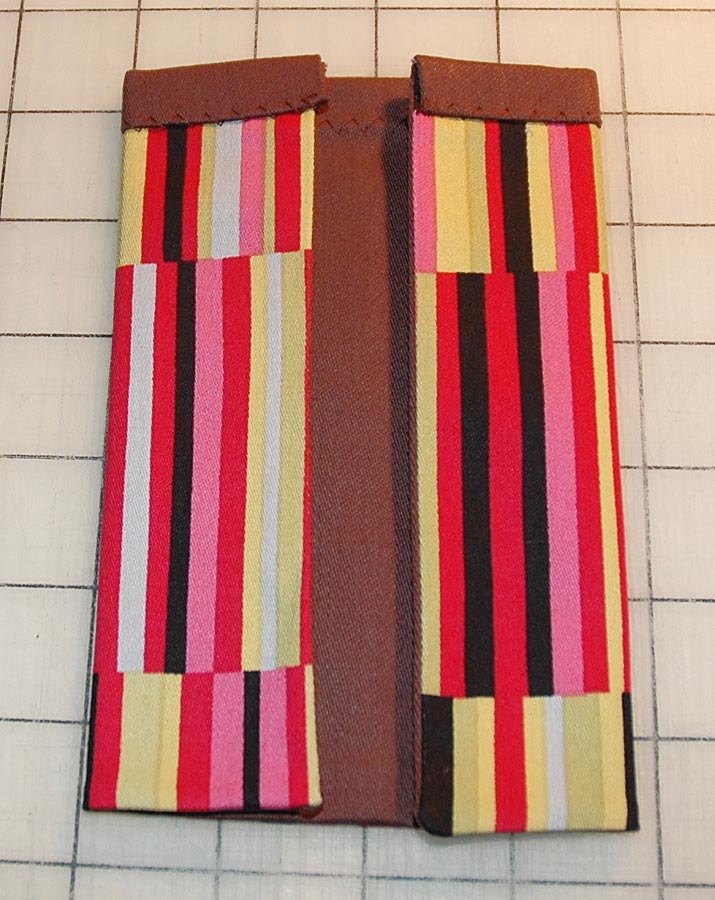
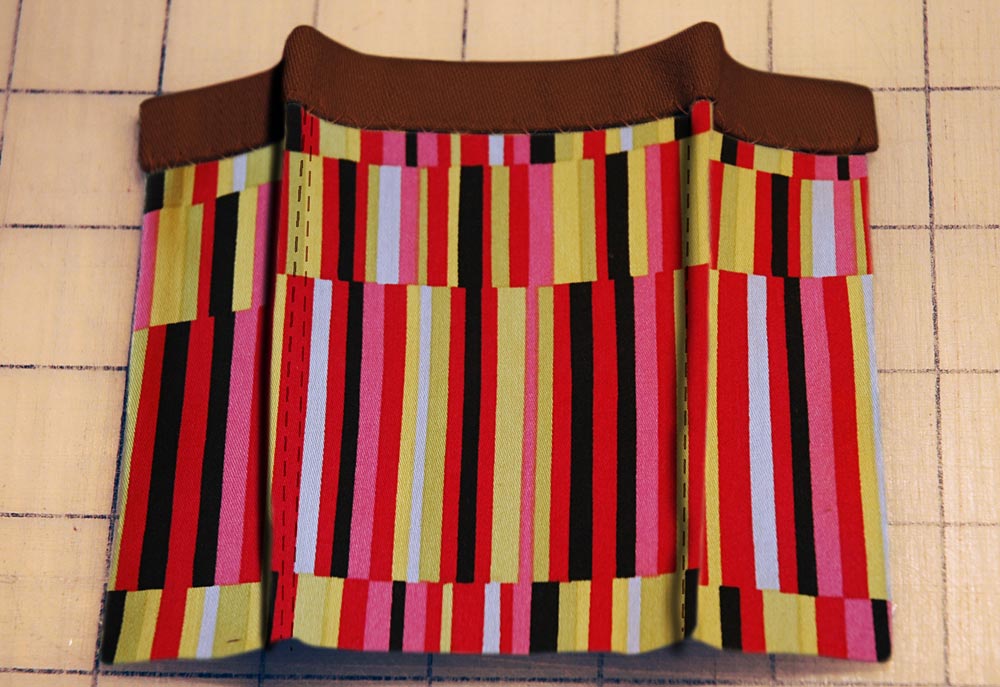
- To form the side gussets, flip over the pocket and fold each side back 1½”. Press to create a firm fold.
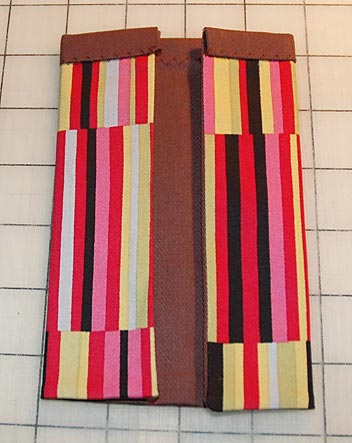
- Re-thread if necessary with thread to best match the printed fabric (we chose to stay with the thread to match our olid fabric). Edgestitch along the fold and then stitch again ⅛” from the first edgestitching to create double stitching lines. Do this along both folds.
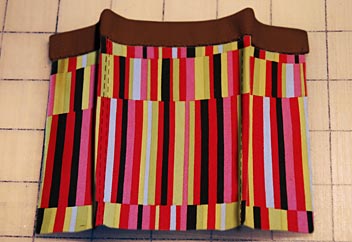
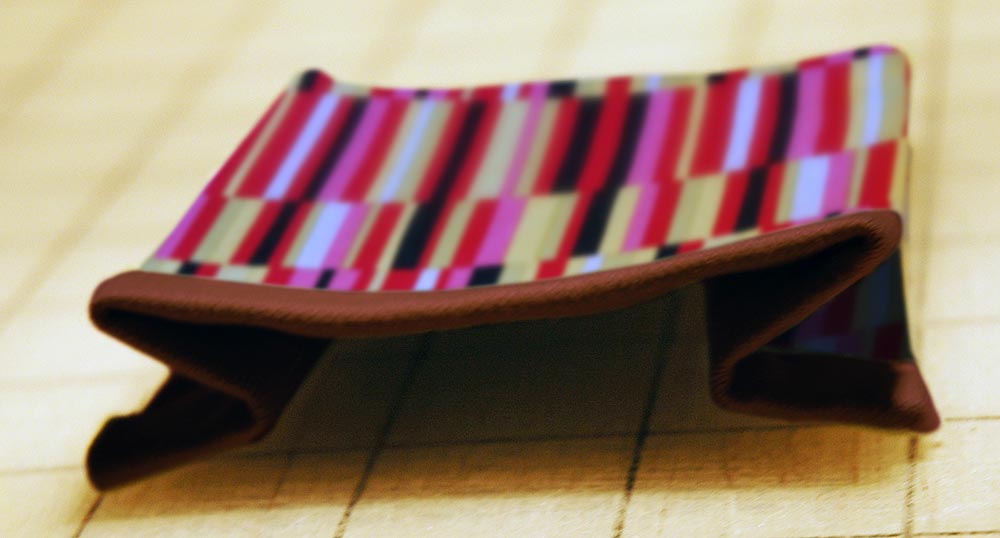
- Fan fold (aka accordion fold) each side flap back towards the side edge. Press firmly to hold these secondary folds.
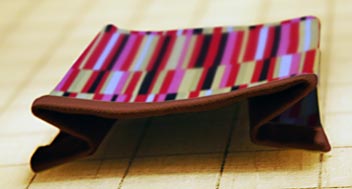
- Repeat for each pocket. Set all the pockets aside.
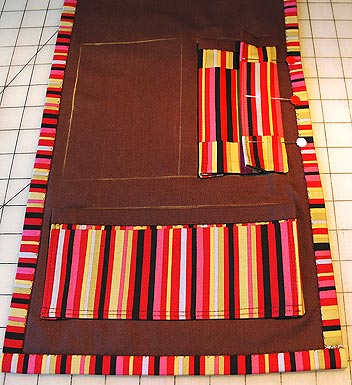
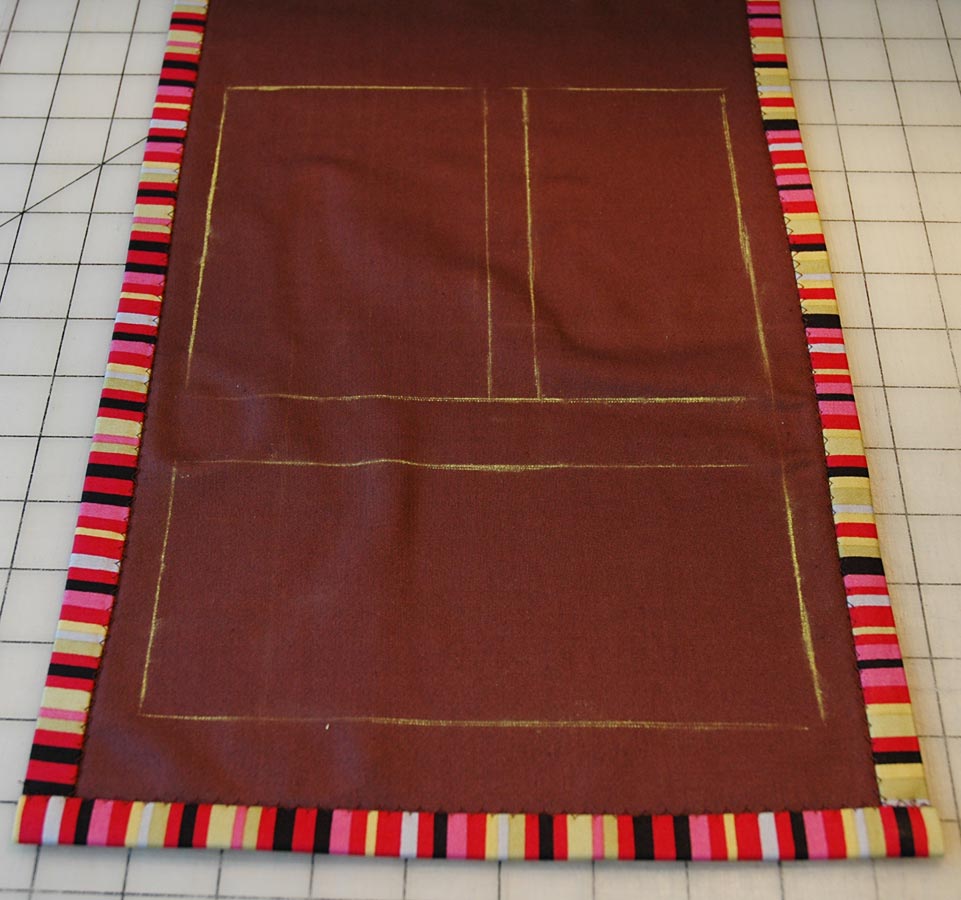
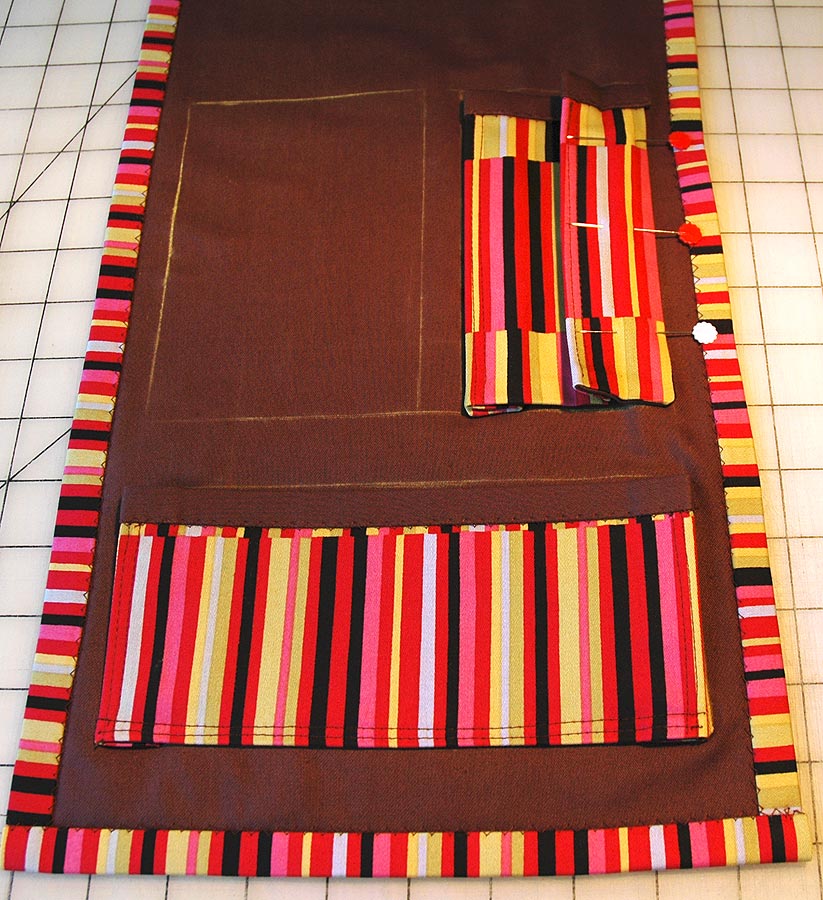
- Lay out your base fabric piece and use your fabric pencil to draw guides for your pocket placement. If you’re duplicating our design: measure 1″ in from the left side edge and draw a 14″ vertical line. Then, measure 1½” up from the bottom edge and draw a horizontal line straight across.
- With the intersecting corner as your guide, draw an 8″ wide x 3½” tall rectangle. Measure 1″ up from the top of this rectangle and draw another horizontal line straight across. With the new intersecting corner as your guide, draw a rectangle 4″ wide x 6″ high. From the right edge of this rectangle, measure 1″ to the right and draw a third rectangle. It should be even along with bottom with the other but only 3″ wide x 6″ high. The far right edge should be perfectly aligned with the right edge of the pocket below.
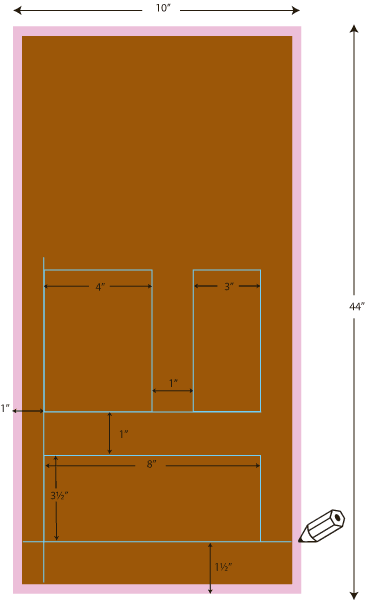
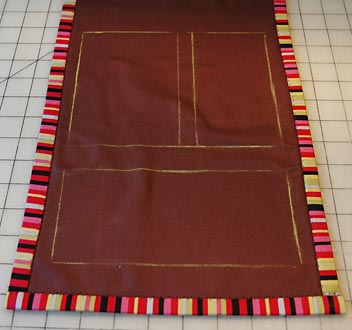
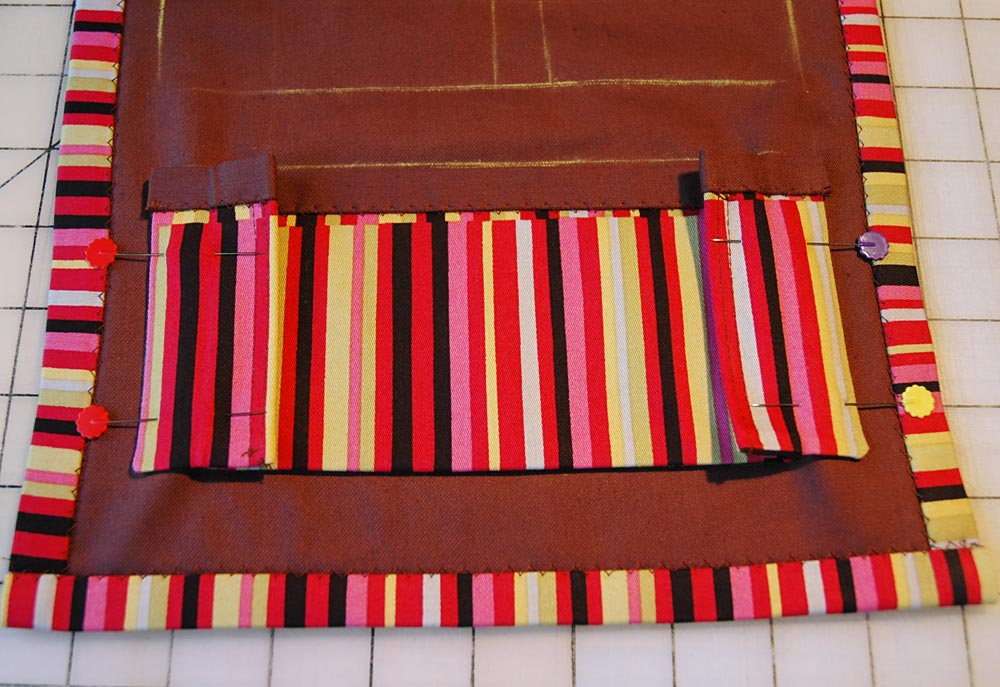
- Start with the largest pocket (in our sample, the #3 pocket). Open up the pocket so it is flat and the sewn pleats are facing towards the center of the pocket. Using your drawn lines as guides, square up the pocket, lining up the right hand side of the pocket with the right vertical line and the bottom of the pocket with the bottom horizontal line.
- Pin the outermost seamed edges to the base fabric along both sides.
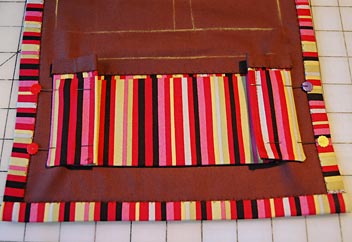
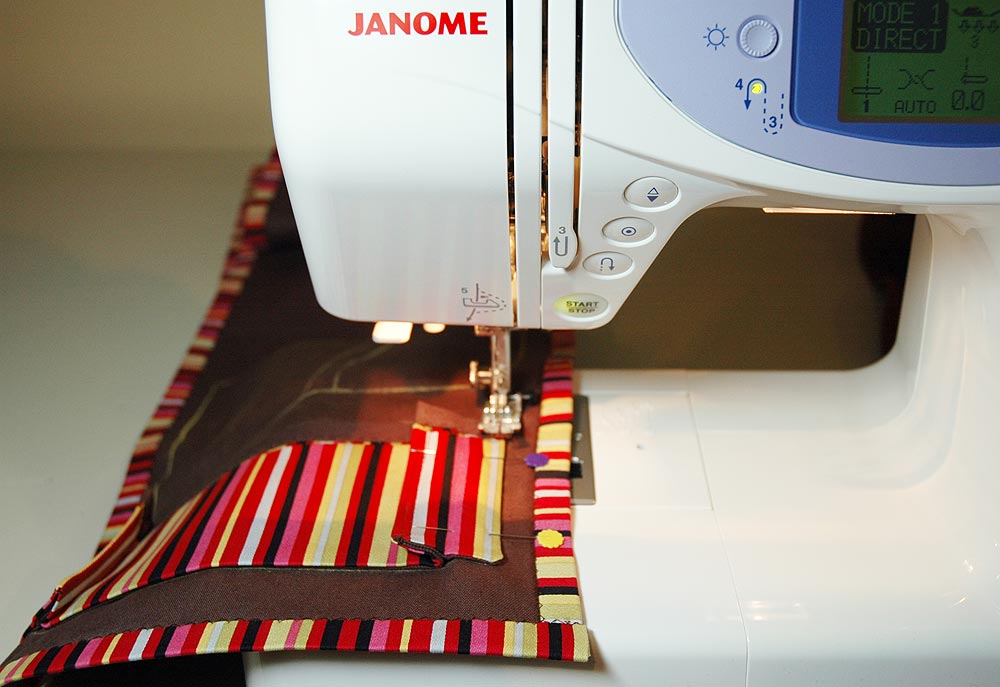
- Edgestitch each side of the pocket to the fabric base, then stitch again about ⅛” from the first edgestitching line. Leave the bottom edge open. Remove from the machine.
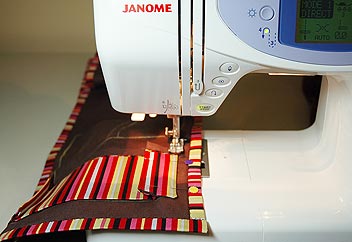
- Fold the gussets back out to their final position (recreating that “fan or accordion” fold from above) and pin the the bottom edge of the pocket to the base fabric. Stitch the bottom closed by edgestitching through all layers, then stitch again about ⅛” from the first edgestitching line. Start and stop these seams at the corners to best match the vertical stitching lines of the gusset’s fold.
- Lay pocket #1 on the base fabric, lining up the bottom and left side edge with your drawn lines on the left side and bottom. Pin and stitch as indicated in the steps above.
- Lay pocket #2 on the base fabric, lining up the bottom and left side edge with your drawn rectangle. Pin and stitch in the same manner as the other pockets.
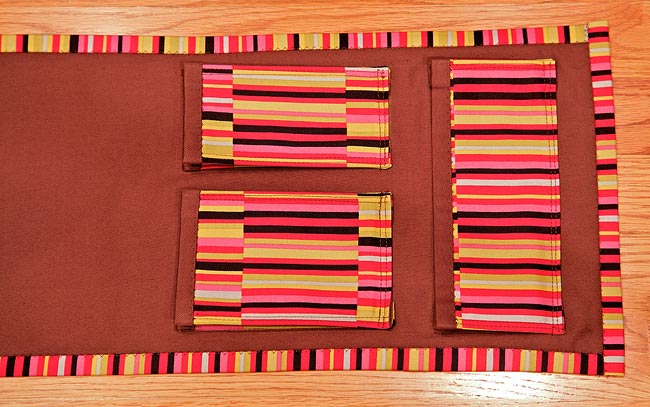
- Slide your caddy under your chair cushion and up and over the arm. Adjust so the pockets fall within arm’s reach.
Hints and Tips
What are all those double stitching lines for?
These pockets need to hold some heavy things, and the gussets need to flex in and out repeatedly. The double lines of stitching keep the seams nice and secure. Double lines for double strength!
Stitching through the layers
When you’re sewing the pockets to the base fabric, and you get to the corners, you will be stitching through a lot of layers! Go slowly and carefully. Rather than using the foot pedal, sometimes it helps to use your machine’s hand wheel to crank through the last half to quarter inch, and go stitch-by-stitch.
This is also the time to use your lock stitch button if you have one. If you don’t, hit reverse and use the hand wheel again to back tack a few stitches.
Project Design: Alicia Thommas
Sample Coreation: Dianne LeBlanc