






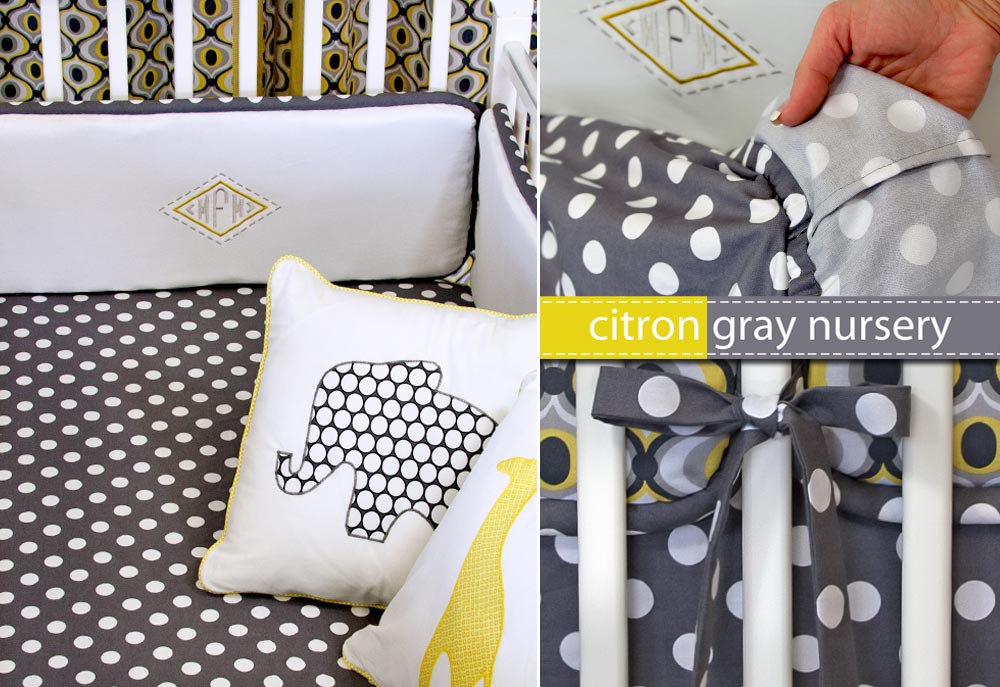
You can never have too many baby bed linens. Changing the crib several times in one day is not unheard of… let’s just say babies are kind of “leaky.” This super simple crib sheet takes just a couple yards of fabric, a length of elastic and about an hour of your time. Why settle for boring old white sheets when it’s so easy to add color and design, like our modern citron and gray combination?
This project is sized for a standard 52″ x 28″ x 6″ deep crib mattress and is based on an original tutorial by Joanna Armour for Michael Miller Fabrics.
If you are loving the whole look, we have a tutorial for the stylish crib bumpers as well as tutorials for the cute animal appliqué pillows and another fitted crib sheet tutorial in cozy fleece.
Sewing Tools You Need

- Sewing machine and standard presser foot
Fabric and Other Supplies
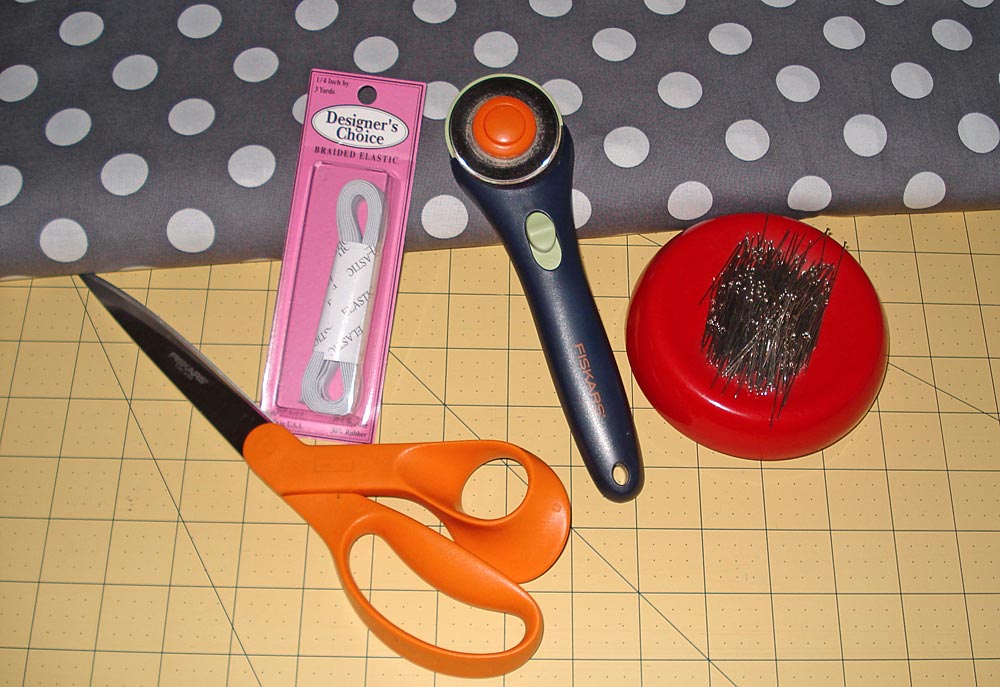
- 2 yards of 44-45″ wide print fabric: we originally used Gray Quarter Dot from the Citron-Gray Color Story by Michael Miller Fabrics
- 2 yards of ¼” flat elastic
- All purpose thread
- See-through ruler
- Fabric pen or pencil
- Iron and ironing board
- Scissors or rotary cutter and mat
- Tape measure
- Seam gauge
- Seam ripper
- Straight pins
- Safety pin
Getting Started
- From your fabric, cut ONE rectangle 45″ wide x 69″ long. For most fabrics, this will mean that you use the entire width of the fabric (WOF), including the selvedge.
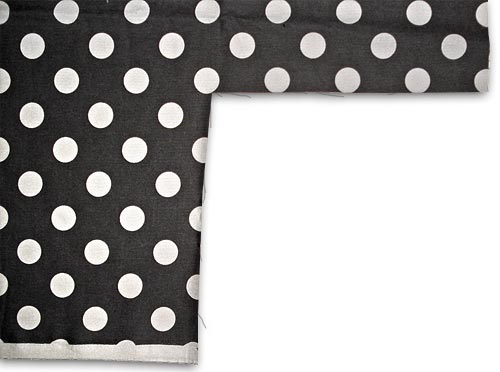
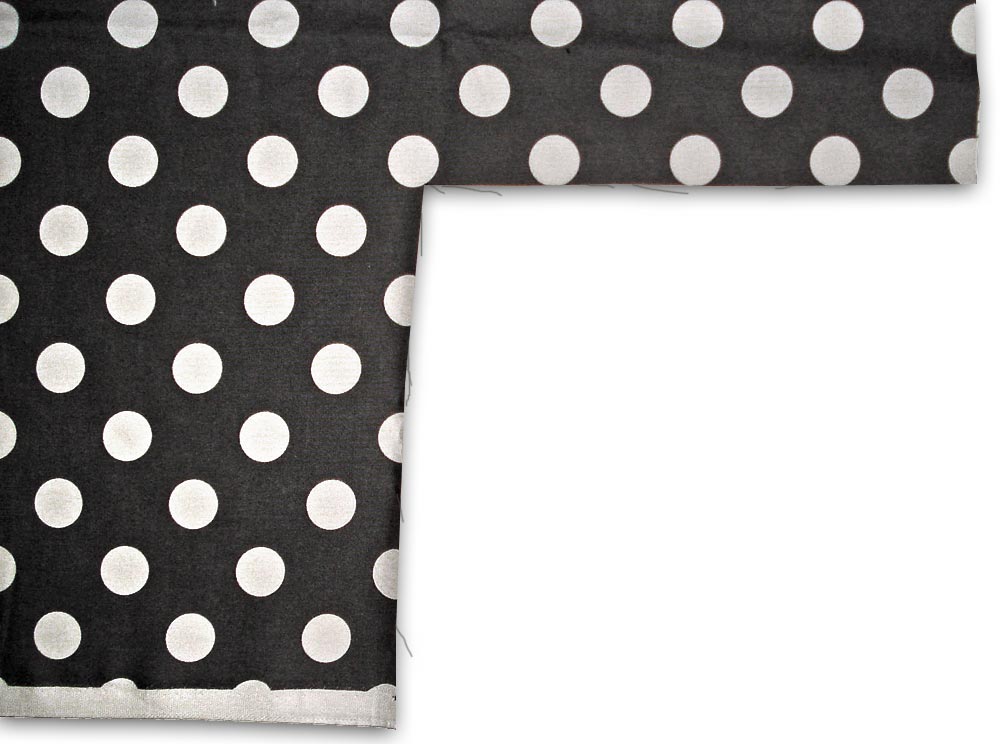
- Using your see-through ruler (or a square you’ve drawn and cut from paper as a pattern), draw an 8″ x 8″ square at each corner of your fabric rectangle.
- Cut out the 8″ x 8″ square from each corner.
At Your Sewing Machine & Ironing Board
- This crib sheet features enclosed French Seams. This step is not required, but we recommend it since crib sheets get washed frequently. An enclosed French Seam helps prevent raveling and gives the inside of your sheet a nice, finished look.
NOTE: If you’d prefer a different finish, you can review our four-part series on machine sewn seam finishes. - To make each corner’s French Seam, first fold the corners WRONG sides together. You are matching the raw edges of each corner cut, which will create a little “triangle fold” in the fabric at the inside point of the seam. Pin in place.
- Stitch, using a ¼” seam, wrong sides together from top to bottom.Trim down the finished seam allowance to ⅛”.
- Make this seam at each corner.
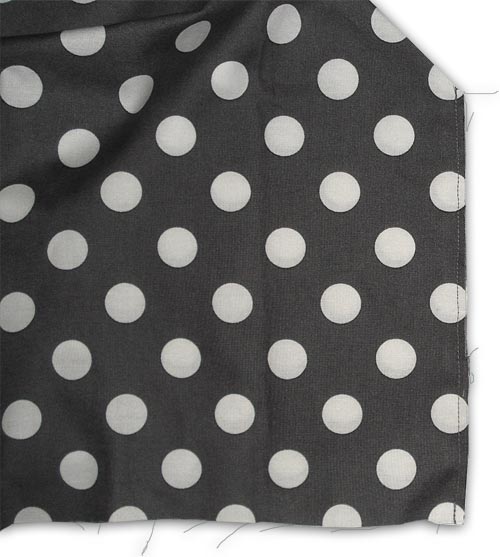
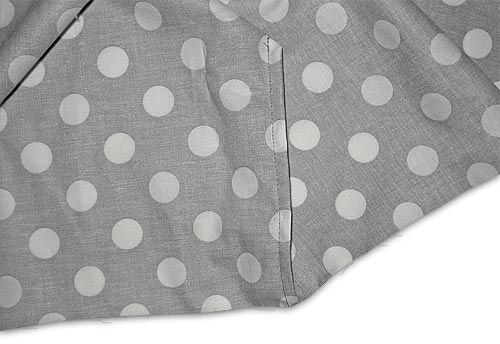
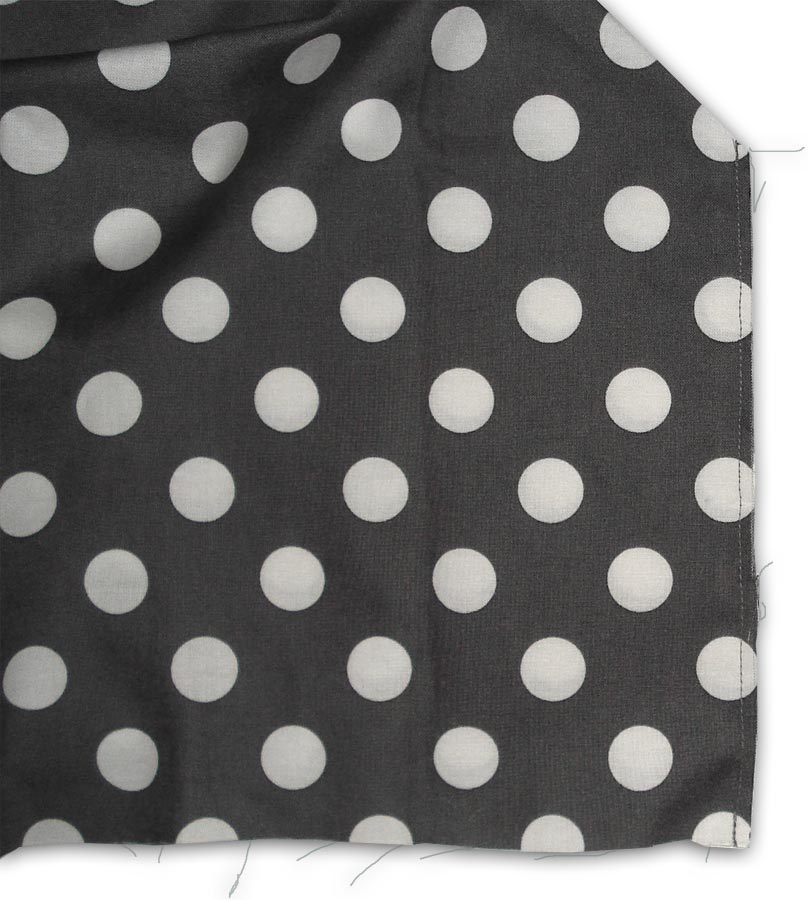
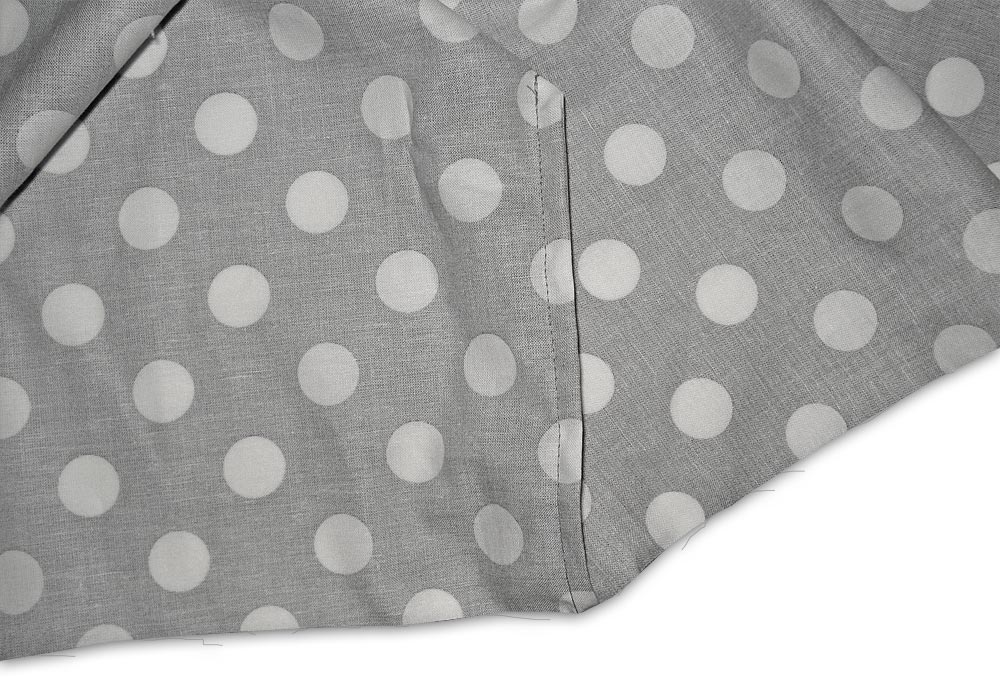
- When all four corners are finished, turn the sheet wrong side out ( so it is now right sides together), and re-pin each corner for an additional seam. You are making the same four seams, but now the fabric is right sides together and you will be encasing your original seam in the new seam. Pin each corner seam in place.
- Using a ¼” seam allowance, stitch together from top to bottom.
Create the casing tunnel for the elastic
- To create the casing tunnel, make a ⅜” double-fold hem. To do this, fold under ⅜” and press all around the bottom raw edge, then fold under and press an additional ⅜”.
- Edgestitch close to the inner fold all the way around, leaving an approximate 2-3″ opening between your starting and ending points. This is where you will insert the elastic. Remember to lock your seams at both ends, ie. at either side of the opening.
- Cut the elastic to a 60″ length.
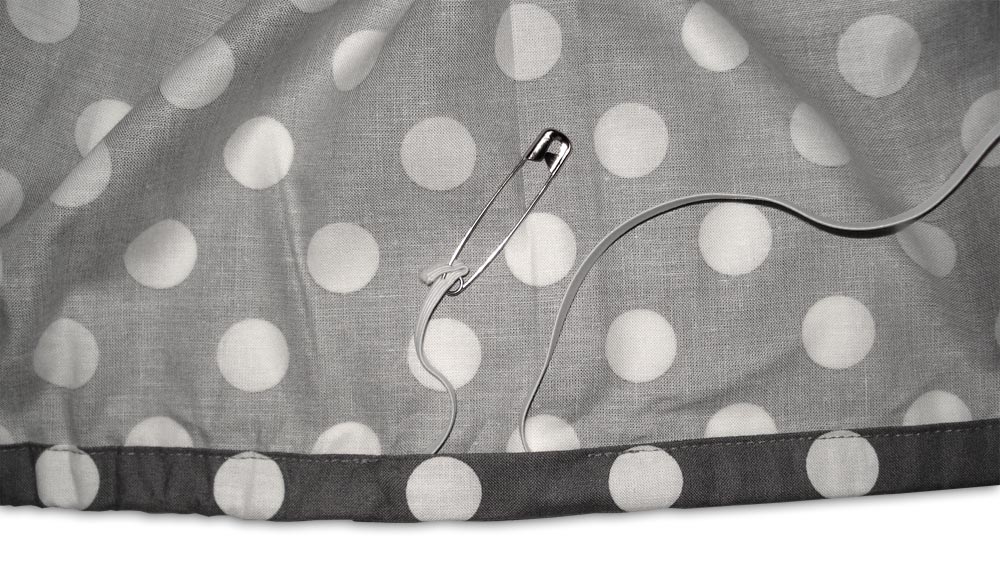
NOTE: We used 60″ of elastic for our sample. Some folks who have made the sheet recommend using the full 2 yards (72″). - Attach a safety pin to one end of the elastic. Slide the safety pin into the opening of the casing and work it all the way around until it comes out again through the opening. Gather the fabric along the length of the elastic as you go, so the unpinned end of the elastic does not accidentally get pulled inside the tunnel. It also helps to hold on to 6″- 8″ of the unpinned elastic end to keep it from slipping into the casing.
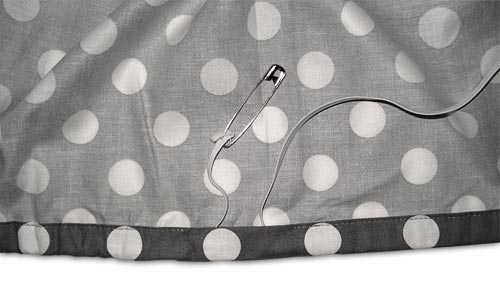
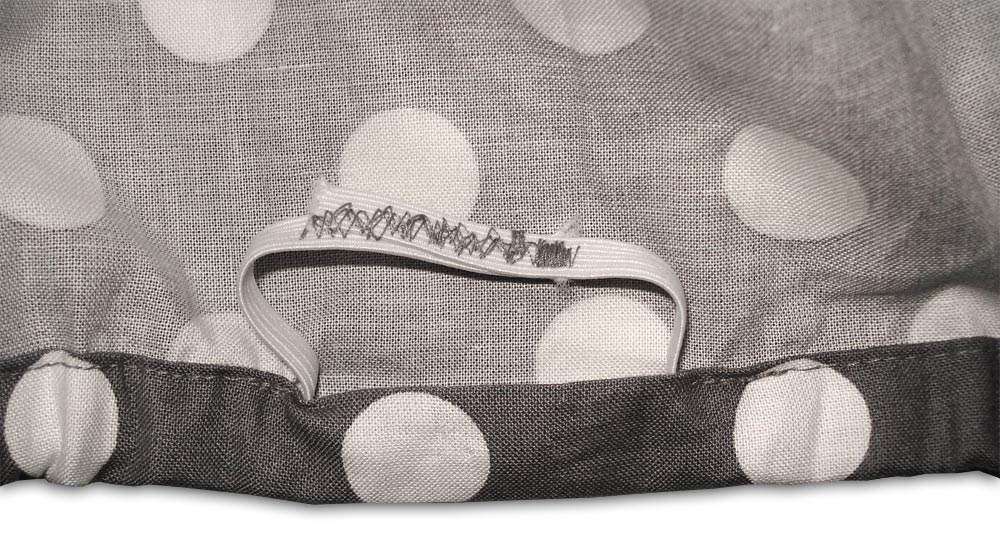
- When the safety pin comes out of the other side of the tunnel opening, remove the safety pin and overlap the two ends 2″- 3″. Pin in place (or just hold the ends together), and secure with several rows of zigzag stitching. Be generous with your stitching so the elastic ends do not pull apart. You want to be able to stretch the sheet over and over again; baby linens get changed a lot !
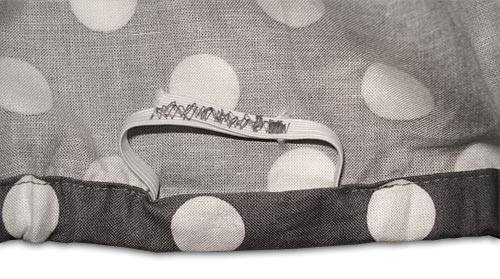
- Pull the tunnel hem straight so the remainder of the elastic disappears inside the tunnel.
- Edgestitch the tunnel opening closed, matching your new seam to the start and end points of the existing seam.
Project Concept: Alicia Thommas
Sample Creation and Instructional Outline: Gregory Dickson