






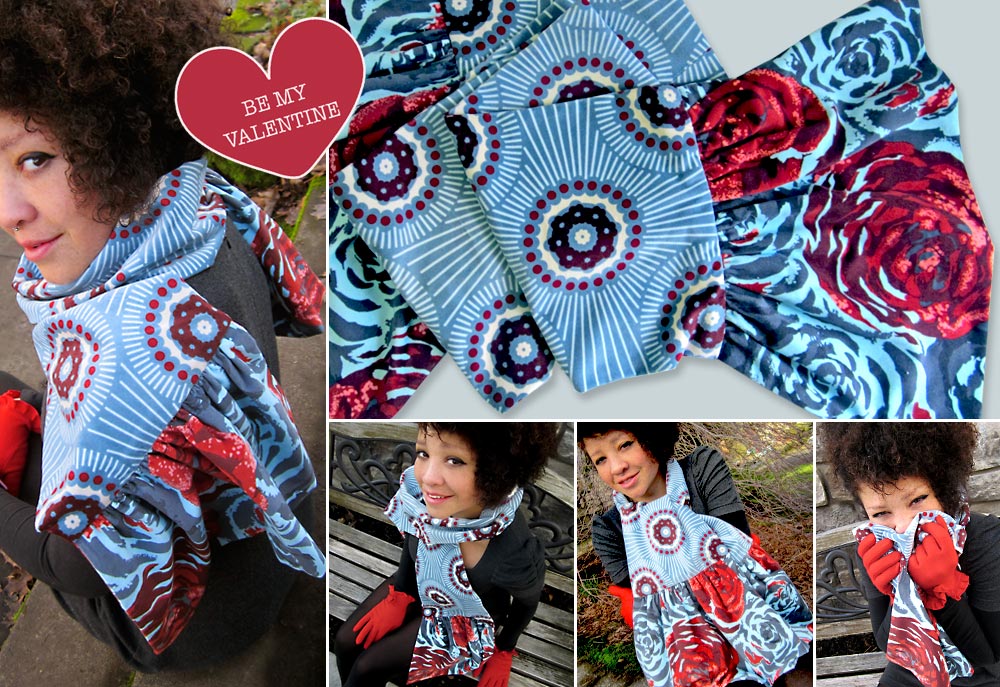
Quilting cotton might be your go-to, but it’s fun to experiment different fabric types. Called ‘substrates’ in the trade, this refers to the base fabric onto which the design is applied. For this gorgeous scarf, we originally used two velveteens from an early Anna Maria Horner collection, but velveteen is a substrate that is once again popping up as an option from a variety of manufacturers.
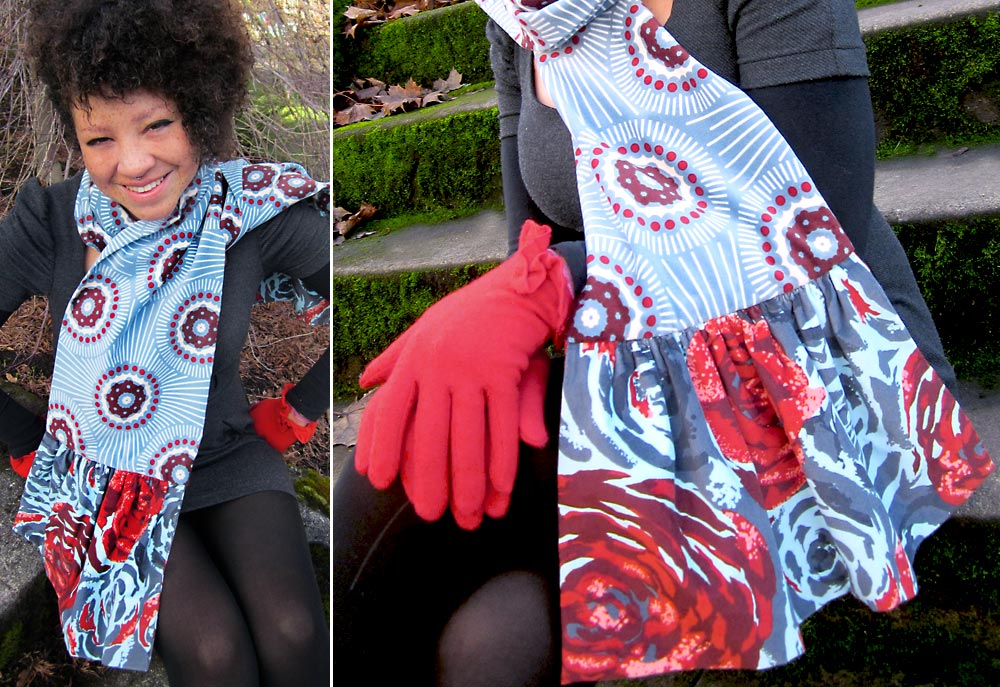
This would be a fun, and useful, project to chase away the winter blues and still stay toasty warm. Ours is done in rich Valentine’s Day colors and would make a lovely gift. No need for wrapping paper; simply tie the scarf itself into a big beautiful bow.
When a fabric has a ‘fuzzy’ surface like velveteen, velvet, velour or corduroy it is called nap. Nap has direction and can change color when viewed from a different angle. It’s important to pay attention to the direction of the nap when laying out and cutting velveteen so pieces that will be next together when sew are cut with the nap going in the same direction.
We used velveteen for this project, which is a low-nap cotton velvet. It must be treated with care when you press it. For true velvets, especially silk or rayon velvet, the best option is to use a needle board or Velvaboard (a June Tailor product) to press out wrinkles. But with velveteens and corduroys, it’s okay to steam them lightly from the back, stretching and smoothing out the wrinkles with your hand. During pressing, it’s also a very good idea to lay the velveteen right sides together with another piece of velveteen. This allows the naps to mesh together to prevent crushing. Some folks also swear by the technique of placing a plush bath towel on their ironing boards and pressing/steaming napped fabrics against it. This is our favorite technique for corduroy.
Sewing Tools You Need
- Sewing Machine and standard presser foot
- Even Feed/Walking foot or engage your machine’s built-in feeding system; we used the Janome AcuFeed™ Flex built-in fabric feeding system throughout much of the construction
Fabric and Other Supplies
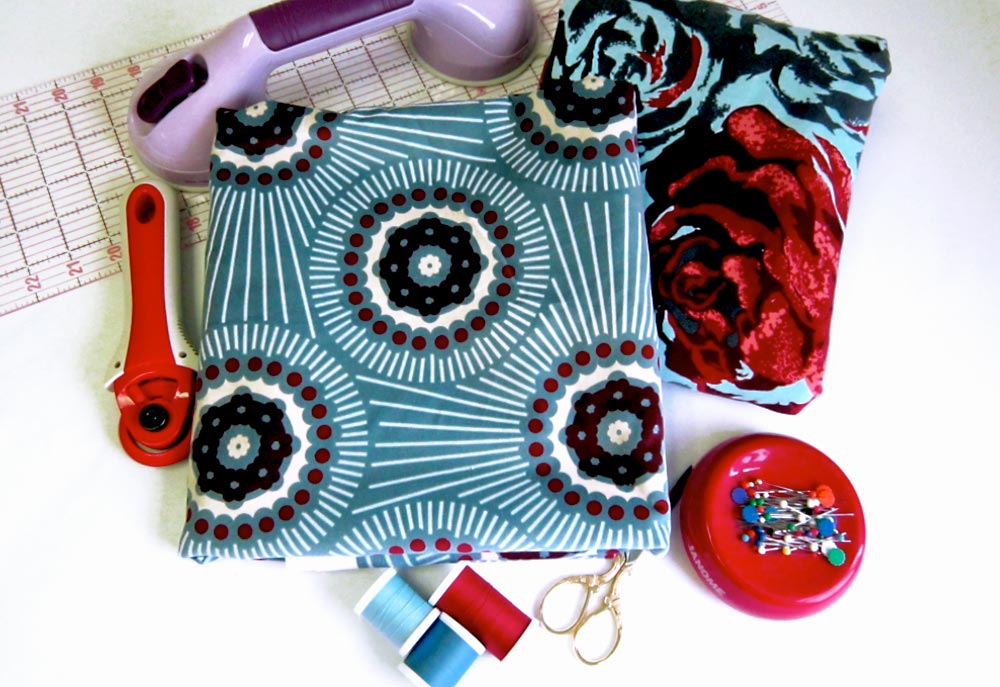
- 1 yard of 54″ velveteen for the body of the scarf, we originally used Bubble Burst Sparkle from the Innocent Crush Velveteen collection by Anna Maria Horner for Free Spirit Fabrics
- ¾ yard of 54″ velveteen for the ruffles, we originally used Turn of Events from the Innocent Crush Velveteen collection by Anna Maria Horner for Free Spirit Fabrics
- See-through ruler
- Iron and ironing board
- Fabric pen or pencil
- Scissors or rotary cutter and mat
- Straight pins
- Tape measure
- Seam gauge
- Seam ripper
- Hand sewing needle
Getting Started
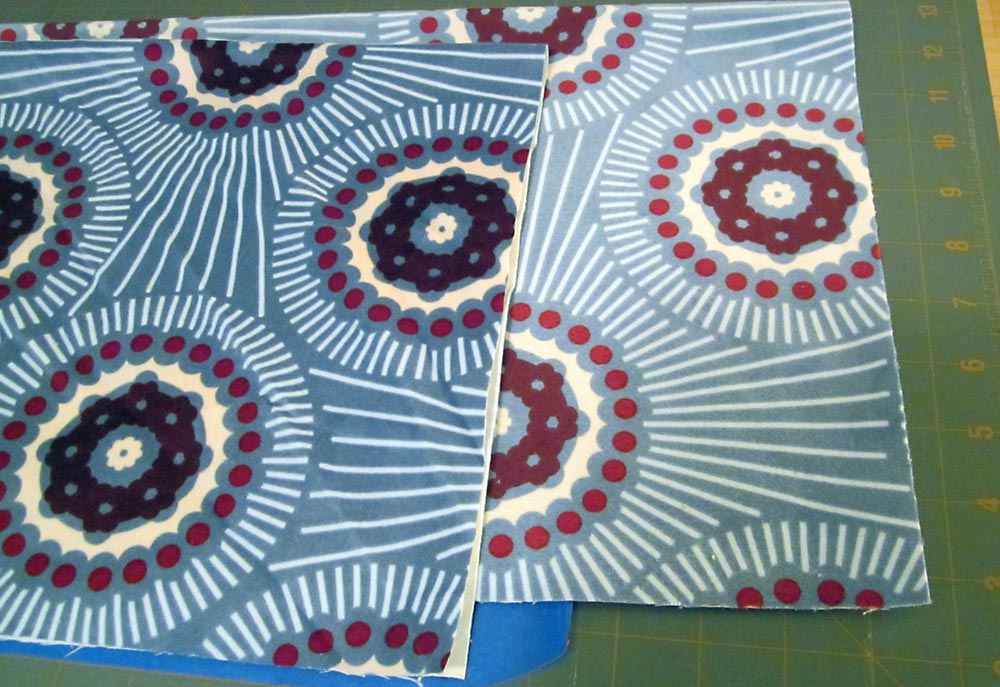
- The main fabric for the scarf (Bubble Burst Sparkle in our sample) should be cut 51″ long x 21″ wide. If you have a random motif, you can simply make a nice, straight cut. The Anna Maria Horner velveteen we chose is 54″ wide with a bold circular “bubble burst” motif. We wanted this motif centered in both directions for the best finished look. To do this, we needed to do a little “motif measuring” prior to cutting.
- First figure the center point of each direction. One half of 21″ is 10½”. One half of 51″ is 25½”.
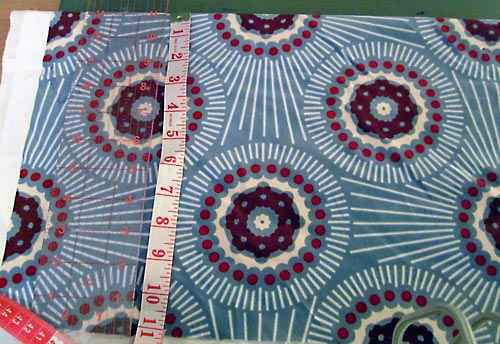
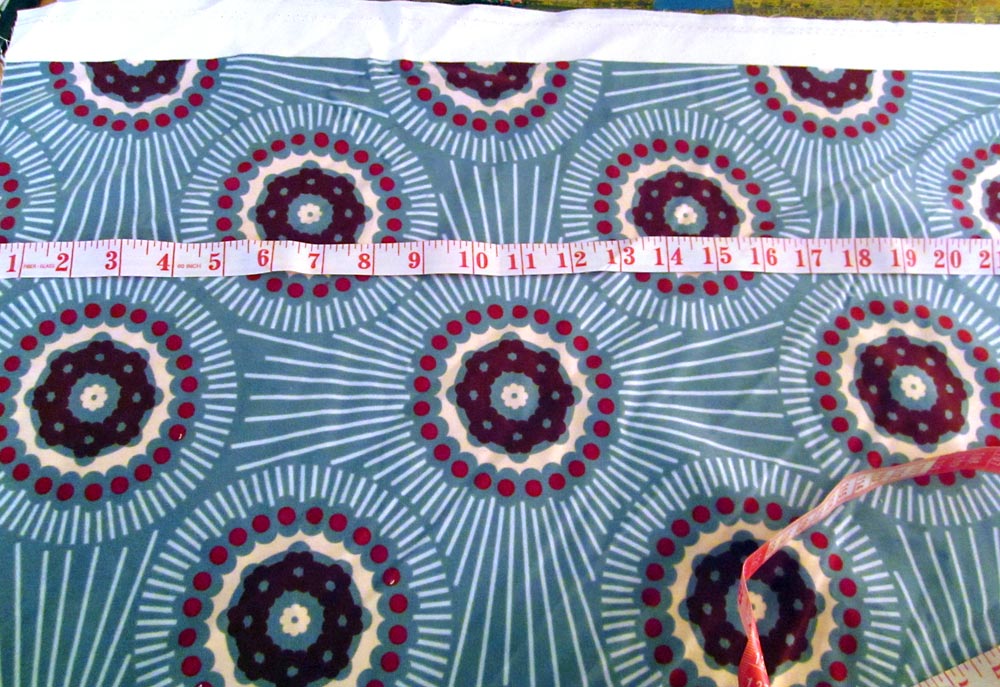
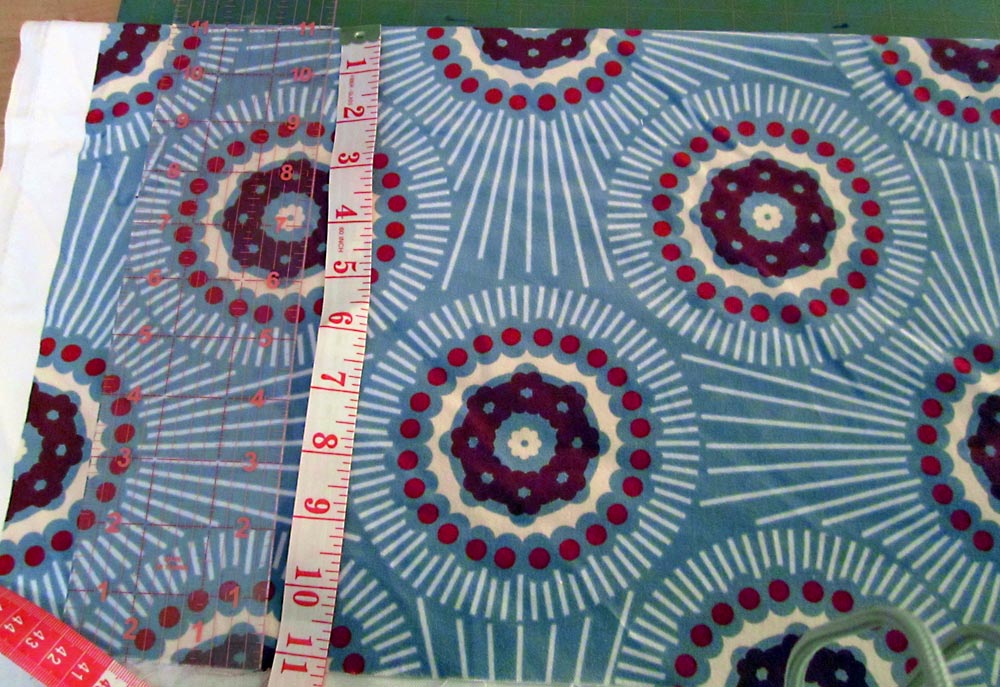
- To determine the cut width, use a see-through ruler or tape measurer to find a motif that is at least 10½” from the cut edge.
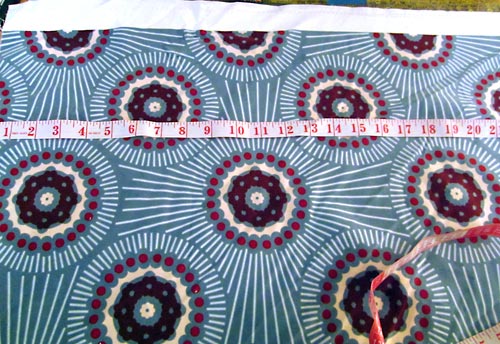
- Carefully fold the fabric along this centered imaginary line. Place a few pins to keep the layers from shifting.
- Cut through both layers exactly 10 ½” from the fold.
- To determine the cut length, unfold the width cut you just made.
- Find the motif that is at the center and fold the fabric lengthwise on the center of that motif. If you cannot get a single motif to be centered, try to center the space between two motifs. With the fabric piece folded, place a few pins as you did above. Measure 25½” from the fold and cut through both layers.
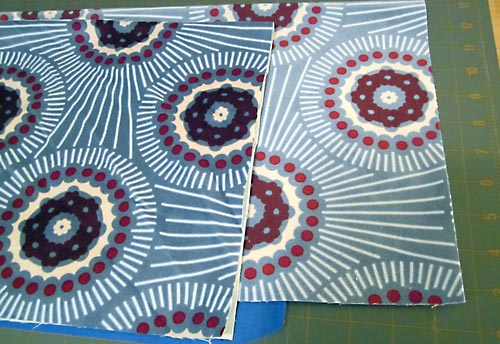
- You now have one piece, centered in both directions, that should measure 51″ x 21″
- From the fabric for the ruffles (Turn of Events Vintage in our sample), cut TWO squares 21″ x 21″.
At Your Sewing Machine & Ironing Board
- Fold the main fabric piece in half, right sides together, so it now measures 51″ x 10½”. Pin in place to form a long tube.
- Using a ½” seam allowance, begin to sew along the 51″ side. Stop a little less than half way and lock your seam. Advance about 6″, leaving an opening in the middle for turning right side out later. Lock your seam and start sewing again to finish your seam.
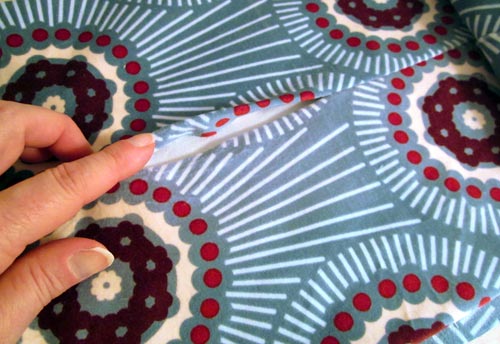
NOTE: The other thing about working with velveteen is that it tends to creep when you stitch it. If you have an Even Feed/Walking foot of a built-in fabric feeding system, such as the Janome AcuFeed™Flex system we often use, this is the time to use it. If you do not have either, check your machine’s manual to see if you can reduce the pressure on the presser foot. Use a lot of pins, keep the fabric taut as it feeds through the machine by pulling on it gently both in front of and behind the needle, and go slowly. Sew right up to each pin before you remove it. Raising the presser foot now and then and readjusting the fabric can also help reduce the creep. - Roll the tube so the seam is centered down the length of the scarf.
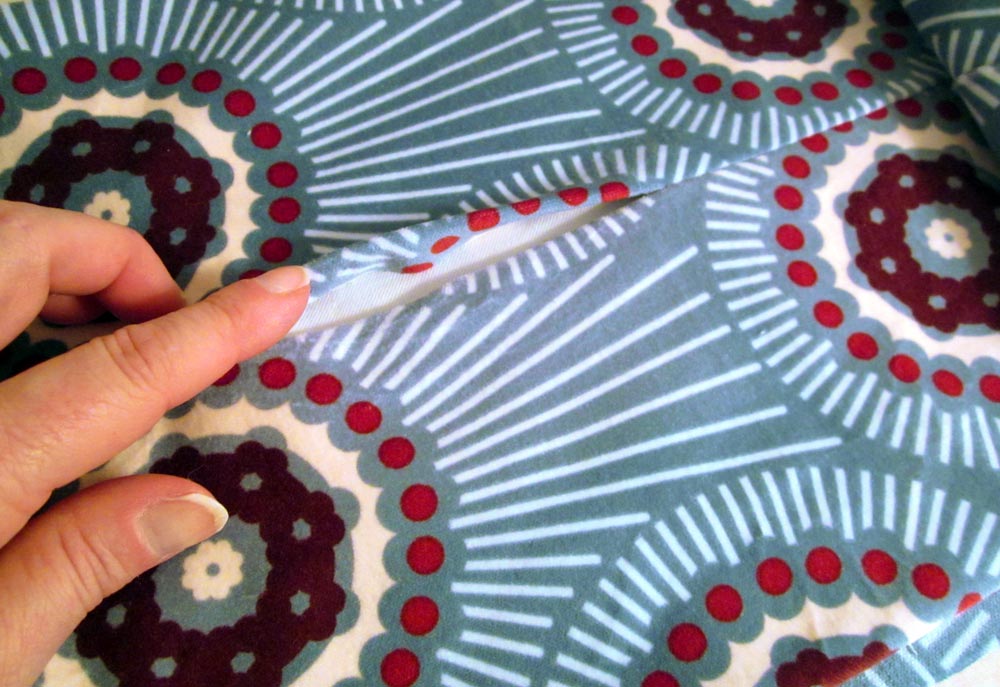
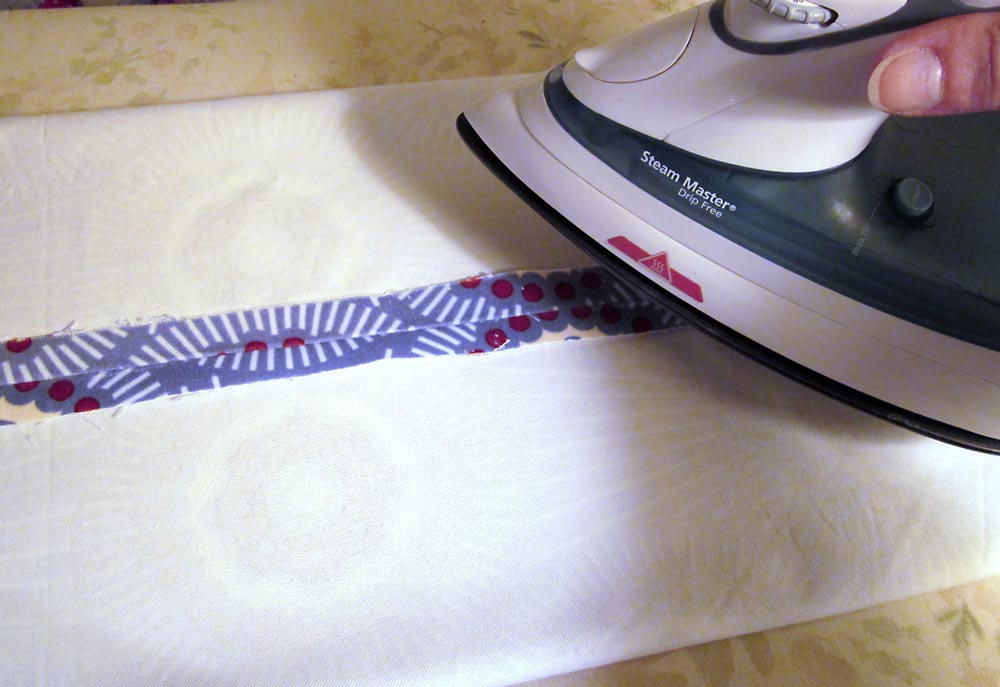
- Steam lightly so the seam allowance lays open and flat.
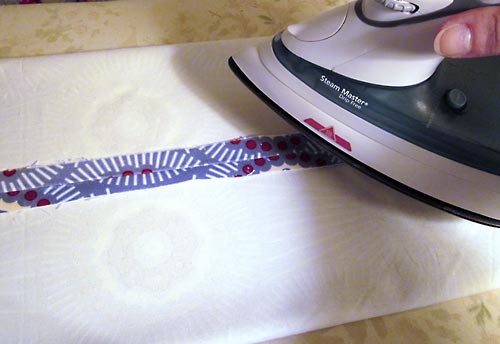
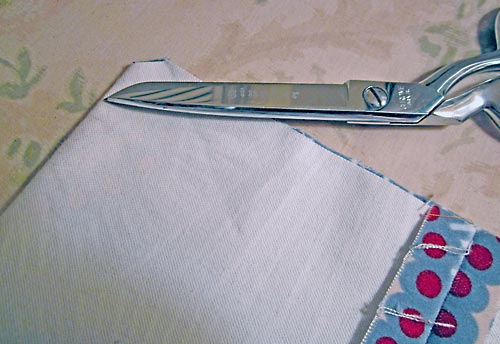
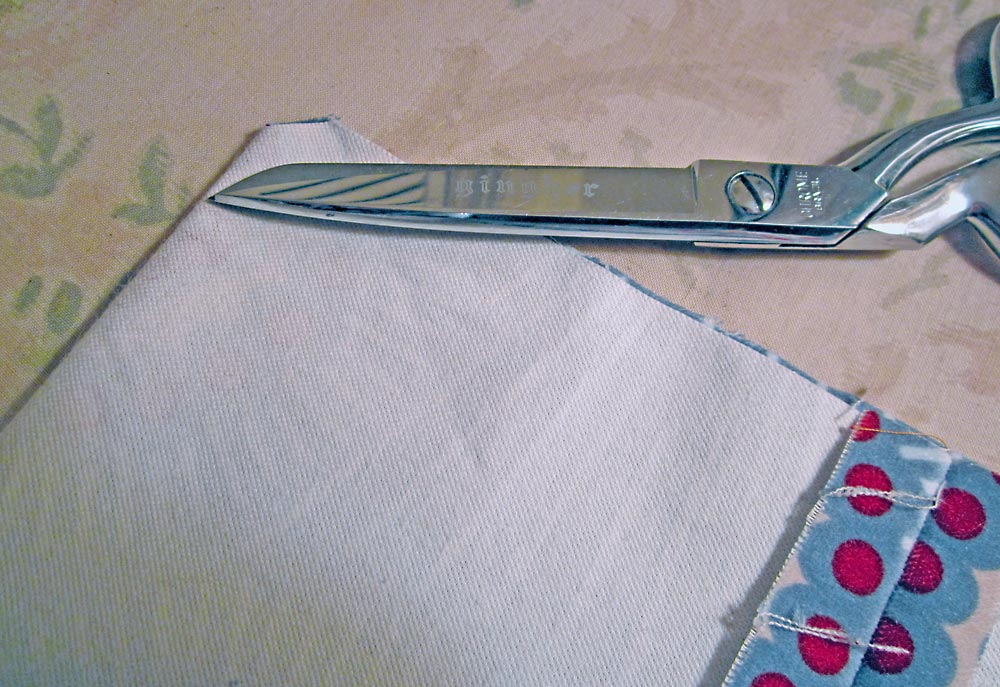
- When flat and with the seam exactly in the center, snip off a tiny bit of each corner (less than ½”). This helps mark the fold, so later, when you are inserting the ruffle, you have reference points to insure your tube will finished with a centered motif and the seam down the middle of the back.
Ruffles
- Fold one of the 21″ x 21″ ruffle pieces in half lengthwise (21″ x 10½”), right sides together.
NOTE: The folded edge is the bottom edge of the ruffle; be sure to remember this if your fabric has a directional motif. - Using a ½” seam allowance, sew both short ends (the 10½” ends). Be sure to lock your stitch at the beginning and end.
- Trim off the corners at a diagonal.
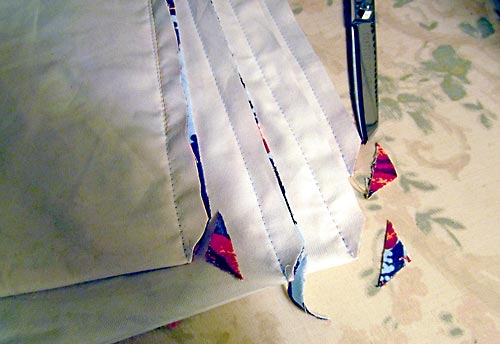
- Turn the ruffle piece right side out. Push out the corners with your finger or a blunt-end tool, like a large knitting needle, chopstick or point turner.
- Steam lightly to press flat.
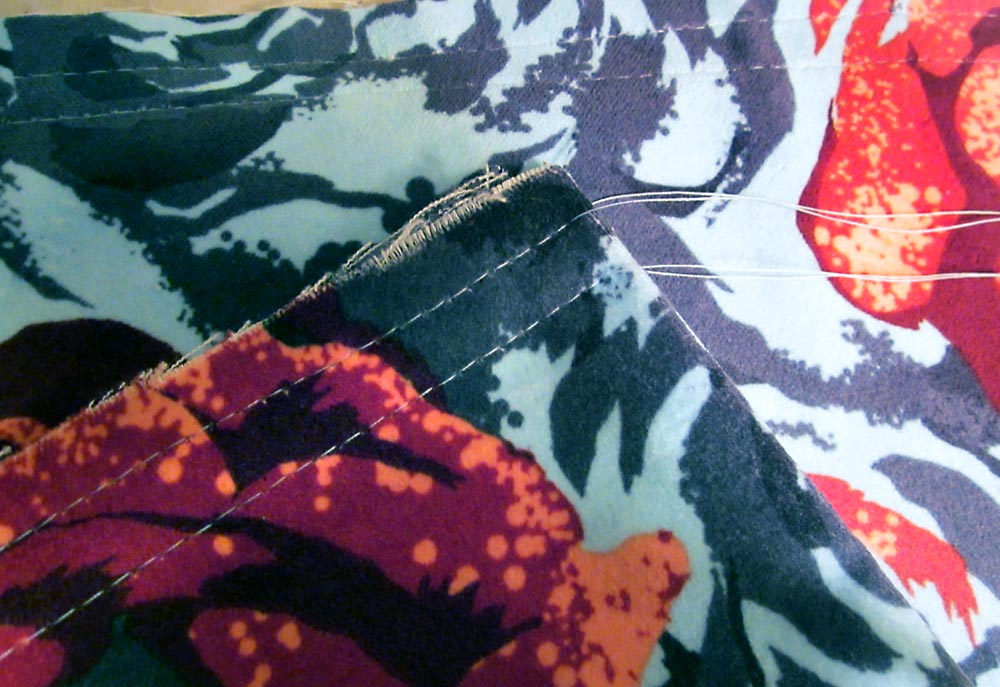
- Sew two lines of gathering stitching (two lines of long basting stitches) along the raw edges of the ruffle piece.
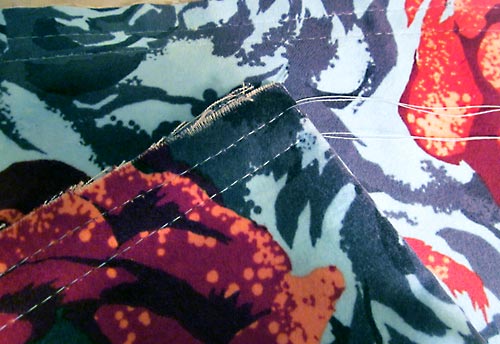
- If you are new to gathering, take a look at our machine gathering tutorial.
- Pull the bobbin threads of the gathering stitches to gather the ruffle to approximately 10″ wide.
- Repeat these steps to create the second ruffle.
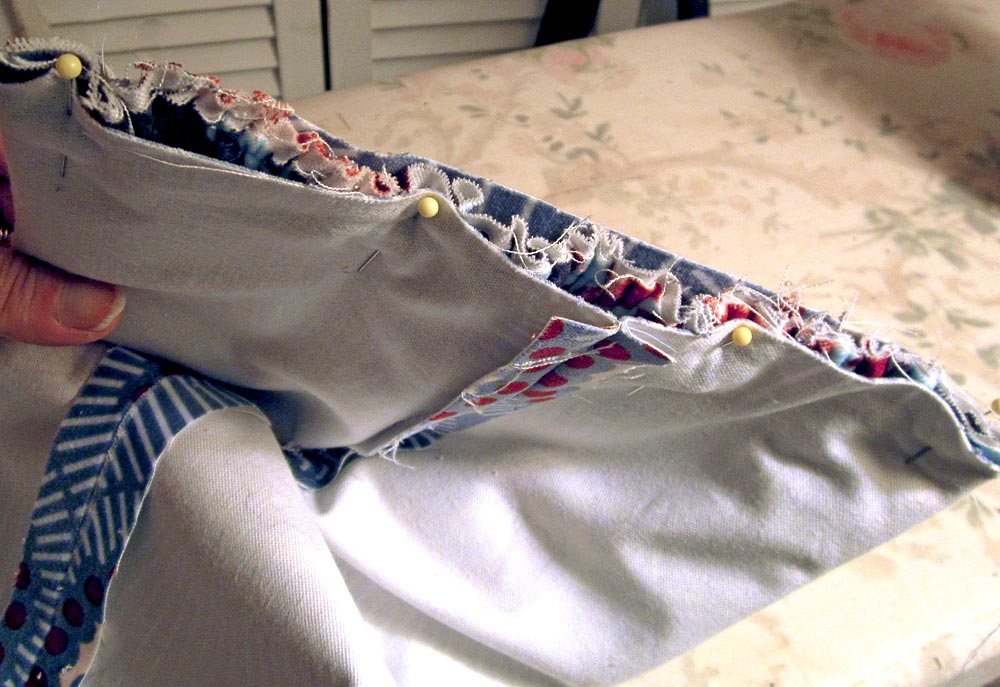
- Place one ruffle inside each end of the tube with the ruffle inside and the raw edges even. Pin in place. Now is the time to align those corner clips you made.
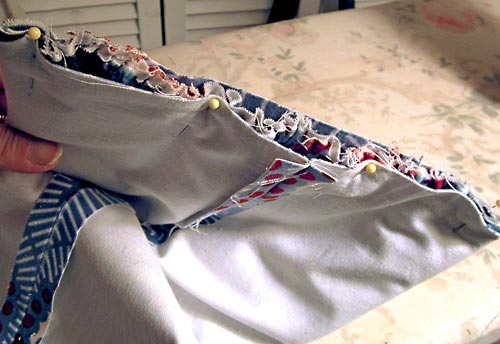
- Using a ½” seam allowance, stitch through all the layers.
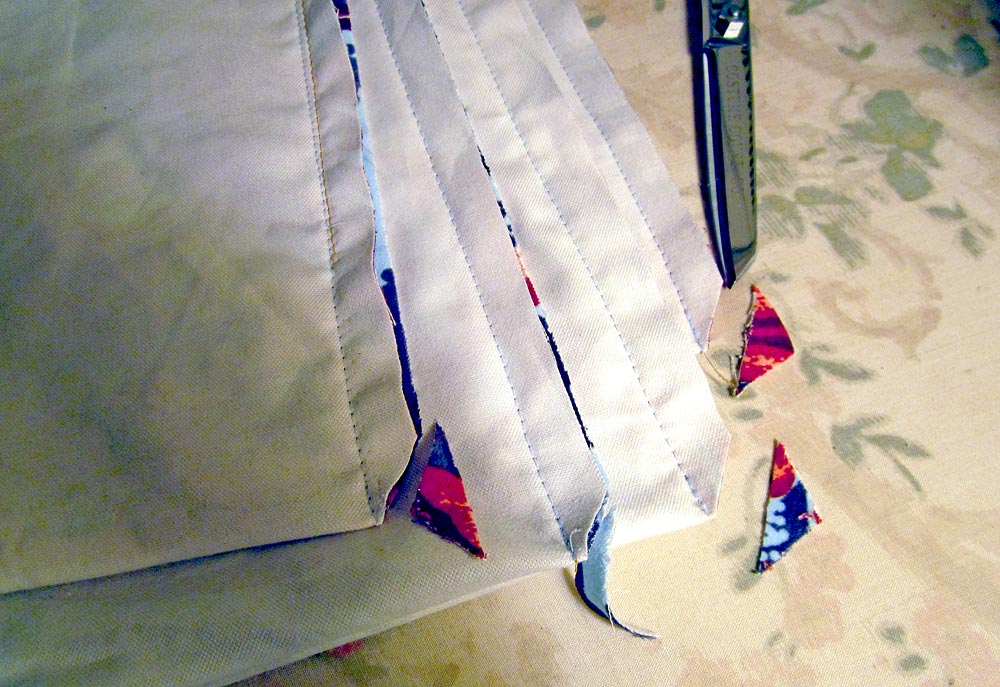
NOTE: You may want to lengthen your stitch a little to get through the layers. - Trim the seam allowance of the tube shorter than the seam allowance on the ruffle.
NOTE: This is called grading the seam. Graded… like pavement on a hill, not like, “I got an C on my English essay.” You can check out our full seam grading tutorial here. - Turn the scarf right side out through the opening in the back seam.
- Pull out the ruffles and steam lightly along each seam.
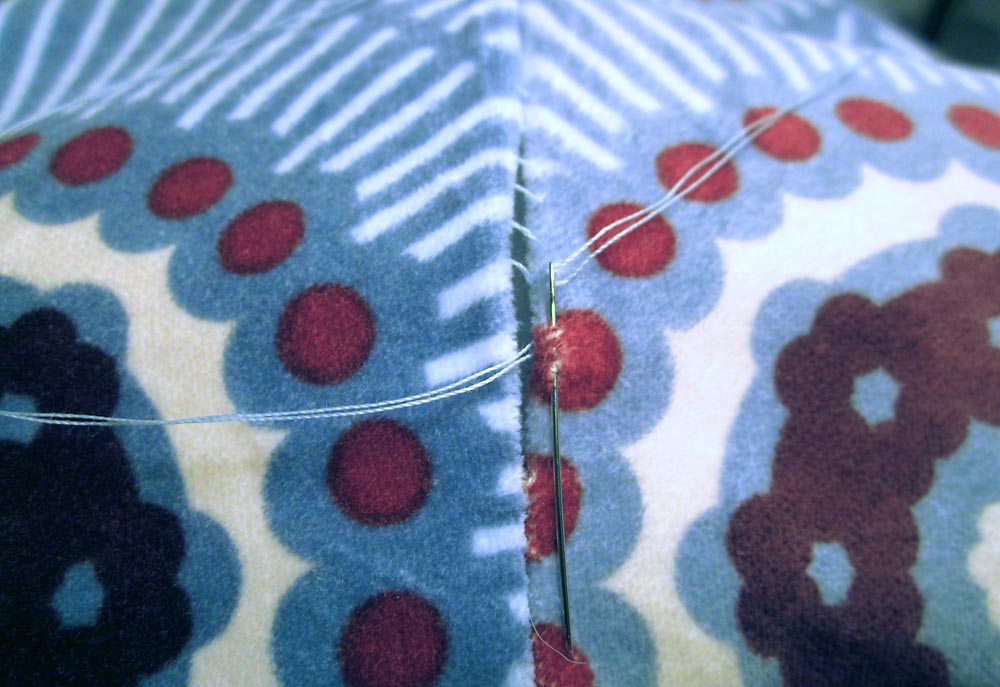
- Slip stitch the opening in the bottom seam of the body closed.
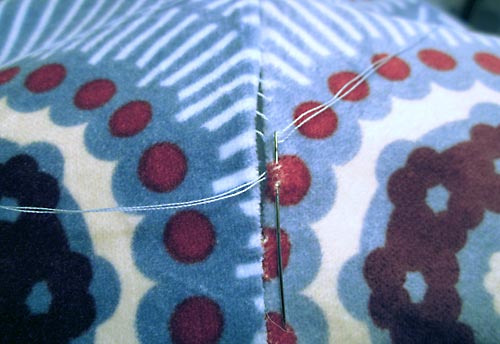
- Our velveteen layers laid perfectly smooth and flat with no twisting when we turned the scarf right side out. If you feel your scarf is not behaving quite as well, you can add a line of topstitching along each ruffle/scarf seam approximately ¼” from the seam line, in the body of the scarf.
Project Design: Alicia Thommas
Sample Creation and Instructional Outline: Kathy Andrews, What Sew Ever