






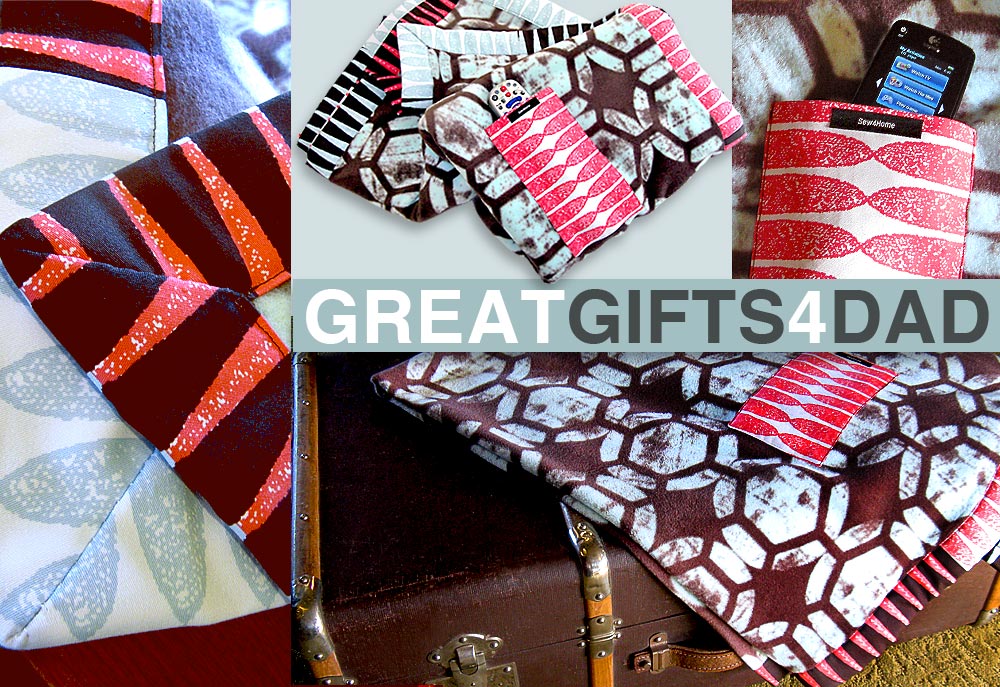
Dads like to nap. It’s a fact well documented in homes across the country and around the world, especially homes with comfy recliners positioned in front of big screen TVs. I know, I know… that’s a gross generalization and not politically correct. But, we all know it’s happening somewhere at this very moment. Make Dad’s nap time cushy and comfortable with our soft fleece blanket, which includes a handsome cotton sateen binding and a handy remote control pocket. So, when Dad wakes up… he doesn’t have to wonder where he dropped the remote.
Dads like to nap. It’s a fact well documented in homes across the country and around the world, especially homes with comfy recliners positioned in front of big screen TVs. I know, I know… that’s a gross generalization and not politically correct. But, we all know it’s happening somewhere at this very moment. Make Dad’s nap time cushy and comfortable with our soft fleece blanket, which includes a handsome cotton sateen binding and a handy remote control pocket. So, when Dad wakes up… he doesn’t have to wonder where he dropped the remote.
In all fairness, everyone loses the remote – so everyone can get in on the excellent napping/watching potential of this soft bound blanket.
Our thanks to our project sponsor Free Spirit Fabrics for providing the Ty Pennington (you know him from TV’s Extreme Makeover: Home Edition) fleece and cotton for all our Father’s Day projects. Ty’s new Impressions Collection for Free Spirit Fabrics has been very popular and includes regular cotton, cotton sateen, fleece and cotton laminate in a beautiful range of bold designs. We found it available online at CityCraft Online, Fat Quarter Shop, and Fabric.com.
Sewing Tools You Need
- Sewing machine and standard presser foot
- Even Feed/Walking foot or engage your machine’s built-in feeding system; such as the Janome AcuFeed™ Flex built-in fabric feeding system — this is optional but helpful when binding the plush fleece
Fabric and Other Supplies
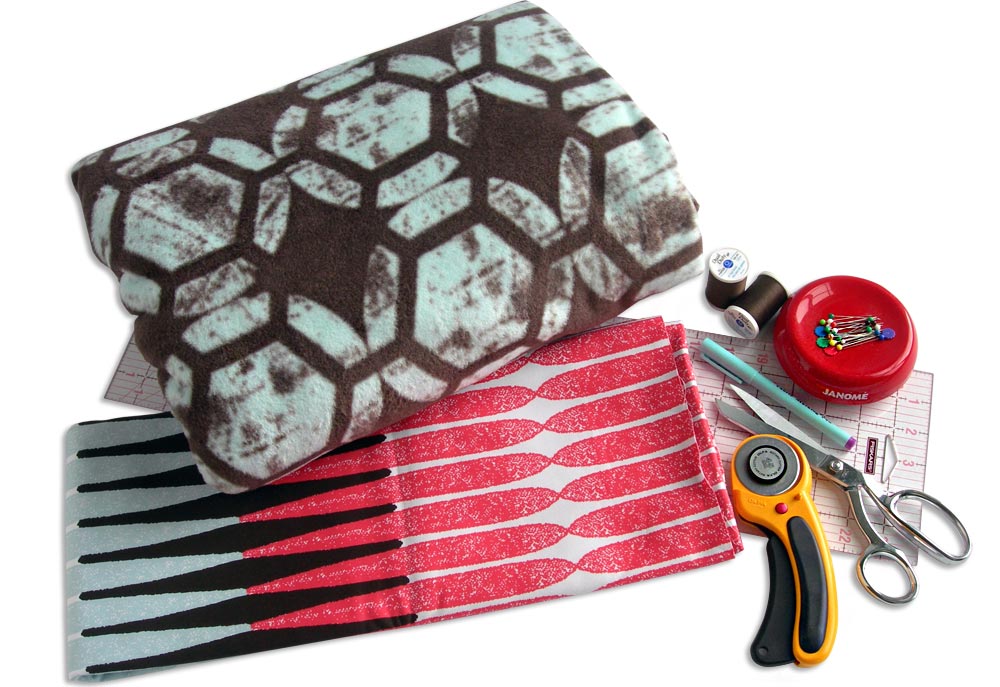
- 2 yards of 60″+ wide soft fleece: you will use the entire piece; if you are concerned about getting a perfectly straight cut, get an extra ¼ – ½ yard… you can always make a matching pillow; we originally used Honeycomb in Espresso from the Impressions Collection by Ty Pennington for FreeSpirit Fabrics
- 2½ yards of 54″+ cotton sateen or similar for the binding: as outlined below, we are doing a lot of fussy cutting to get our alternating color blocks; if you chose not to use this technique, you can get away with less fabric – we show how to determine the binding needed below; we originally used Bamboo Stripe in Espresso from the Impressions Collection by Ty Pennington for FreeSpirit Fabrics
- All purpose thread in a color to match the binding fabric
- See-through ruler
- Measuring tape
- Scissors or rotary cutter and mat
- Iron and ironing board
- Fabric pen or pencil
- Seam gauge
- Seam ripper
- Straight pins
Getting Started
- Trim selvages from the fleece and cut ONE 60″ x 72″ rectangle. Make sure your measuring and cutting is straight and true so your corners will miter nicely.
- The final length of your binding will be determined by your chosen fabric. What is super clever about our blanket is how we fussy cut our Ty Pennington cotton sateen in order to create a 2″ finished binding with an alternating color block pattern. It takes a little more fabric, and a little more time, but the end result is stunning.
- For our fabric and the size of our blanket, we decided a good finished length for our alternating color block sections would be 14″; accounting for ½” seam allowances, we would need 15″ lengths to work with.
- Our finished perimeter is 264″ (60″ + 72″ + 60″ + 72″). Divide this perimeter measurement by your finished section measurement (14″ in our sample) to determine how many pieces you need to start with. In our sample, 264″ ÷ 14″ = 18.86… call it 19. Add one additional section to account for the corner folding and an overlap to finish. We needed a total of twenty 15″ lengths of binding.
- For the binding width, again you get to choose. Based on our fabric, we decided on a 2″ finished binding. We are using our Faux Mitered Corners technique, which means we need the cut width to be four-times the finished width. Our cut width will need to be 2″ x 4 = 8″.
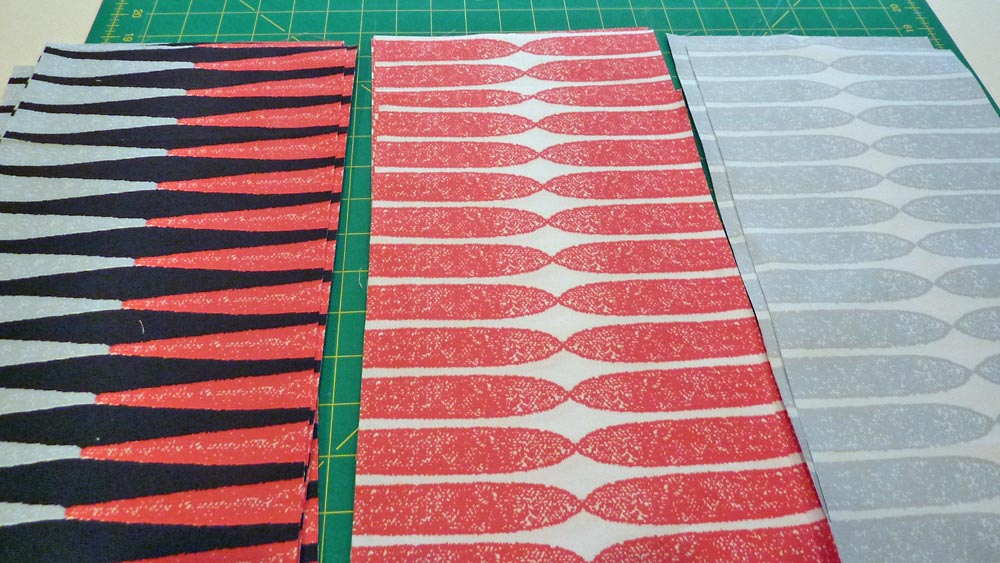
- For our motif, we started by fussy cutting the fabric into color/pattern groups, placing in stacks. At this stage, we simply cut along the actual motif divisions across the entire width of your fabric (WOF). We didn’t need worry yet about the final 15″ x 8″ sizing. If you do fussy cutting similar to ours, what you are doing at this stage is simply cutting the design itself into strips.
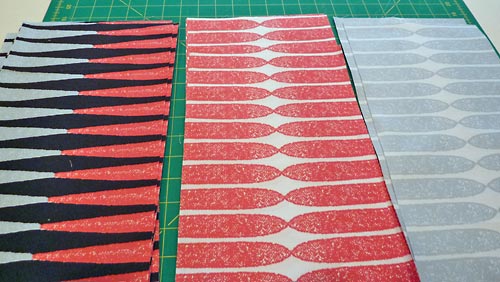
- Cut the WOF strips into 15″ lengths.
- Trim each 15″ length to an 8″ width, centering the pattern within the strip.
At Your Sewing Machine & Ironing Board
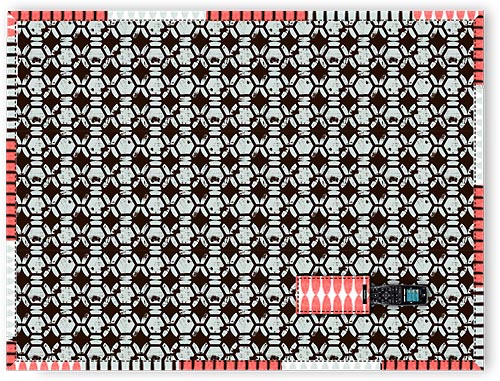
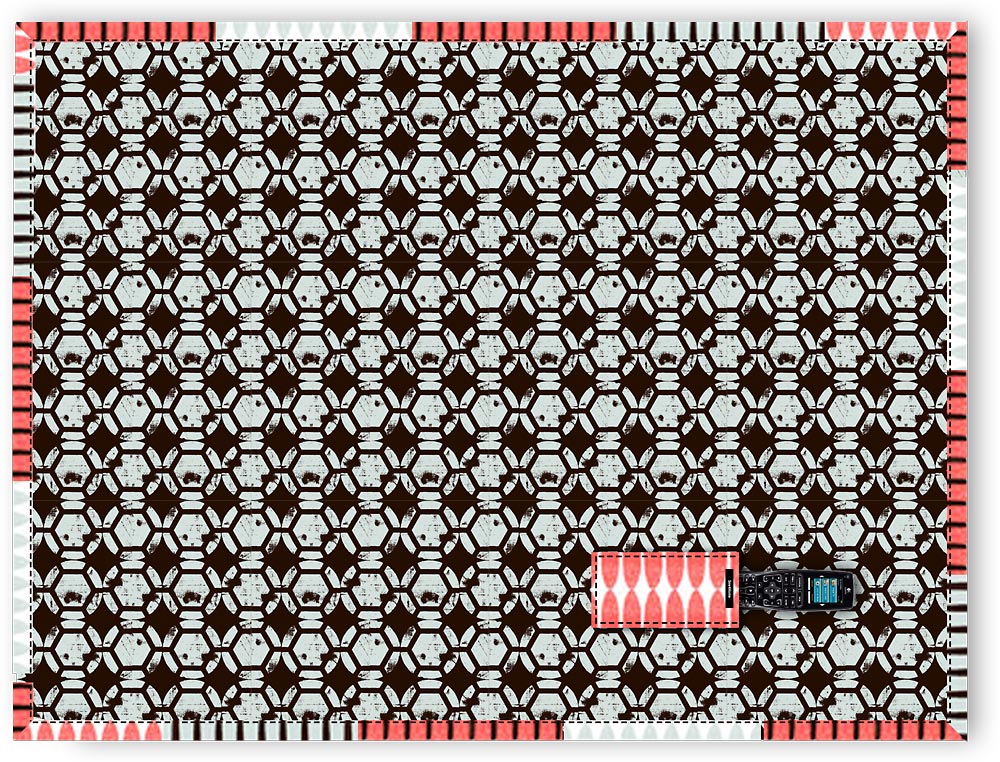
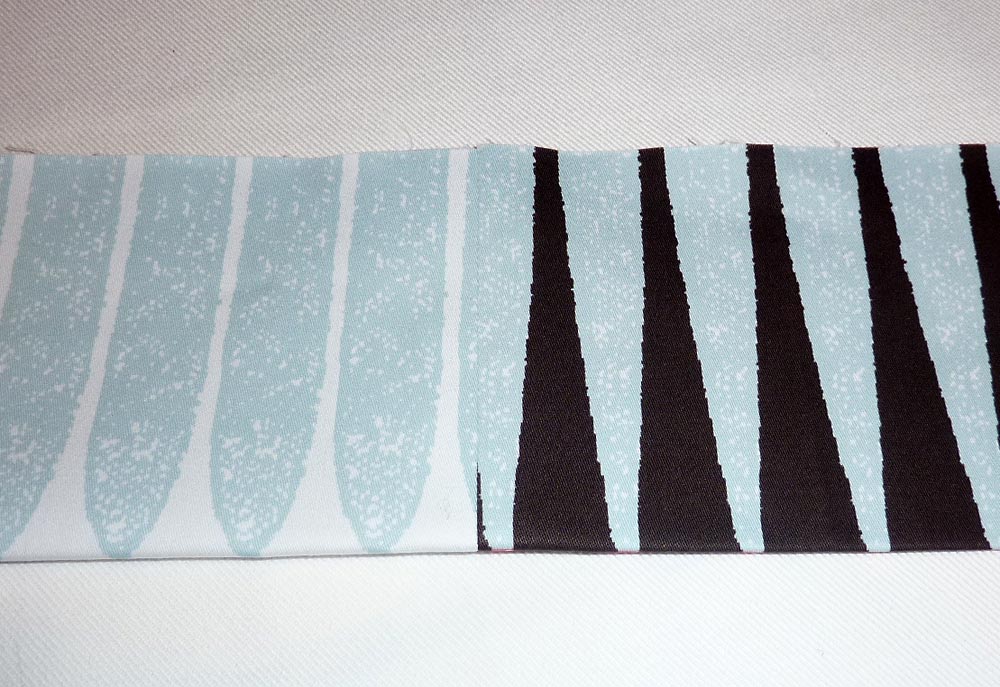
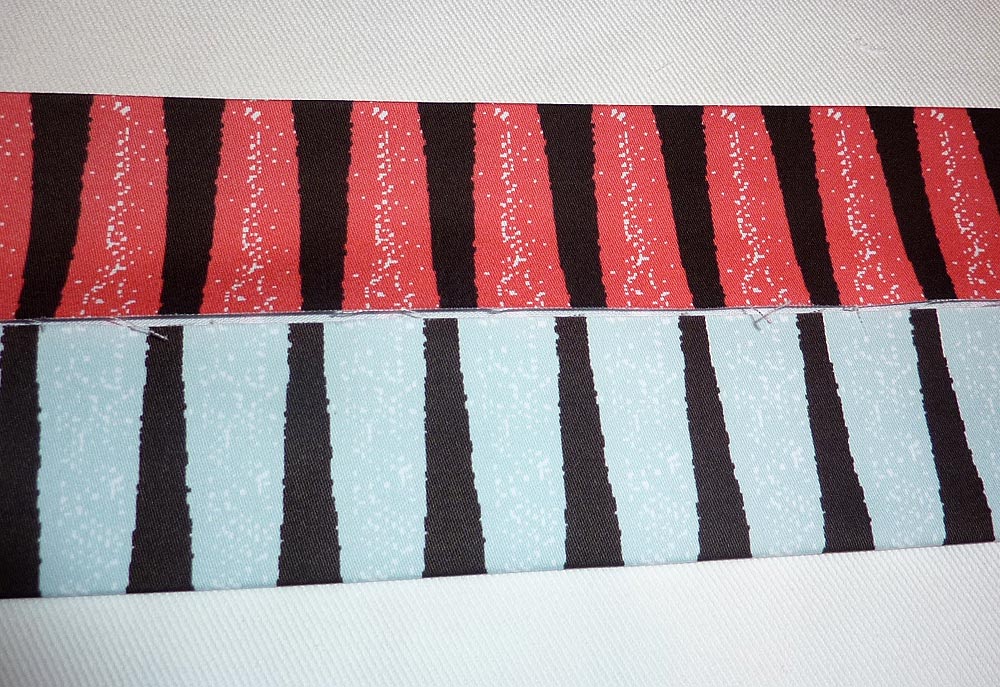
- Collect twenty 15″ x 8″ strips (as mentioned above, your count might not be twenty – could be more or less, depending on your binding color block pattern). Arrange the strips into an alternating color block pattern. The diagram below shows you how we planned our alternating color block sections. Use ours or design your own.
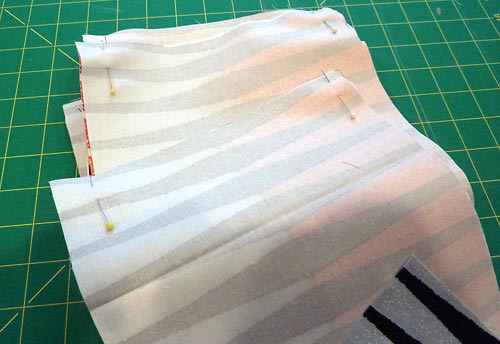
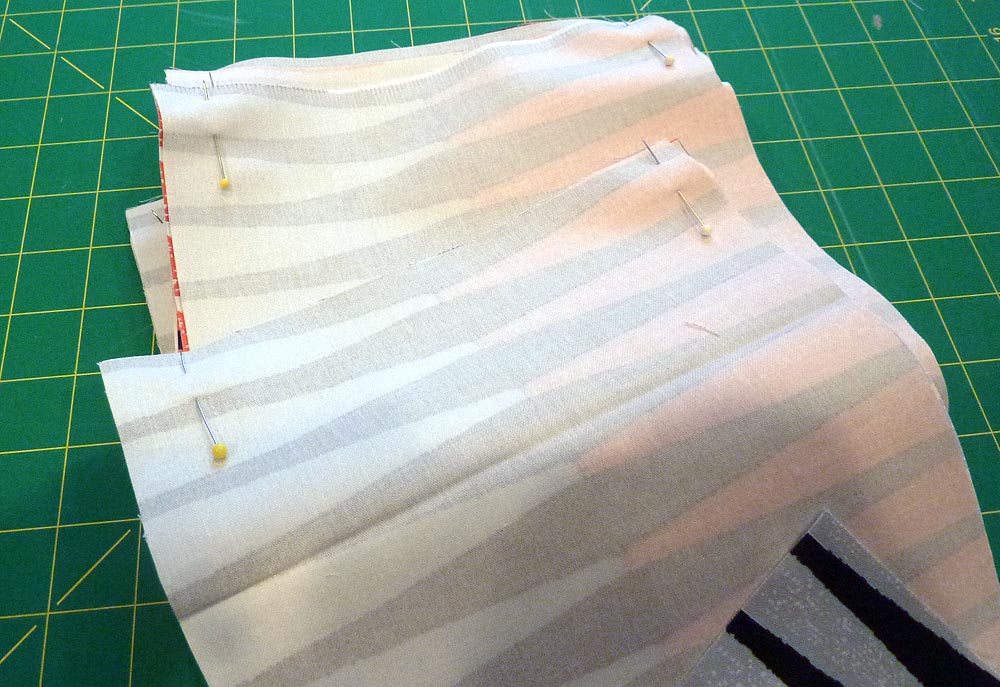
- Pin the strips together end to end.
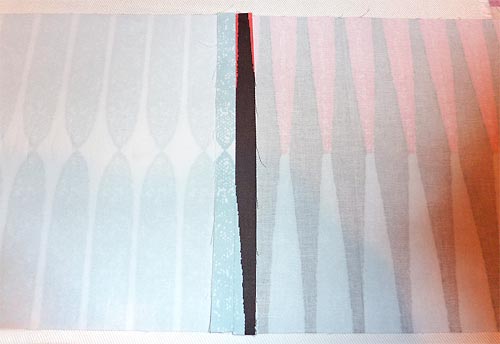
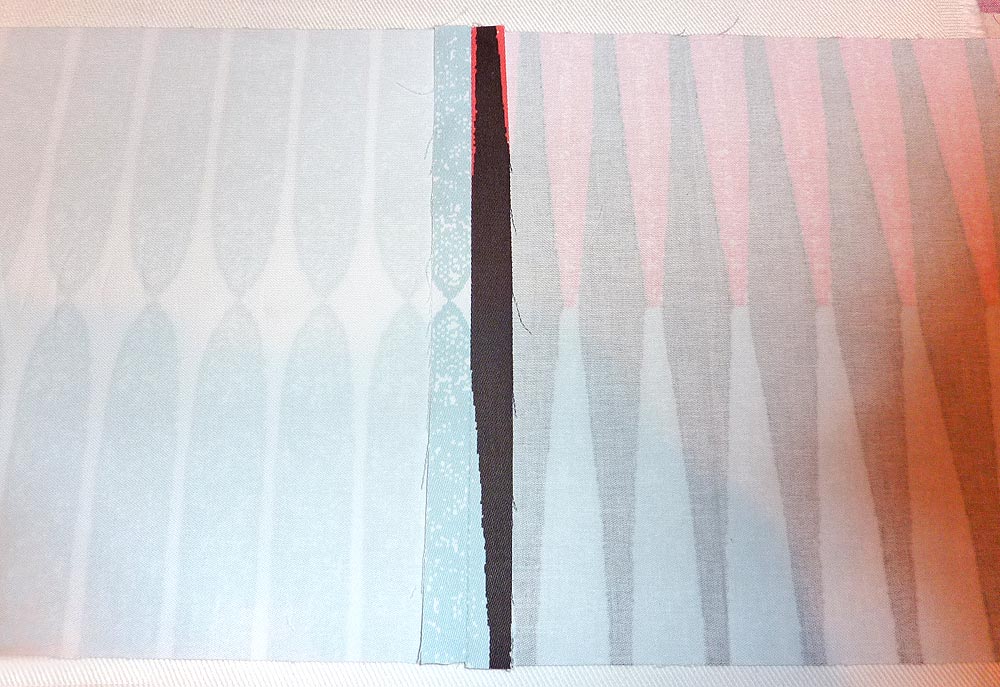
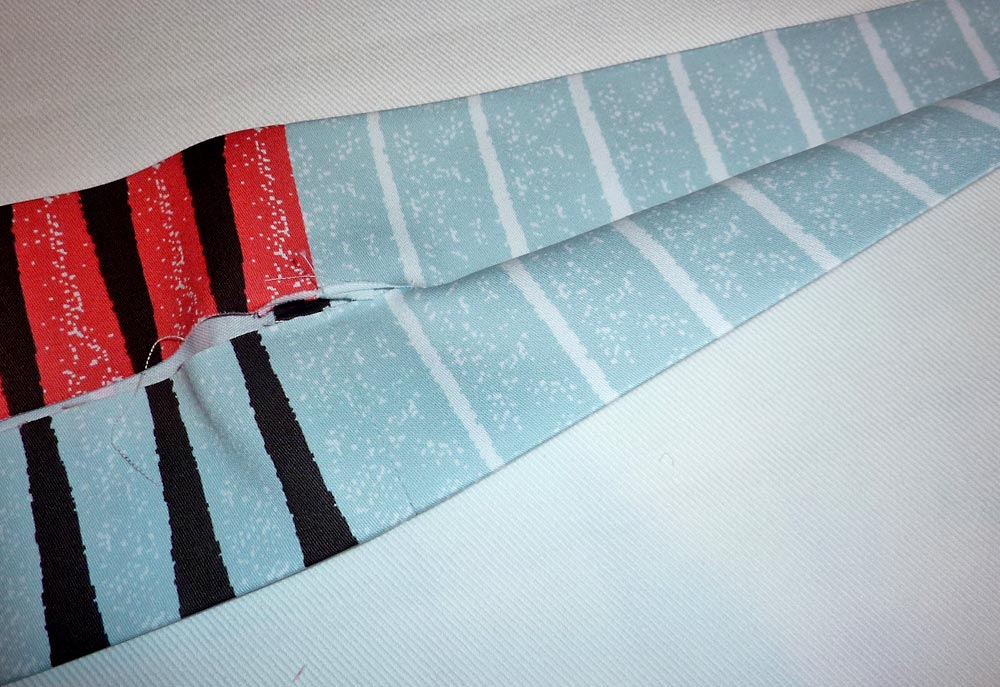
- Using a ½” seam allowance, stitch each short seam to create one long binding strip.
- Press all seam allowances open.
- Fold the binding in half, lengthwise, wrong sides together and press to form a center crease.
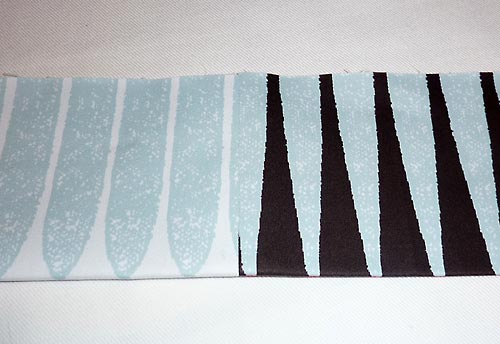
- Open up your strip wrong side towards you so you can see the center crease.
- Fold each side in towards the center crease so the two raw edges meet. Press well.
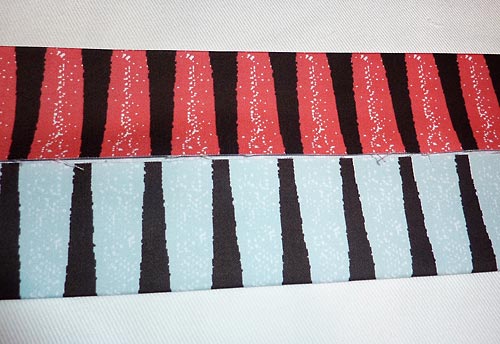
- Fold again along your original center crease, right sides together, so now your two folded edges meet. Press.
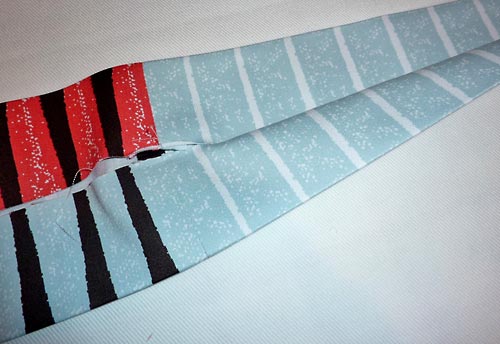
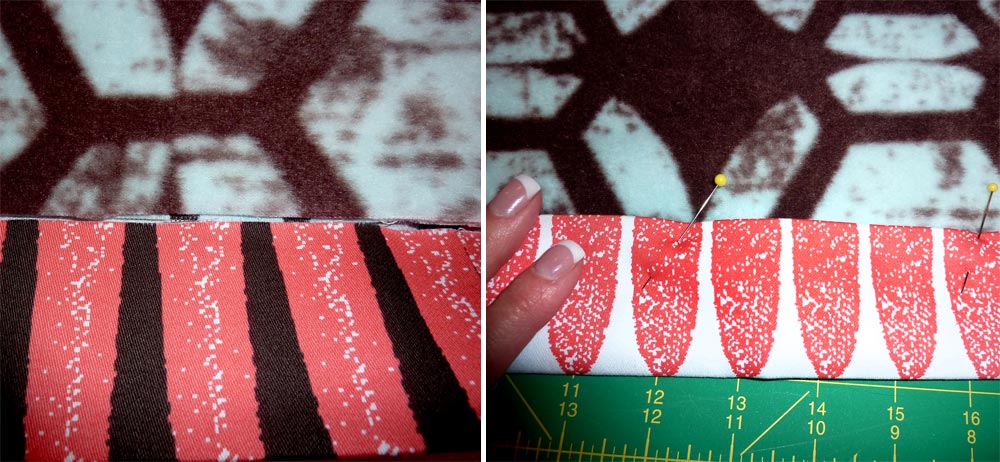
- Starting in the middle of one side of the blanket, unfold your binding and slip it over the raw edge.
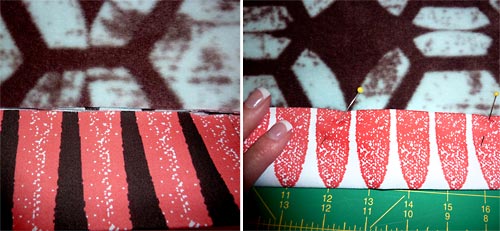
NOTE: Be very careful that your middle crease sits right against the cut edge of the fleece and your binding is even on both sides. - Pin from your starting point to the first corner.
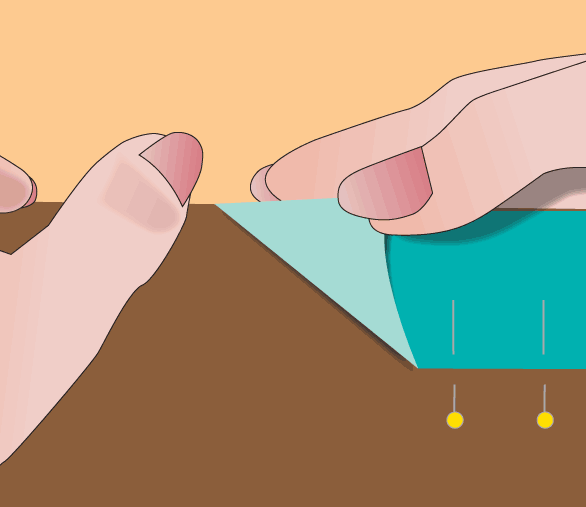
- Bring your project to your machine, and starting in the middle (where you started pining), stitch the binding to the project, staying as close to the folded edge of the binding as you can. Go slowly and make sure you catch both sides of the binding equally.
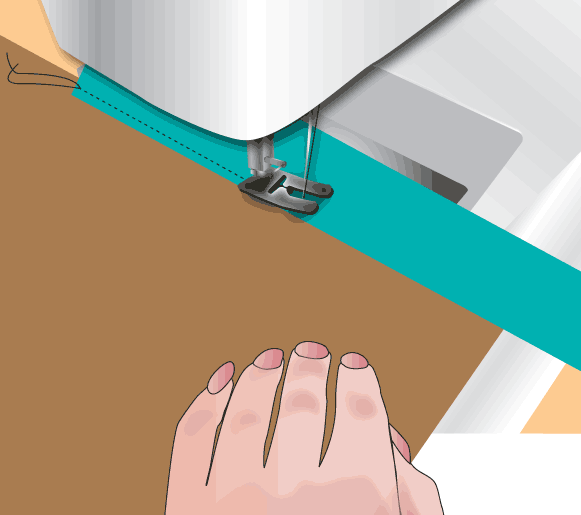
NOTE: Because this project uses two very different fabric types (fleece and cotton sateen) and is a wide binding, as we mention above in the supply list, we recommend using and Even Feed/Walking foot or engaging your machine’s built-in feeding system; such as the Janome AcuFeed™ Flex built-in fabric feeding system. This will help keep all the layers moving evenly under the needle. It is also a good idea to increase the stitch length and set the needle to its far left position in order to stay as close to the edge of the binding as possible. Needle position adjustment is not available on all machines, but if you have this feature on yours, now is is a good time to use it. - Sew to the corner and stop. Lock your seam.
- Remove the project from under the needle and clip your threads, but do not cut your binding.
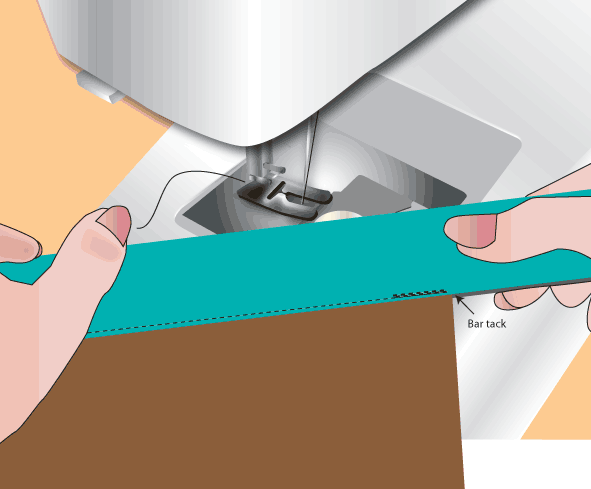
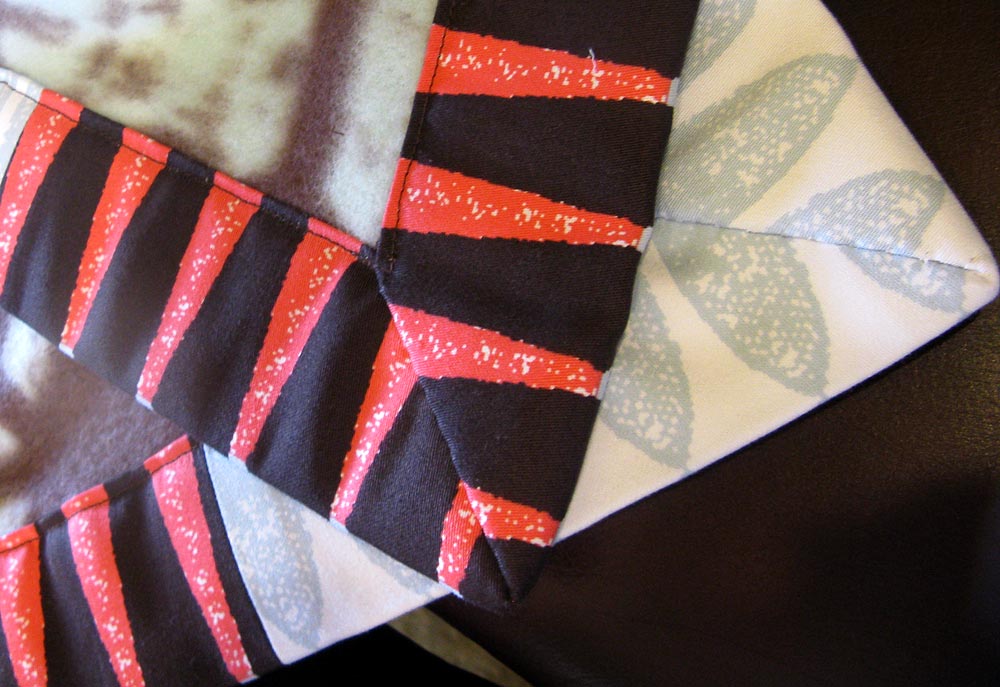
- Fold a pleat in the corner to make a 45° angle. Pin. Encase the new side’s raw edge with the binding, working your way to the next corner. Pin in place.
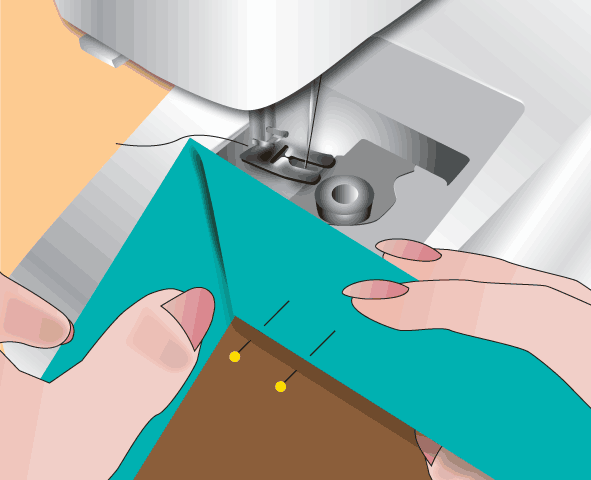
- Return to your machine, and matching your first line of stitching, edgestitch around the corner and down the side towards the next corner.
NOTE: By ‘around the corner,” we mean you should drop your needle in at the end of your original line of stitching, stitch into the corner, pivot and then stitch down the new edge. This way your line of stitching around each corner will appear uninterrupted.
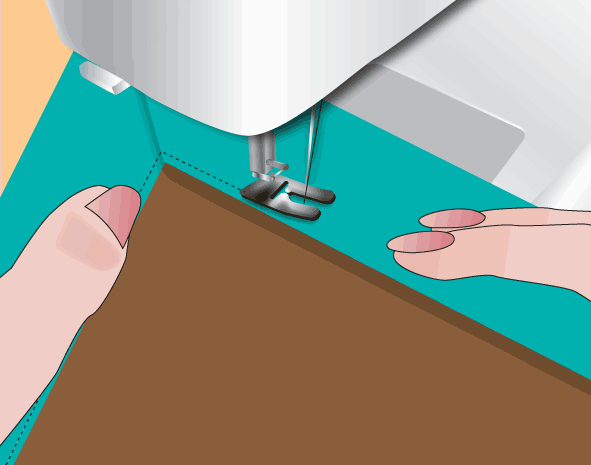
- Stop at the next corner, as you did above, and lock your stitch.
- Repeat these same steps at each corner.
- When you return to your starting point, cut away any excess fabric, then tuck under the raw edge of the binding about 1″. Match the bottom edges and match your stitching line to finish. Press. DO NOT iron the fleece: just press the cotton binding.
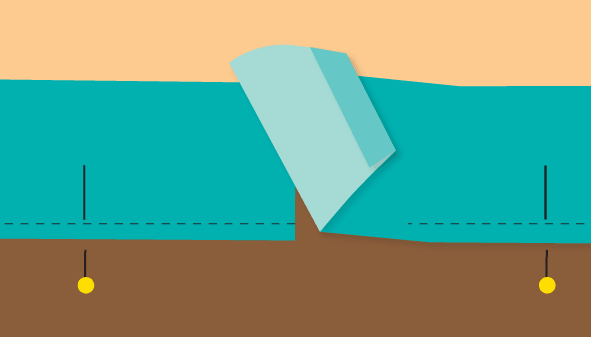
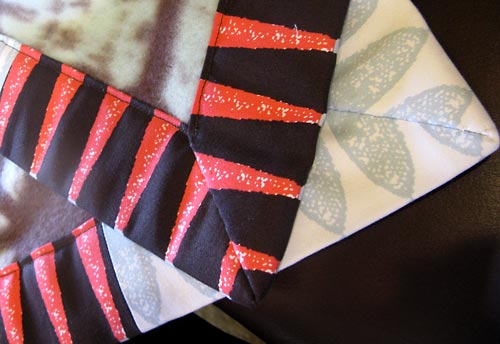
- We went to the extra step of hand-stitching the diagonal corner folds in place on both the front and back. Using a slip stitch makes them extra tidy.
Remote Pocket
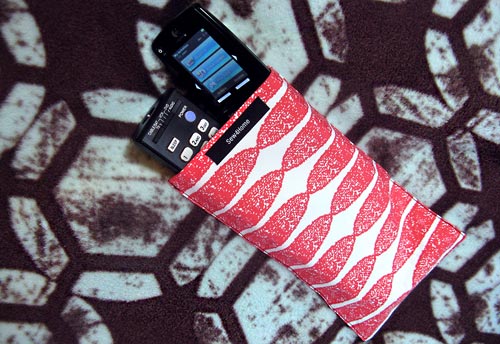
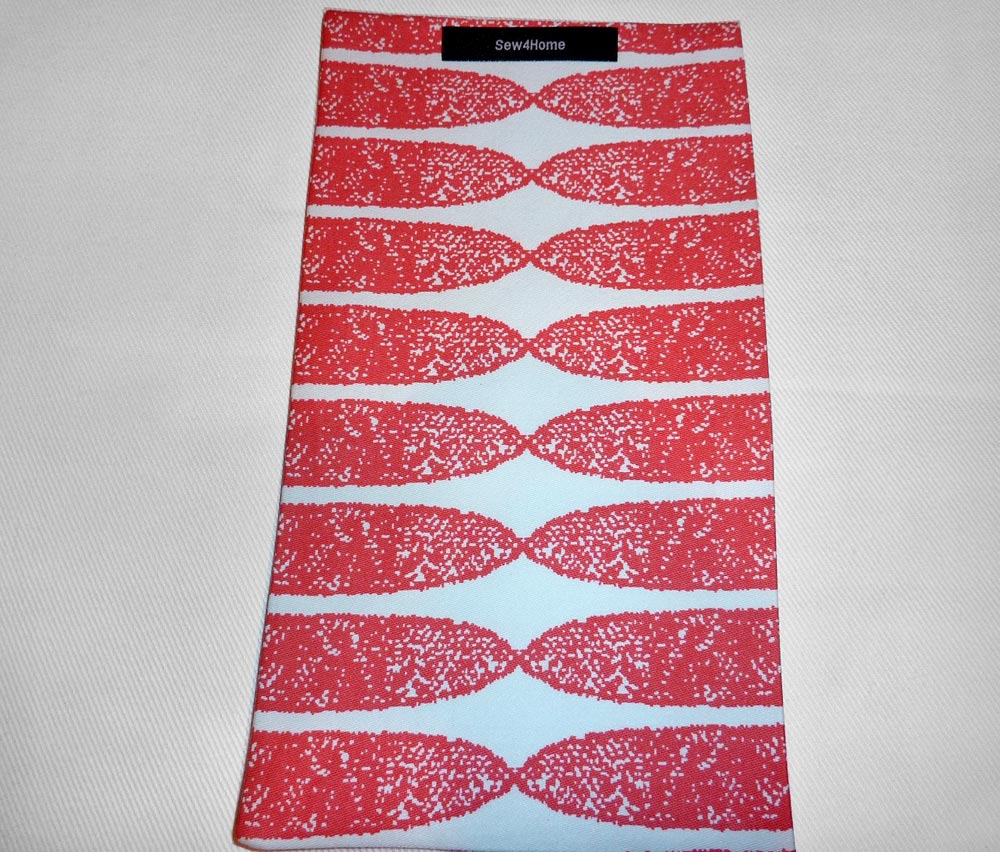
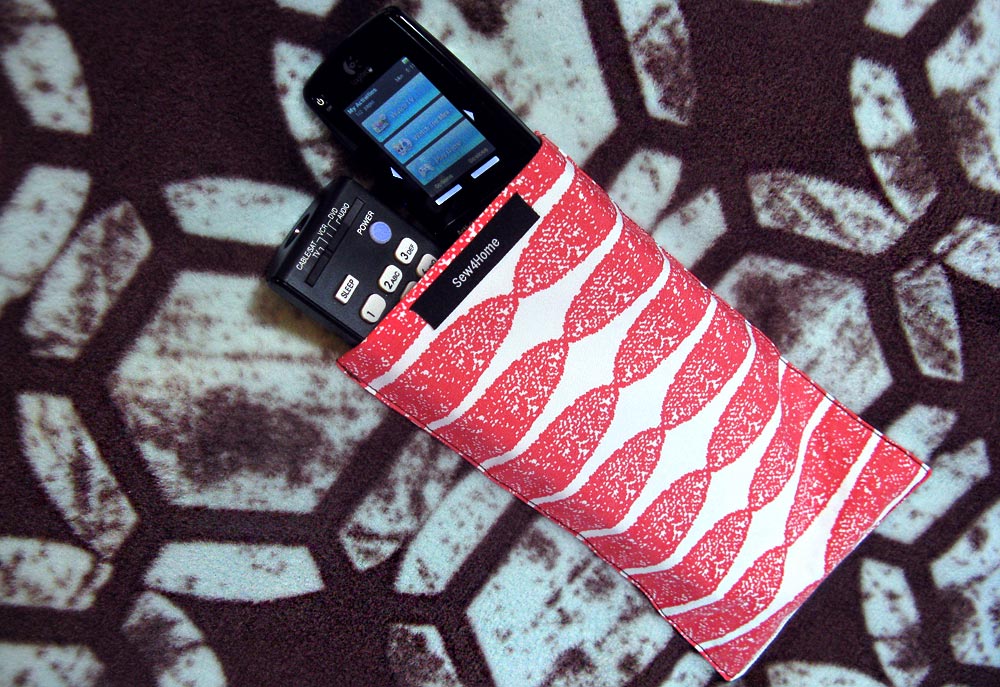
- The finished size of our remote pocket is 9″ x 5″. This easily fits one or two of the sample remotes we had on hand. Draw a 9″ x 5″ rectangle on a piece of paper to confirm your remotes will fit this size pocket. If not, adjust your cut larger or smaller as needed.
- Fussy cut a 19″ x 6″ rectangle out of binding fabric.
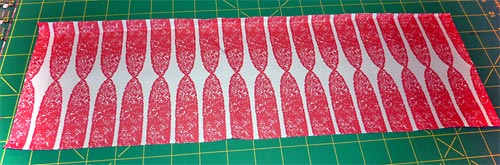
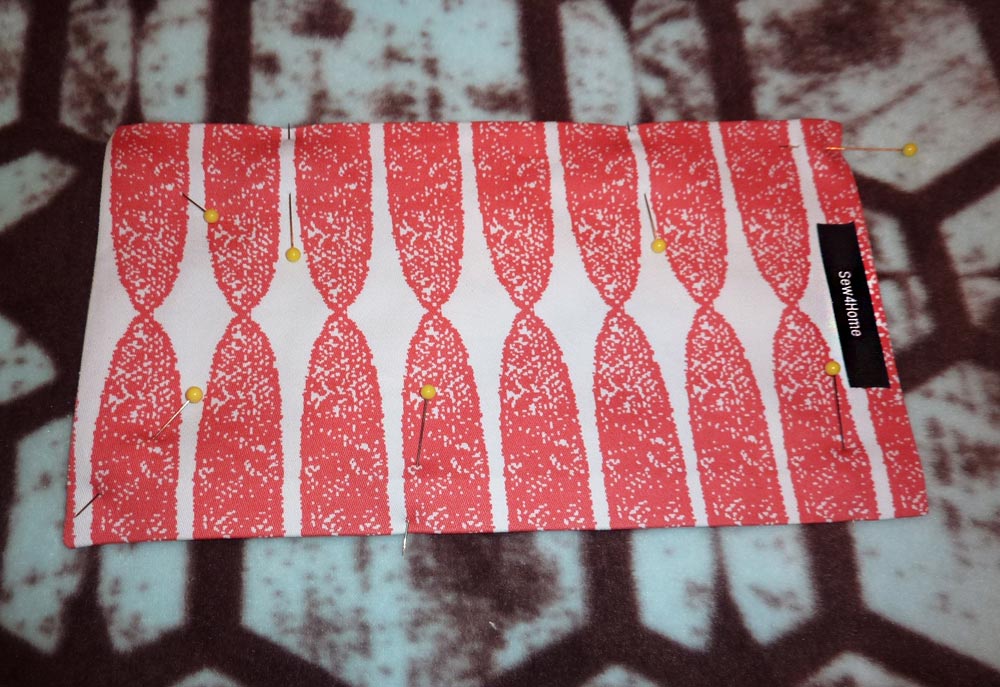
- Fold this rectangle in half (so it is now 9½” x 6″), pin the raw edges. The folded edge will become the top of your pocket; be aware of this if you are using a directional print.
- Using ½” seam allowance, stitch the three raw-edged sides of the pocket, pivoting at the corners and leaving a 2″ opening along the bottom for turning.
- Trim the corners at a diagonal and turn right side out, gently poking out the corners with a blunt tool, like a chop stick, knitting needle or point turner, to make them nice and square. Turn in the raw edges of the opening along the bottom so they are flush with the sewn seam.
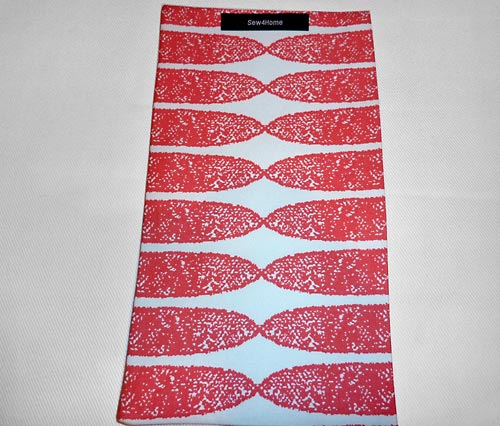
- We added a Sew4Home label along the top edge of the pocket.
- Place the pocket on the blanket. We positioned ours in the upper right corner, approximately 6½” in from the inner edge of the right side binding and 16½” down from the inner edge of the top binding. Pin in place.
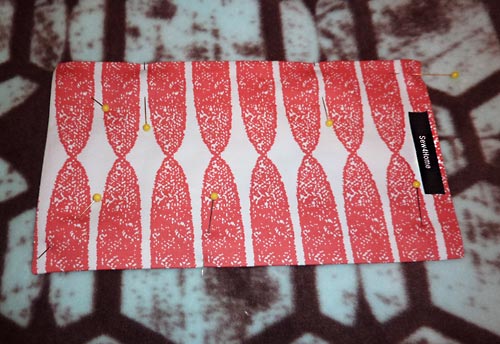
- Edgestitch the pocket to the blanket along both sides and across the bottom.
Project Design: Alicia Thommas
Sample Creation: Debbie Guild