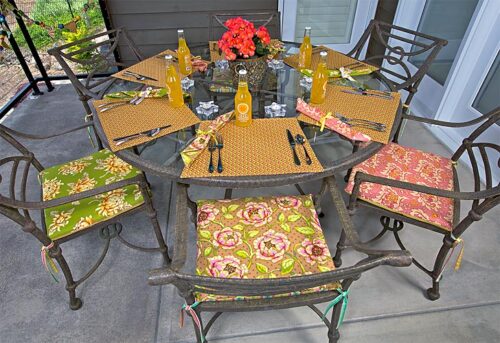
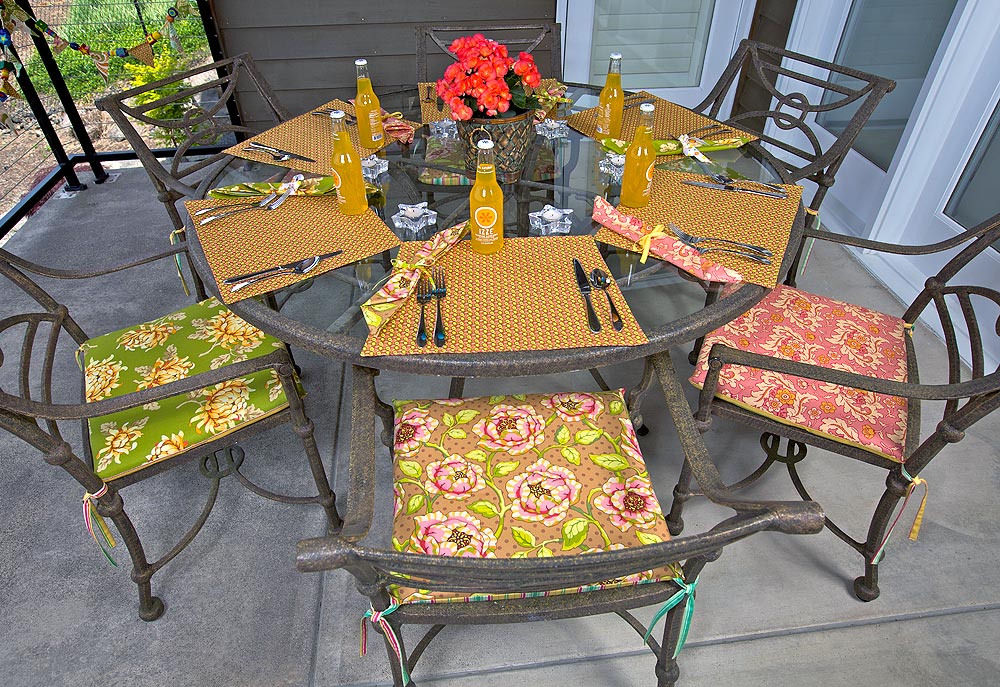
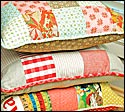
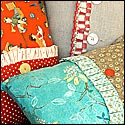
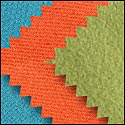
Your Patio Party guests will stay longer if they have somewhere soft and pretty to sit. Give your chairs comfort and style with a set of custom seat cushions. Outdoor furniture often comes with a set of basic cushions, but the standard colors are pretty bland and boring. It’s much more fun to mix and match colorful fabrics to create a unique seating experience.
Uncategorized
Colorway
Colorway is a textile industry term used to describe versions of the same design produced in different colors.
Crazy Patch Pillow with Bow
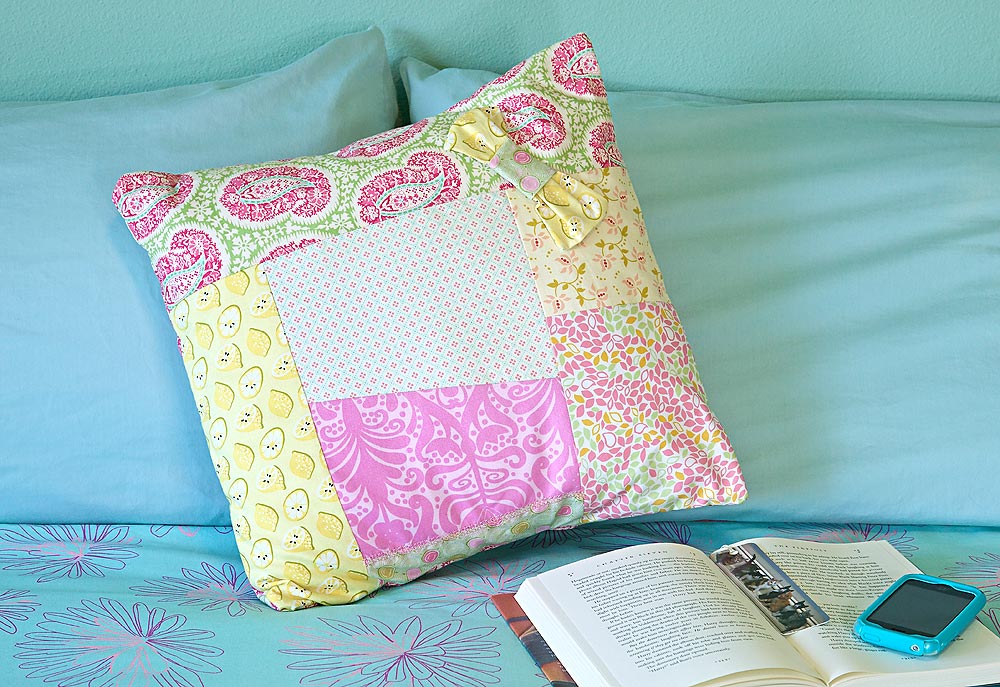
Crazy patch quilting incorporates small scraps of many different fabrics into one block. It came into vogue in Victorian times as a way for ladies to show off their needlework skills whilst passing the time in their parlors. The parlor went out of style along with the bustle (and the word “whilst”), but crazy patch quilting remains a terrific way to use lots of different fabric scraps in one project. This is a great project for incorporating old silk ties or bits of worn-out corduroy pants.
WOF
WOF is an abbreviation for Width of Fabric. This means that you would cut pieces of fabric as long as the width of the fabric, or the width from selvedge to selvedge. For much cotton fabric, this would be 45″. Home Dec fabric will come in 54″ and 60″ widths as well.
How to Create a Fabric Palette
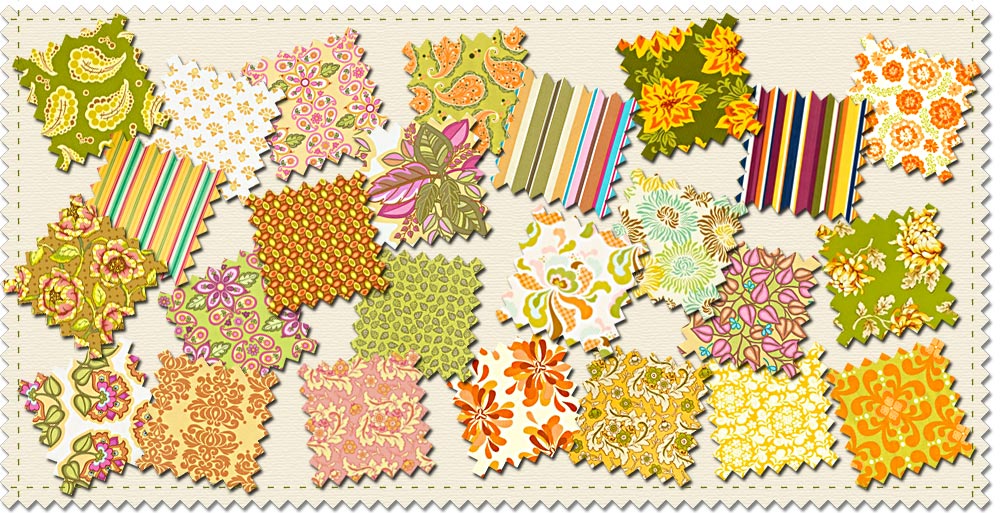
I can’t even begin to guess how many different fabrics there are in the world. Of course, any fabric can be used by itself, but fantastic results can be achieved by mixing different patterns and colors together. Now, if that seems out of your comfort zone, here’s a tip: the easiest way to start mixing patterns is to choose from a fabric designer’s collection made specifically for mixing. You’ll look like a pro on day one!
Understanding Interfacings
Itโs tempting to skip it, but itโs a lot like the difference between a nicely toned body and one that isnโt. Just like you can skip exercising, you can skip interfacing. But, it wonโt be a secret. Which reminds me… I need to go for a jog!
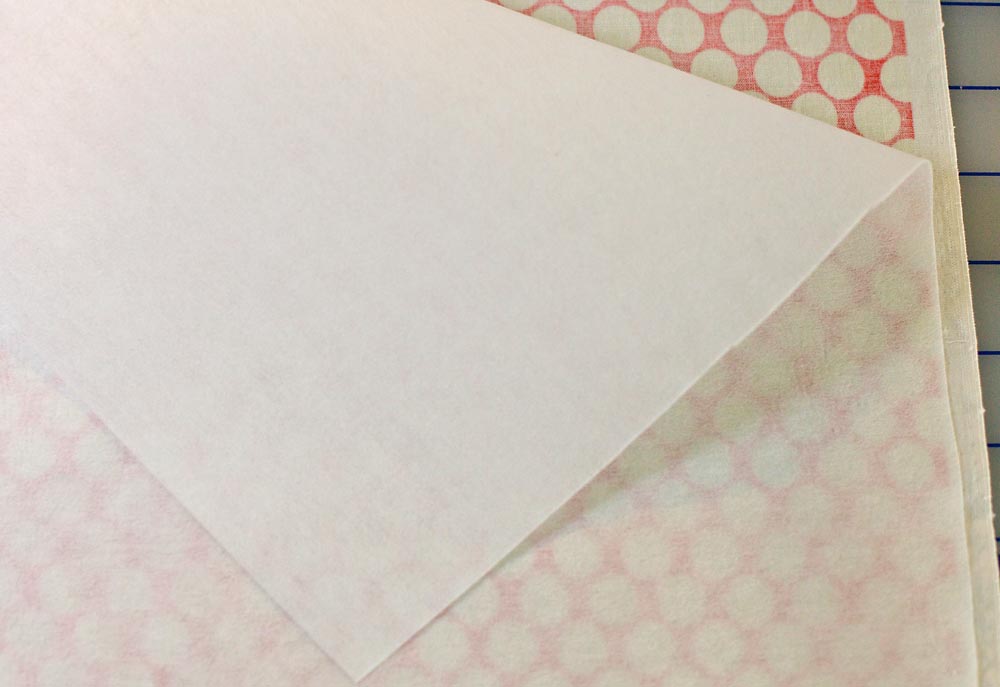
Interfacing is a textile that is either sewn in or fused on using a steam iron, between layers of fabric, to give it structure and body. Interfacing in itself is not very exciting, but it is one of the keys to achieving a professional look to your project. If you are new to sewing, you may never have run across interfacing because itโs not something that shows when your project is done. Most familiar to people is the way a dress shirt has a more substantial collar, placket and cuff. That smooth crispness comes from the interfacing hidden inside. Without interfacing, collars and cuffs would be limp and buttons and buttonholes would rip.
Using the Right Presser Foot for the Job
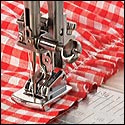
Like any job or hobby, using the right tools makes your project go more smoothly and quickly, and usually yields a more professional finished product. Sewing is no exception, and one of the most important tools we have are the various machine feet. Sewing machine feet come in a wide array of applications. Sewing machine feet do not wear shoes. But, they do make common techniques so much easier.ย
You have been unsubscribed
You have been unsubscribed from our list.
We’re sorry to see you go. We value you any feedback you have for us. Please send it to: feedback@sew4home.com
Thank you for sharing Sew4Home
Thank you for sharing the Sew4Home list with your friends.
Fat quarter
A generously proportioned “quarter yard” of fabric that measures 18″ x 22″.ย To understand this you need to do a little math. Fabric is measured in yards. A yard is 36″. When you ask your fabric store to cut a yard of fabric, you get 36″ by the width of the fabric. Quilting cottons are usually 44″ wide. So, if you buy a yard of quilting cotton, you’ll have a cut piece that measures 36″ x 44″. Now, if you’d stepped up to the counter and ordered a quarter yard of fabric, you’d get a piece that is 9″ (36″ divided by 4) by 44″. But a Fat Quarter is actually a full quarter of that original piece we got when we ordered our single yard of fabric (36″ x 44″). If I divide that original piece (36″ x 44″) into four equal pieces, each one will be 18″ x 22″. A Fat Quarter.
Slip stitch
ย
A Slip Stitch is a stitch created with a hand sewing needle rather than your sewing machine. It joins two folded edges (or a folded edge and a flat edge) together in such a way that the stitches are not visible. This stitch is commonly used in pillows to close seams after stuffing. It is also good for bindings, to close a lining, or to hand-appliquรฉ invisibly.
ย
Miter
A miter is a corner seam that comes together at a precise 45ห angle, like a picture frame.
Pattern notches
Pattern notches are the marks (usually triangle shaped) printed on a pattern’s cutting edge. They are used to line up two or more pieces of fabric that you will be joining together.
Patchwork Pillows
Nap
Nap refers to the short raised fibers on the surface of certain fabrics such as corduroy, velvet and velour. Fabric with a nap looks different from different angles, and therefore pattern pieces must be cut with nap going the same direction.
Pillow insert
A ready-made cushion in one of a variety of standard shapes and sizes; the filling may be down, feather/down, polyester fiberfill, or bamboo.
Quick Tip: Never Sew Over Pins, Try This Instead
Sewing over pins is faster than removing them, but itโs a gamble. Often, the machine needle misses the pin, but when it doesnโt it can break your needle, thread and worst of all, seriously damage your machine. Itโs not unheard of for a piece of the broken pin or needle to end up embedded in your eye. So, NO, donโt sew over pins.
Family Napkins
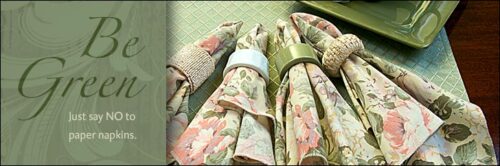
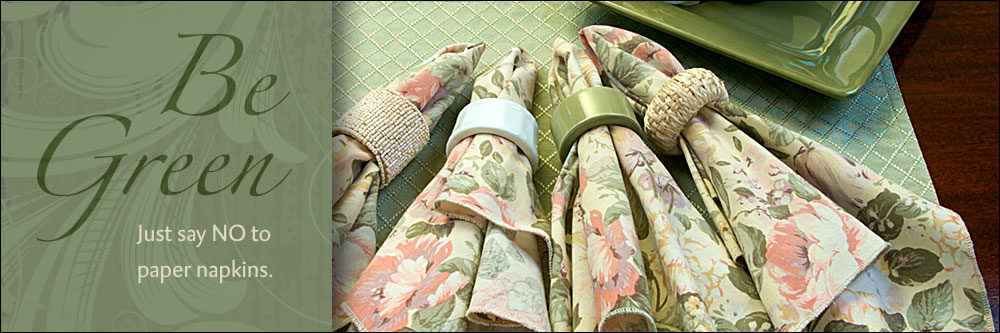
Dining every night with a cloth napkin isn’t just for landed gentry and restaurant critics. It can be a fun and practical tradition for your family. At the same time you’ll save a few bucks and reduce the amount of paper products headed for the landfill. It’s something European families have been doing for decades.
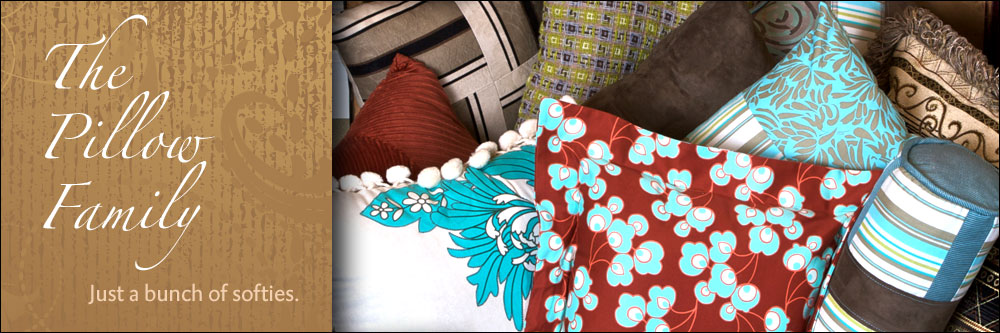
Sham, Roll, Cushion, Throw โ the Pile of Pillows Defined
The very first pillows were likely just heaps of moss or grass in our ancestors’ cozy caves. However, even the more recognizable fabric-stuffed pillow reaches far back into history. Wealthy Greeks slept with their heads and feet resting on ornately embroidered cushions. Ancient Egyptians, who believed the head to be the seat of life, not only spent heavily on lavish pillows for themselves, they also placed them in the tombs of their honored dead. The Chinese thought soft pillows robbed the body of its vitality and therefore made their pillows from wood, leather or even ceramic.
Today, our cushy lifestyles demand comfortable and beautiful pillows of all shapes and sizes. If you want to impress your friends and family, throw out a few of these definitions at your next holiday gathering. Everyone will be impressed… or, they’ll all just ignore you like they always do.
Making the Right Fabric Choice
Shopping for fabric can be overwhelming. There are so many different colors and types of fabrics available, and the prices can range from a few dollars a yard to over one hundred. Home decor fabrics tend to be more expensive, so you want to be happy with what you select. Following a few basic guidelines will help you in your selection process.
Contact Us
General Inquiries & Feedback
To contact Sew4Home for general inquiries and feedback, please send an email toย feedback@sew4home.com
Please note:
Advertising
Sew4Home offers a flexible range of advertising options; please emailย advertising@sew4home.com for rates and availability.
About Sew4Home
Sew4Home is a daily website dedicated to stylish home dรฉcor sewing โ we believe anyone canย and should make their own home dรฉcor. S4H offers beginner-friendly sewing projects by making instructions clear and simple. At the same time, our creations are designed to appeal to all levels of capability for their to-die-for results.
Since launching in early 2009, S4H has attracted a rapidly increasing core group of devoted readers. Our step-by-step tutorials, tips & tricks, and inspiration are all free to the user. We feature today’s easy-to-use sewing machines, beautiful and readily available fabrics, plus clever notions and tools. The S4H team is an experienced group with long ties to the sewing and design industry. We hope you’ll be inspired by our tutorials to transform your space.
Copyright Terms and Making Items to Sell
All projects, patterns, photos, etc. on Sew4Home are copyrighted, so the instructions themselves and any associated patterns or pictures can not be reproduced or reprinted in any way.
This also means our tutorials cannot be re-printed as a handout for use within a class. It would be similar to copying pages out of a book to share with an entire group.
You can make small quantities for sale if you make the items yourself. They cannot be manufactured by others or sold through a third party. We simply ask that on the tag and/ or somewhere within the display or packaging and/or within the sales description online, credit is given for the item being created from a copyrighted design/pattern/tutorial from Sew4Home.com.
We also allow people to pick up a photo or two from our articles to use along with credit and a link back to our site. We appreciate this outreach.
Pattern and Project Alternation Requests
We’re sorry, but we are unable to create revisions to our patterns or projects for size or usage variations. It’s a challenge to change dimensions long-distance, especially without access to the item and/or person for whom the project is being adjusted. We would feel awful if we gave you inaccurate advice that caused your finished project to turn out less than successful. Our standard recommendation is to measure your item and/or person and compare those measurements to our original dimensions. Do the math to make adjustments and scale the original dimensions up or down. Then use these new measurements to make a prototype out of a muslin or another inexpensive fabric you have on hand. This is often the exact way we determine our own patterns and instructions. It is not only a good way to re-engineer a project, making a prototype is also a great practice run through the steps of construction.

Why You Should Register
It’s free. It’s quick. And it gives you full participation in the Sew4Home community, including our contests that often are centered around random drawings from posted comments.
All of our visitors can leave comments on articles and projects at any time without registration or any kind of log in. You can share your observations and tips, or just give an opinion on how you liked an item.ย However, only registered users are securely saved in our system with a user name and email so we can contact you if need be to directly (and off line) answer a specific question for you, alert you to new information about the original article on which you left a post, or contact you should you be a lucky winner in one of our comment-driven Great Giveaways.
To register, you’ll enter a user name and password, and then a valid email address. We’ll immediately send you a confirmation e-mail and you’re ready to go.
We Respect Your Privacy
As a registered user, you will not have your information sold to anyone else.
Your email address will be kept securely and used only for verification purposes and to send you information about the site.
Universal needle
A sewing machine needle designed to work with most types of woven fabrics. The needle tip has a slight ballpoint.
Valance
A decorative treatment that covers the top of a window. A valance can be made from draped fabric, a wooden or styrofoam box covered in fabric, or other materials.
Walking foot
A special sewing foot used to move multiple layers of fabric under the needle. This foot adds pressure from above and “walks” the fabric along in unison with the feed dogs below.