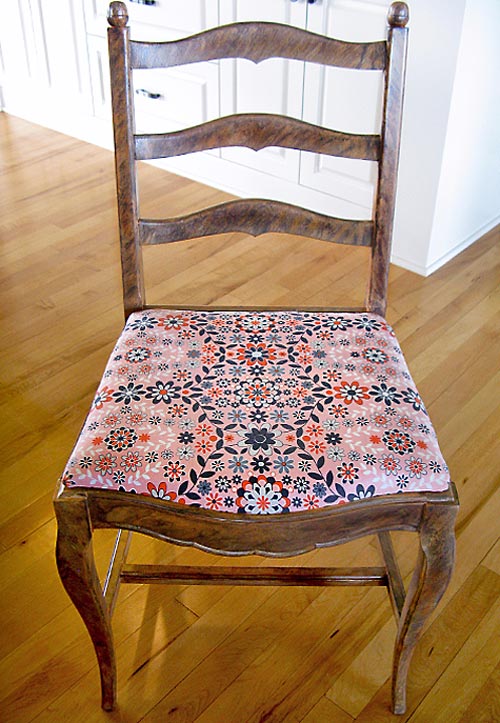






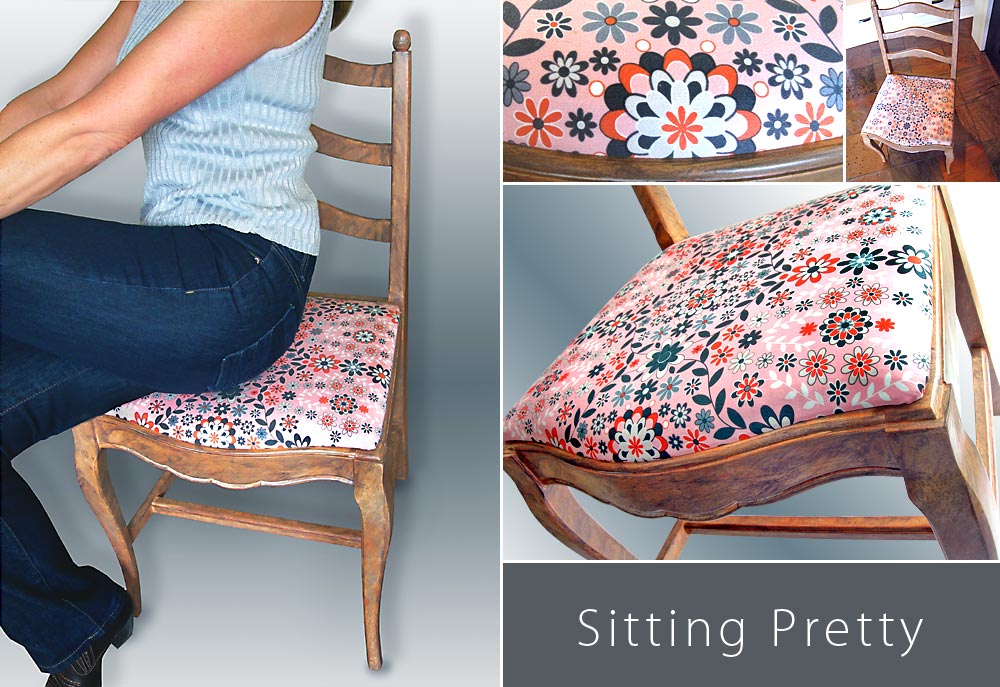
We now have a lovely new chair thanks to our previous Faux Antique Refinishing project. As a part of that process, we took off the old seat. For phase two, it’s out with the old and in with the new as we build a new cushion and cover for the salvaged wooden seat platform. If you’ve never tried this before, I think you’ll be pleasantly surprised how easy it is. Suddenly, many chairs in your house will need recovering!
We original used a fabric by Jenean Morrison called Silent Cinema, which she originally produced fo FreeSpirit Fabrics.
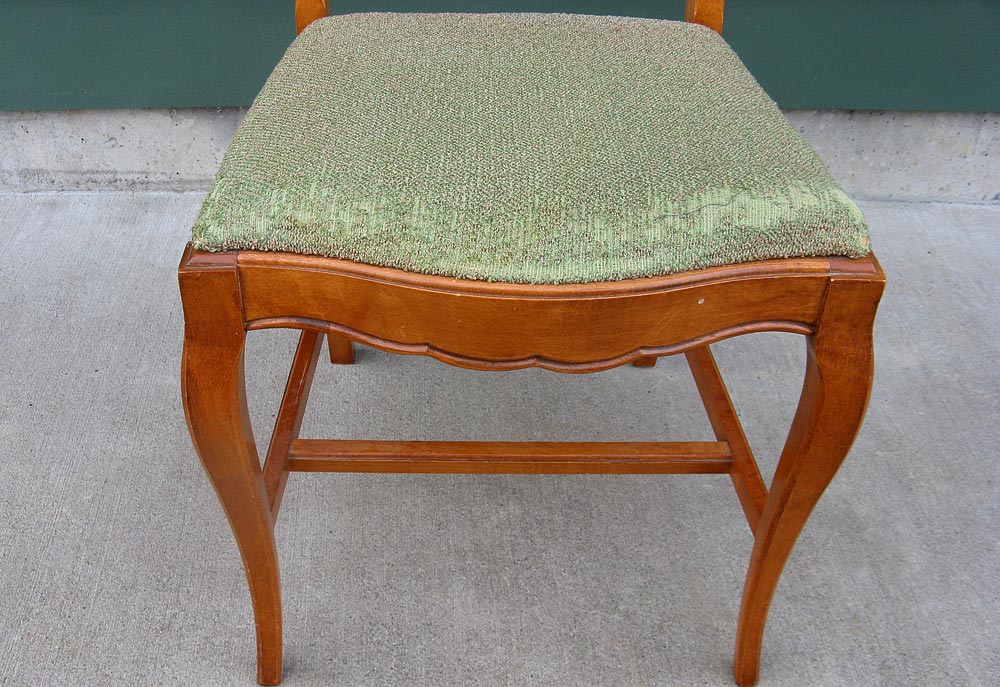
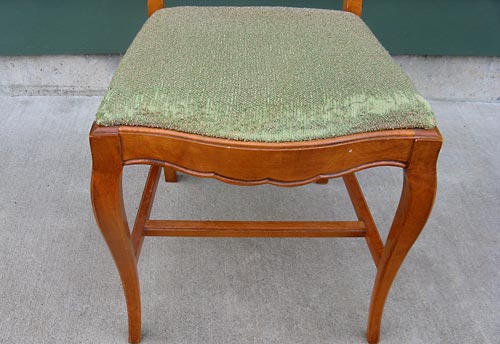
- To re-cap, here is my ‘before’ chair with its very sad and worn seat cushion.
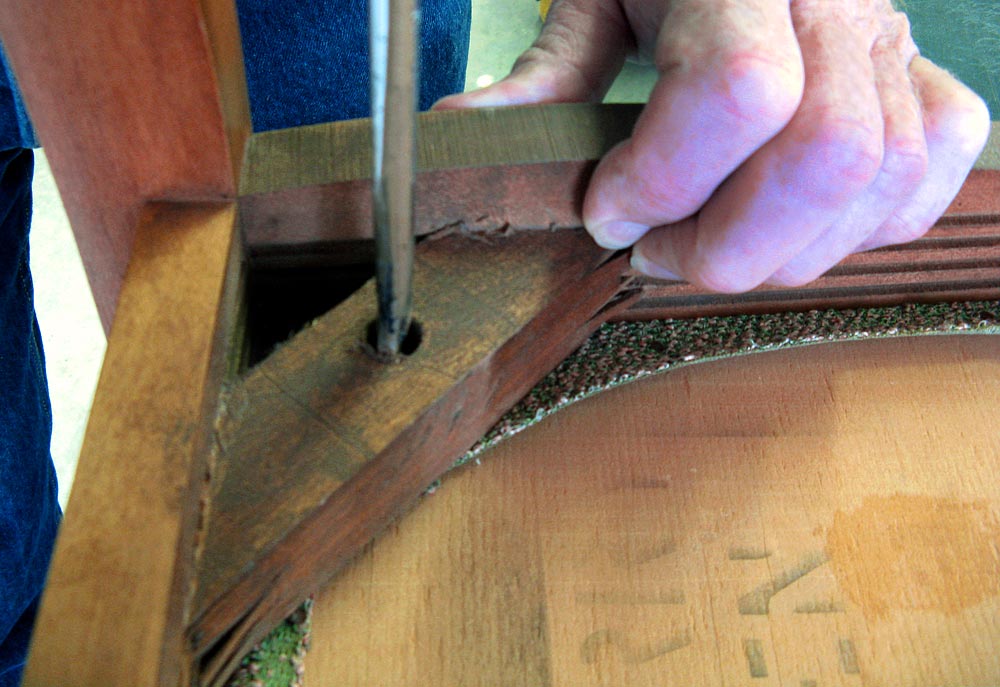
- We simply removed the four screws holding the seat in place.
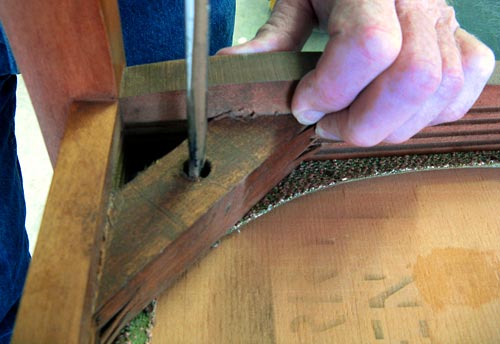
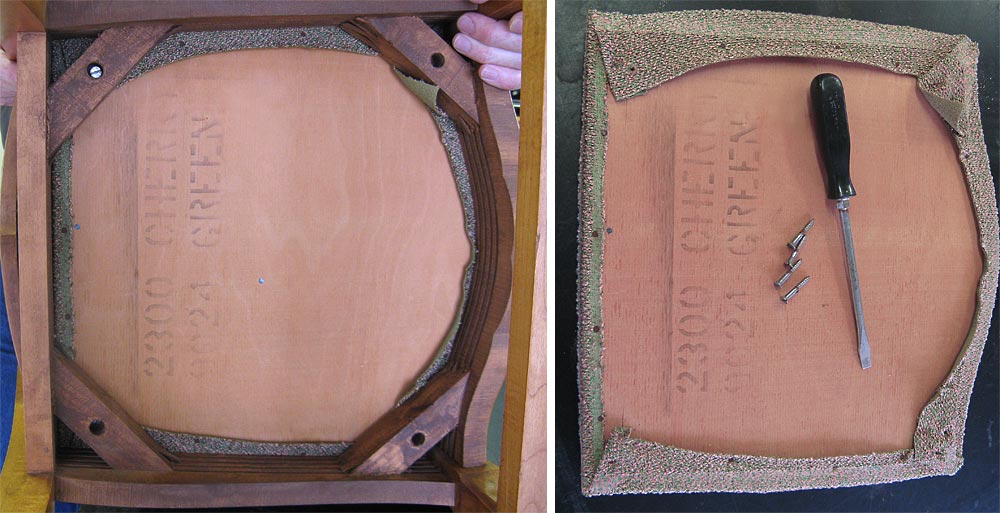
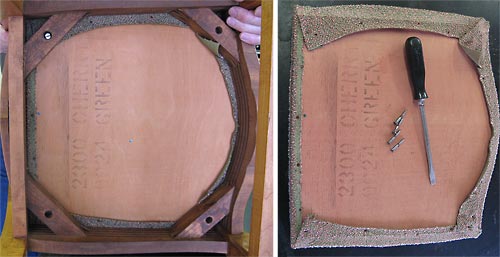
- And pulled the seat away from the chair. Don’t lose track of those screws; you’ll need them to put the chair back together.
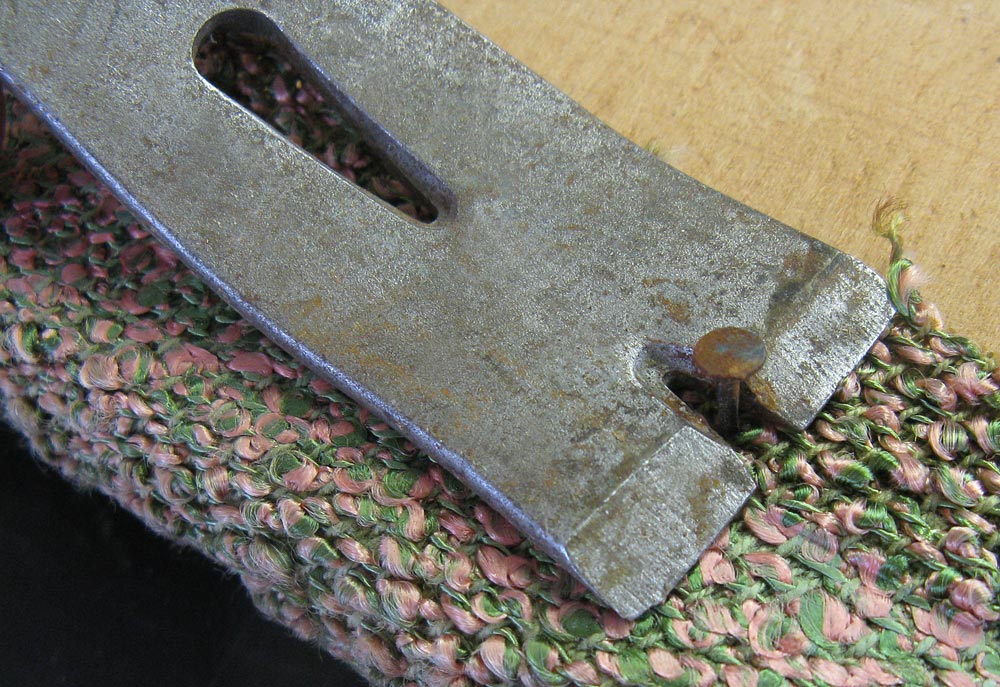
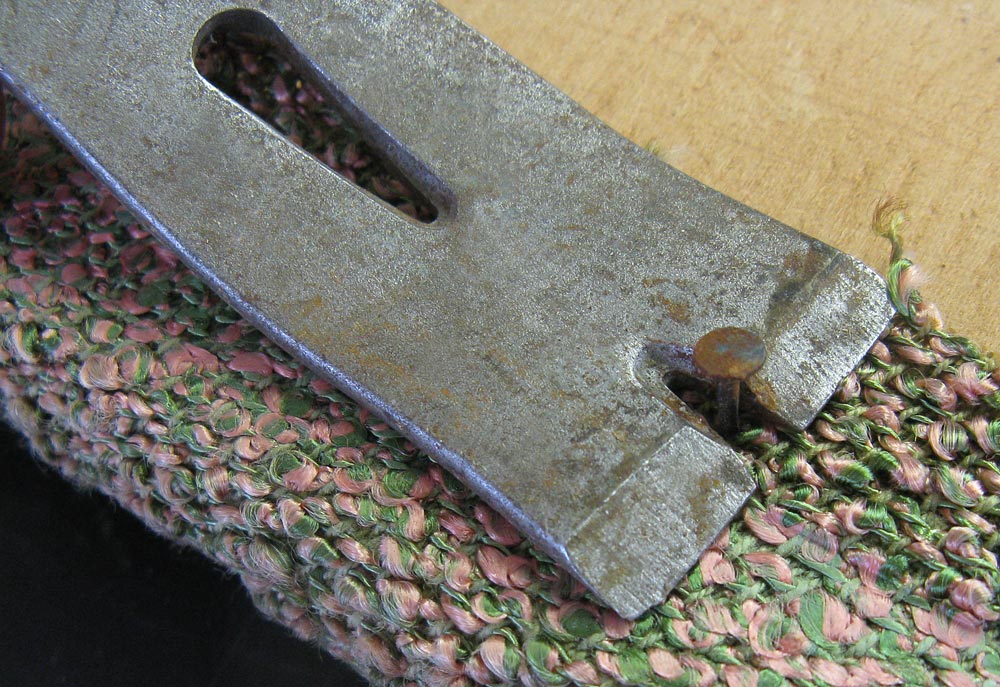
- Our old covering was held in place with tiny upholstery tacks. A mini pry bar was perfect for popping these out. You could also use a flat head screwdriver, but the pry bar is better and safer. You can often find these in the impulse section at your local home improvement store’s check out counter.
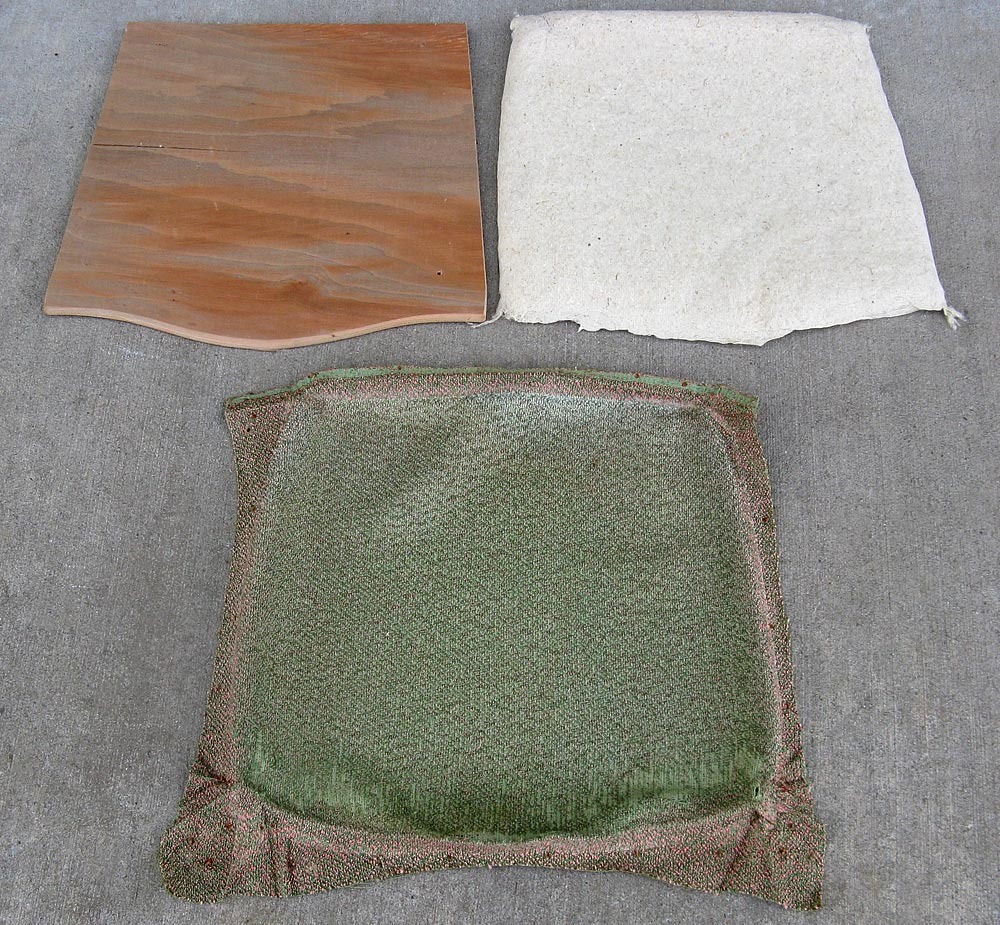
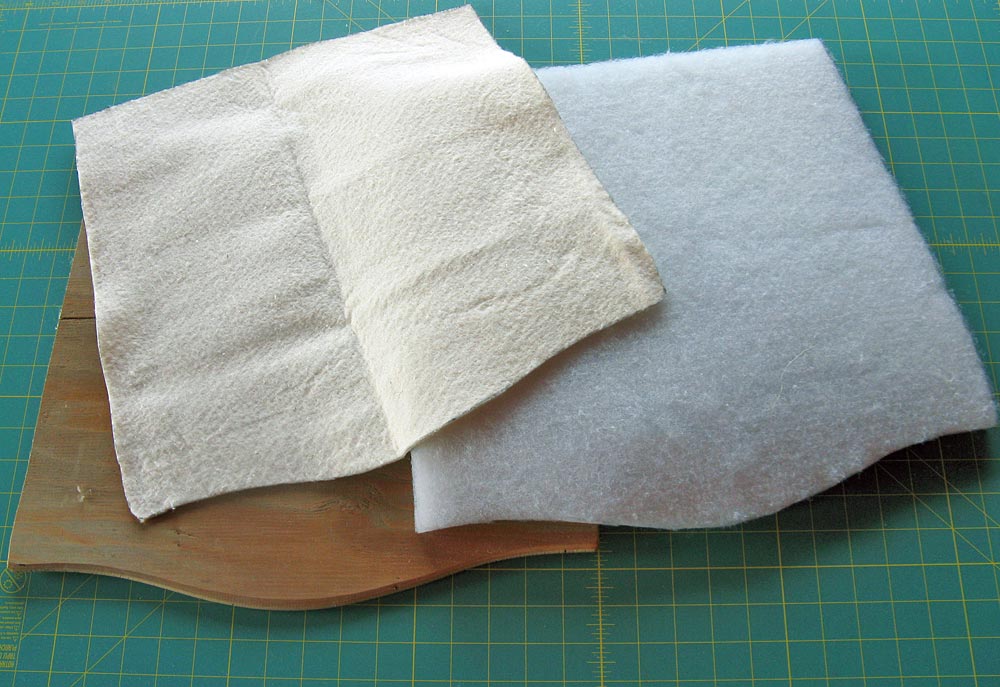
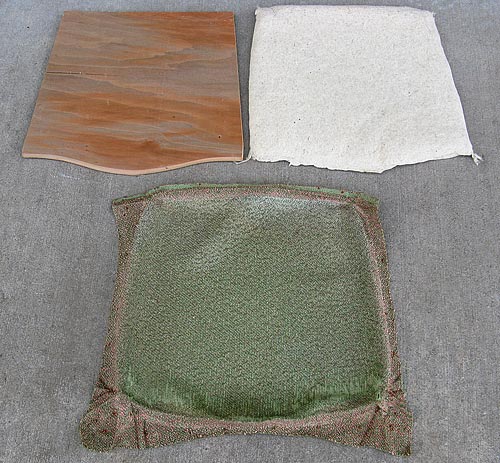
- Here are the three pieces that made up our old seat cushion. We’ll keep the wooden seat platform, but will create a new cushion and covering.
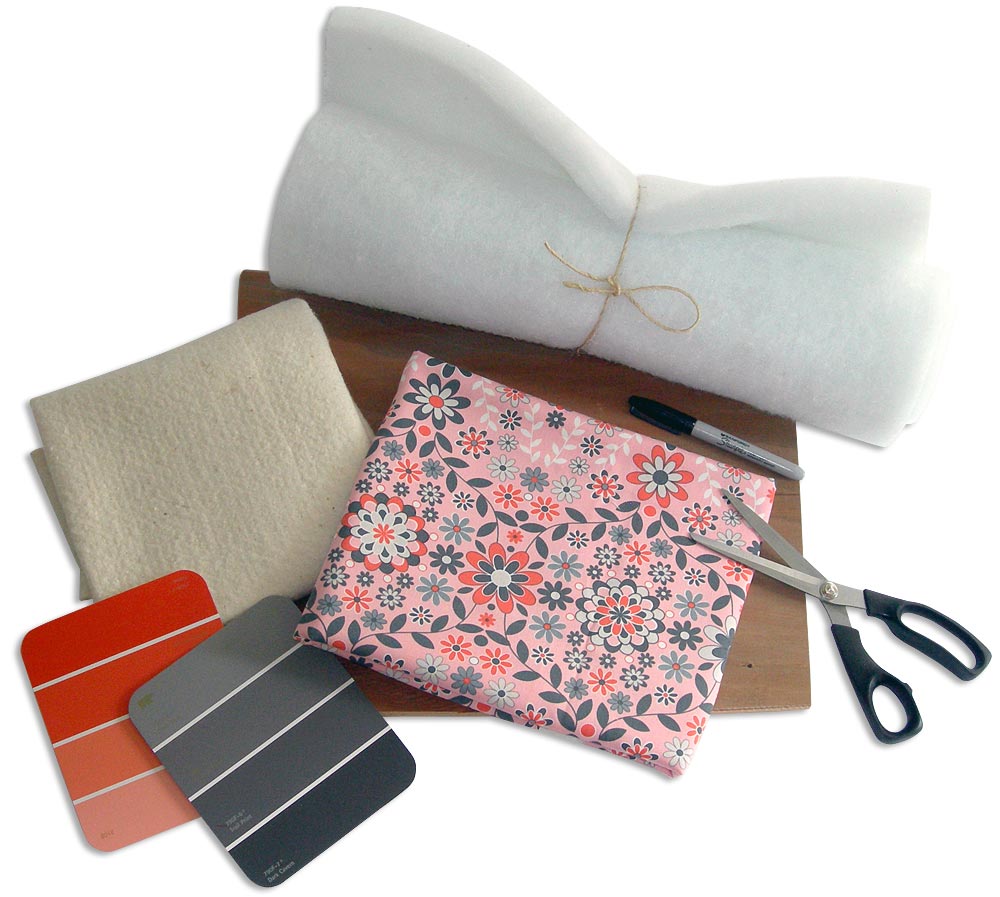
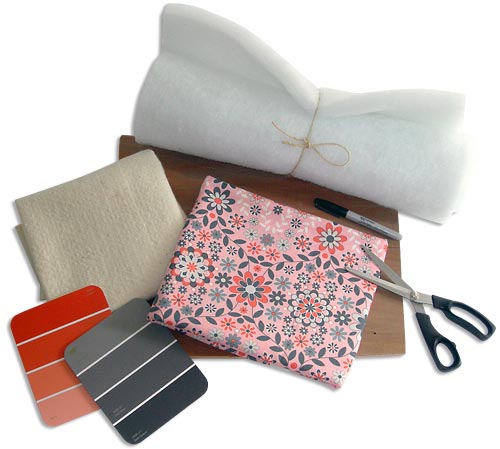
- How much of everything you need will depend totally on the size and shape of your chair, and if you are doing more than one chair. I suggest taking your chair apart first so you can use the actual seat to determine the exact size and amount of foam, batting and fabric you need. For our chair, we used Fairfield’s NuFoam in a 1″ thickness, Kyoto lightweight bamboo batting, and the Silent Cinema fabric, which – as mentioned above – is a heavier home décor weight. The paint swatch cards in the photo simply show we took the fabric to the paint store to get a good match for the initial refinishing project.
- We needed just ½ yard each of NuFoam, bamboo batting and fabric.
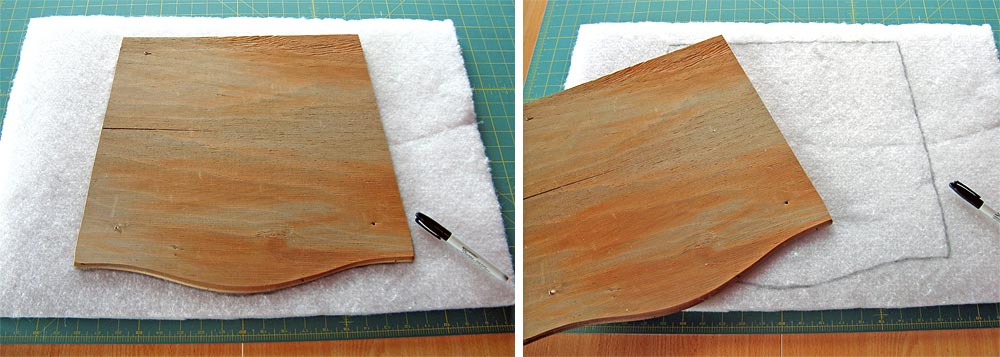
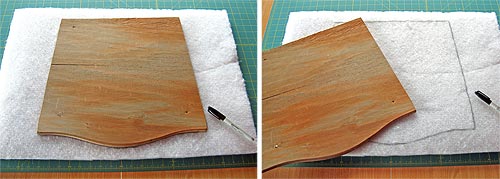
- Place the seat directly onto the NuFoam and trace around it with a marker.
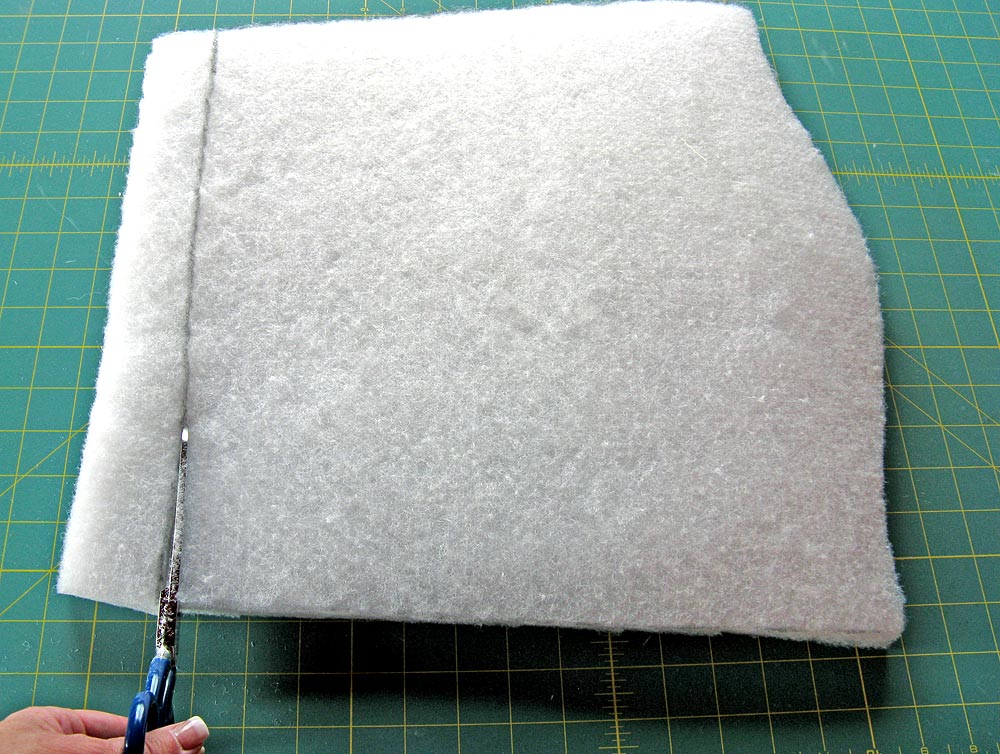
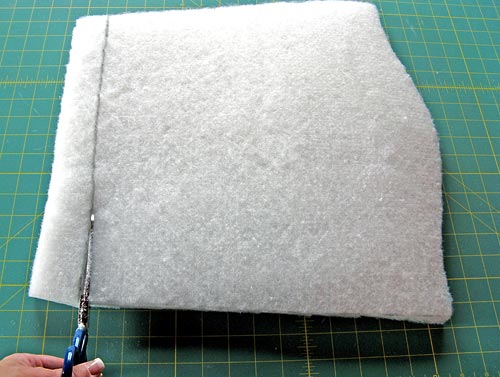
- Cut out the cushion on the drawn line.
- Repeat to trace and cut the batting piece.
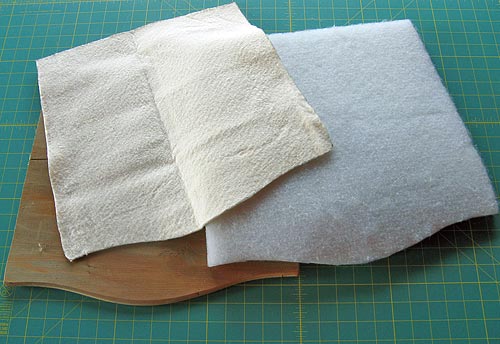
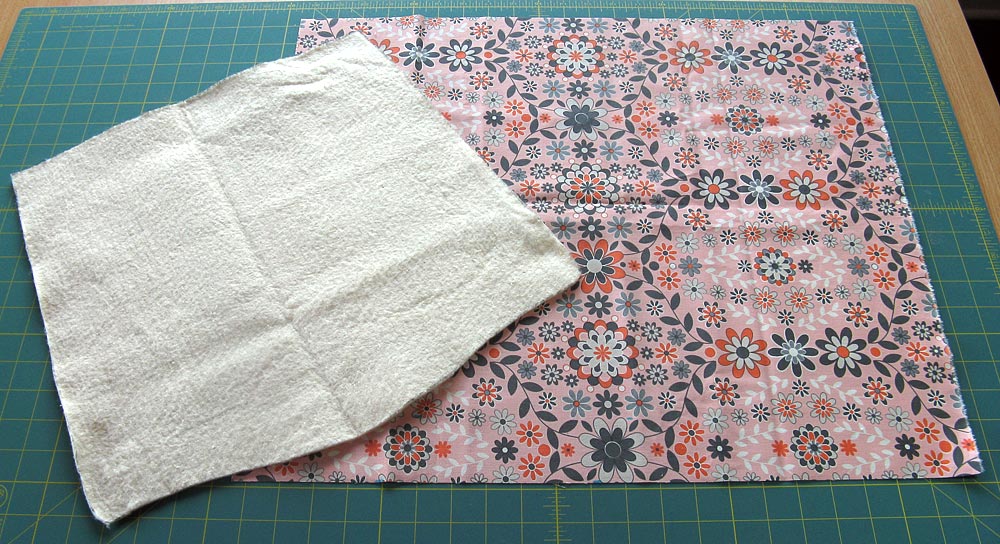
- Use your batting piece as a pattern, adding approximately 2″- 3″ all around the seat, which you will use for wrapping. Your final fabric cut will be a square or rectangle – not the shape of the seat.
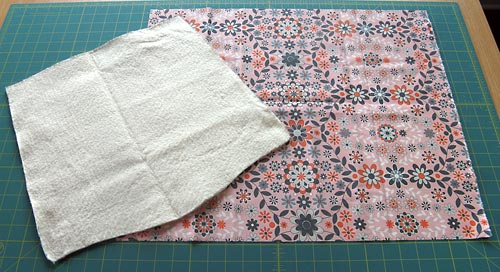
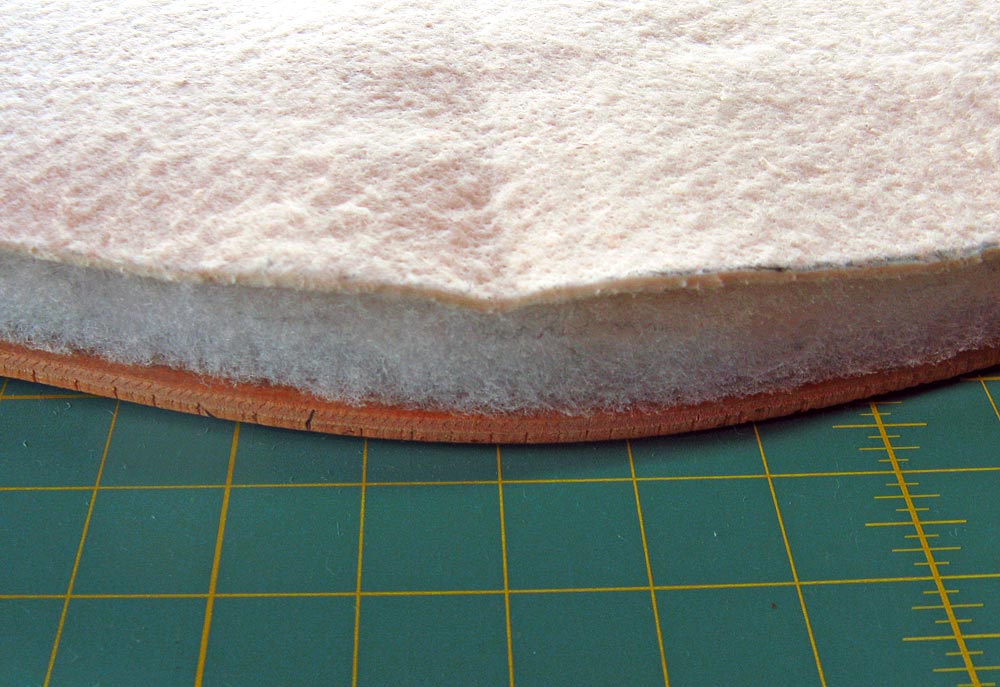
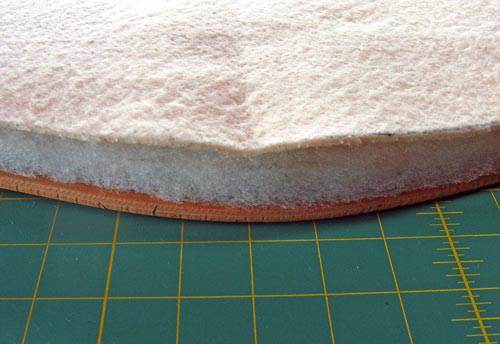
- Layer the NuFoam and batting onto the wooden seat.
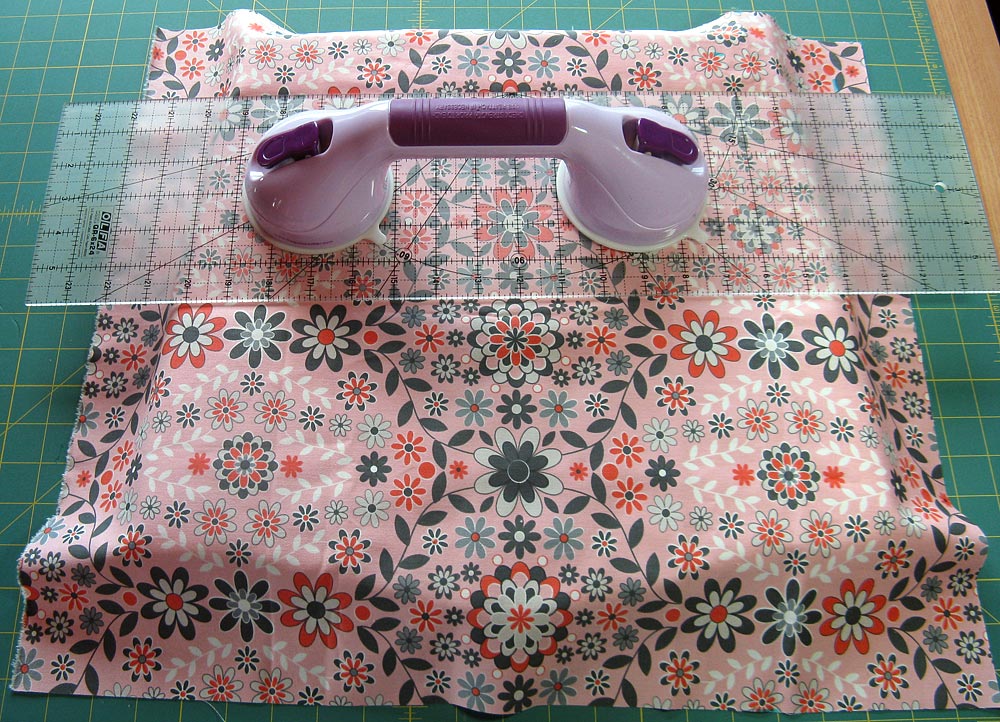
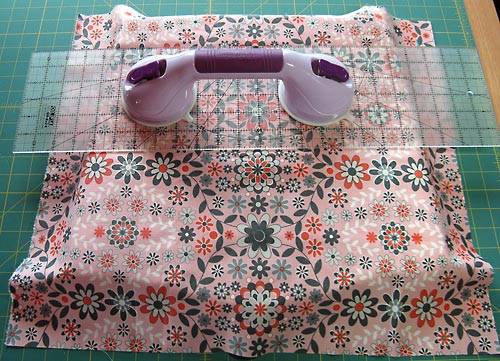
- Drape the fabric over the cushion/batting. Use your ruler to make sure your motif is centered.
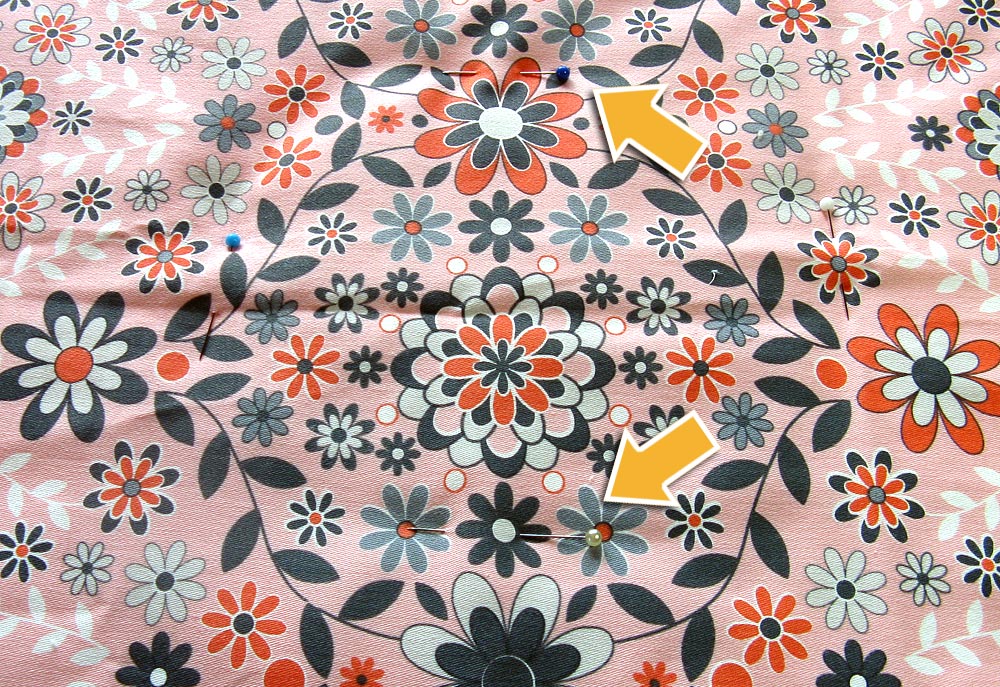
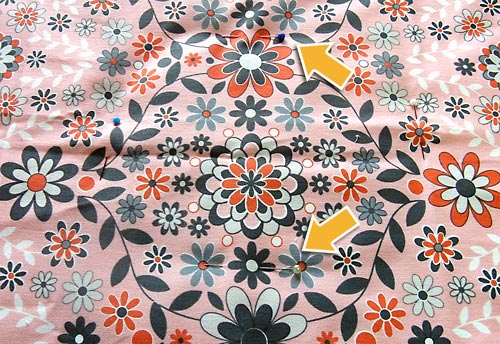
- Once you have your fabric exactly where you want it, pin it in place so it won’t shift when you do you final wrapping.
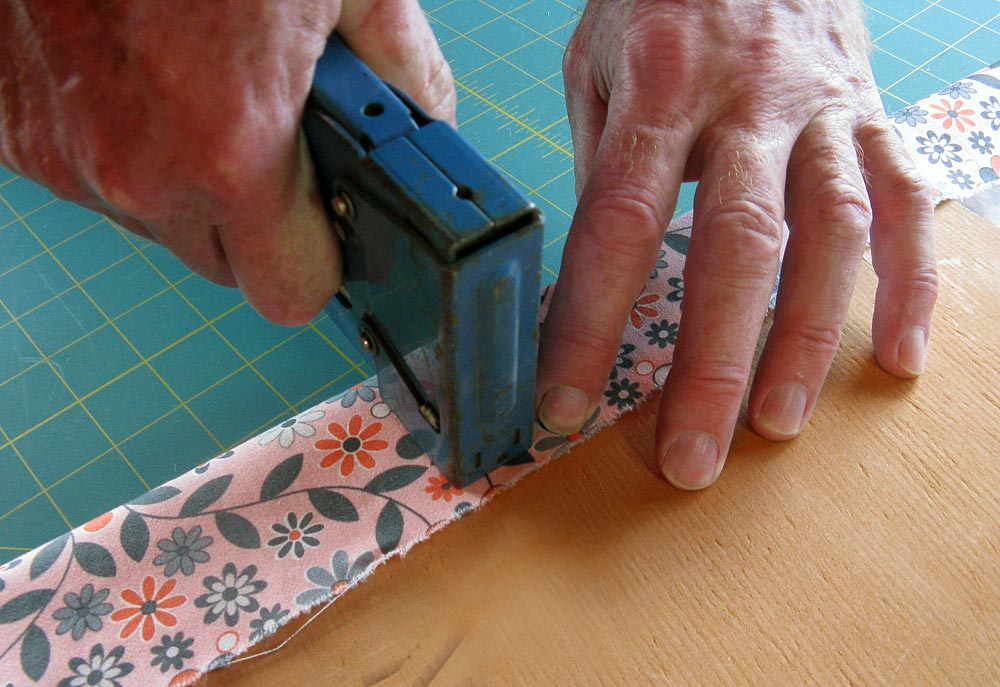
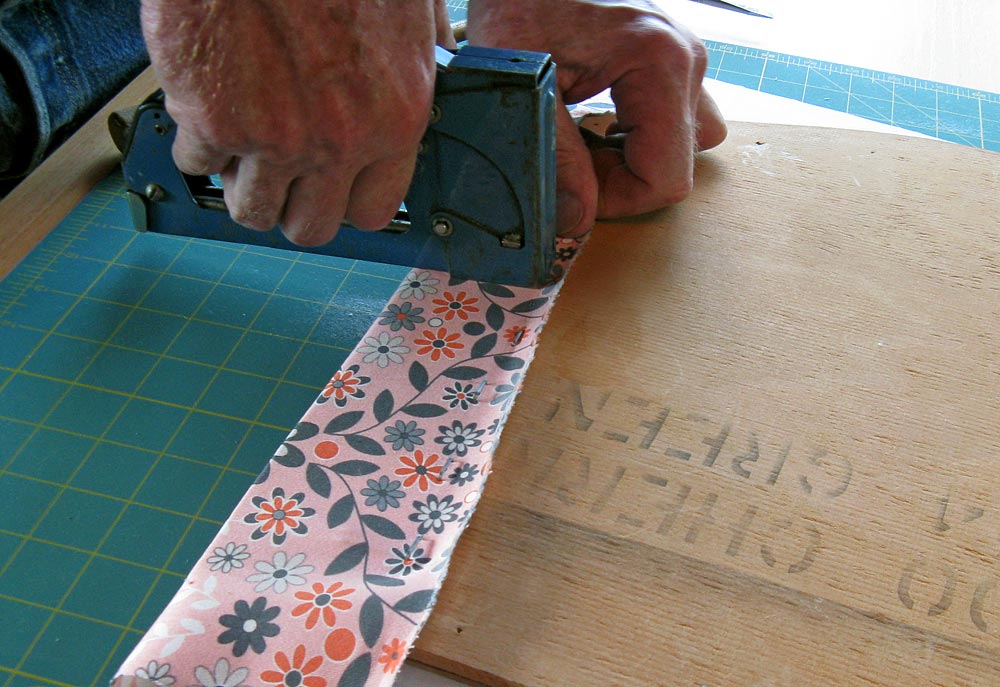
- Wrap one side to the back and tack it in place with the staple gun. (You could use upholstery tacks, but they are quite a bit harder to manipulate.) Your wrap should be snug and taut, but not so tight you distort the fabric or flatten the cushion.
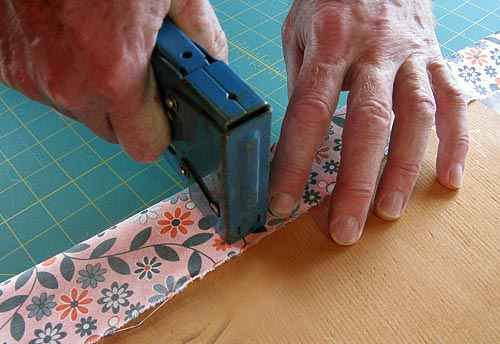
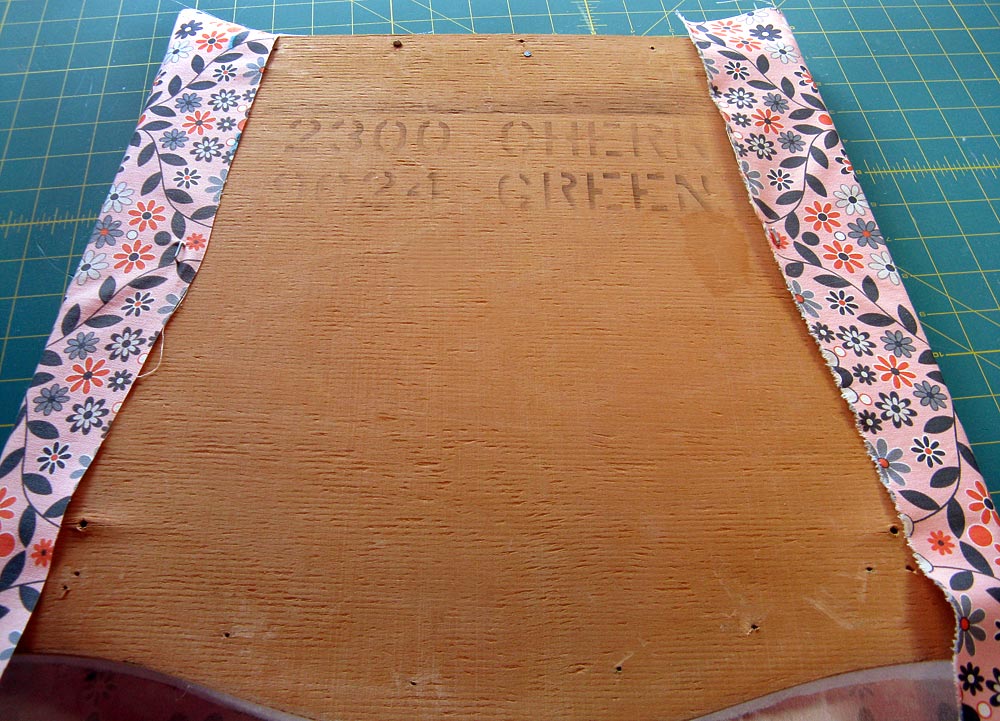
- Wrap the opposite side and tack in place directly across from the first tack. Flip the cushion over and make sure your motif is still looking good and your edges are smooth.
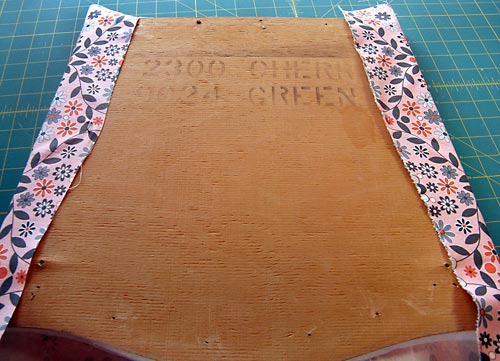
- If all looks good, staple both sides in place. A staple about every inch is good.
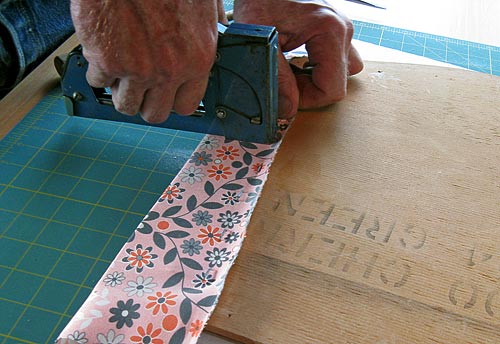
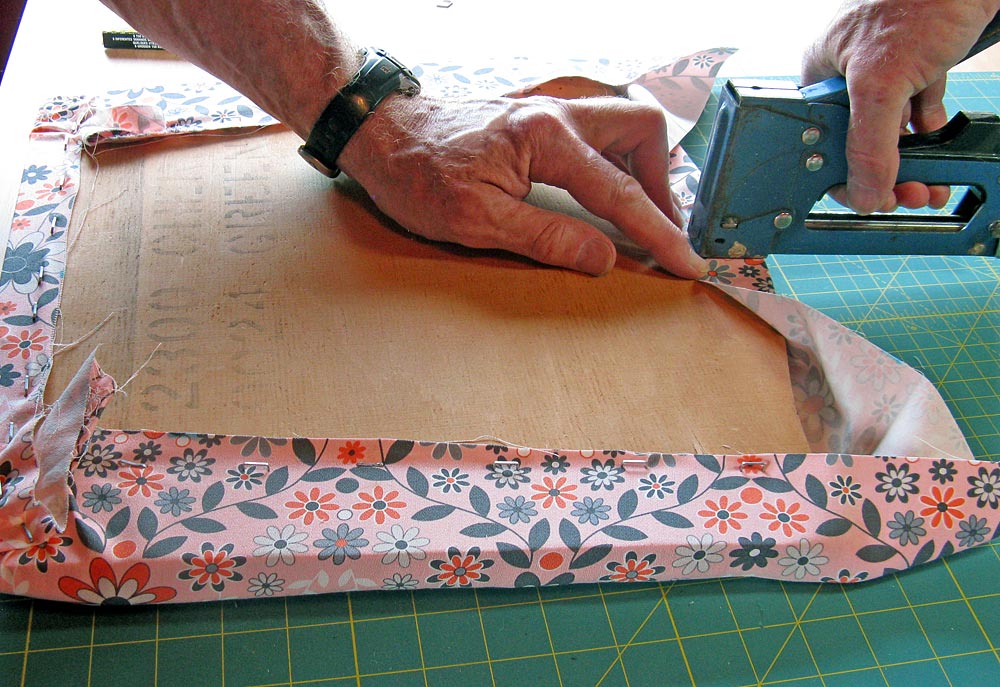
NOTE: If you think your motif has shifted, remove the two initial staple tacks and re-wrap. Take the time to be really sure everything looks good, because taking a bunch of staples out of old wood is not fun. - Repeat to wrap the top edge of the seat and then the bottom edge.
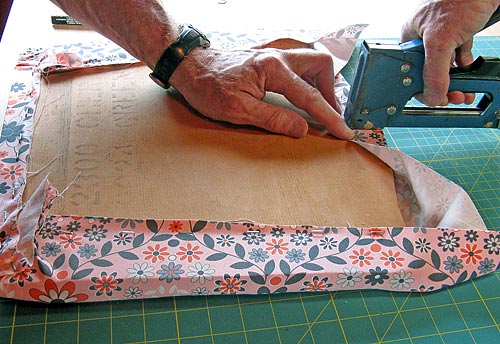
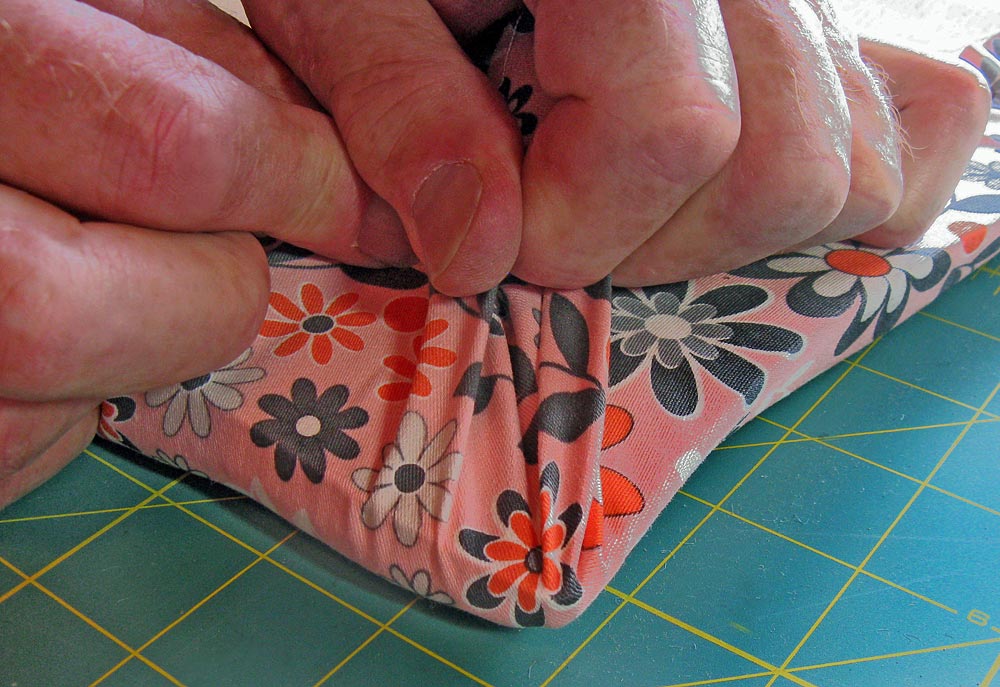
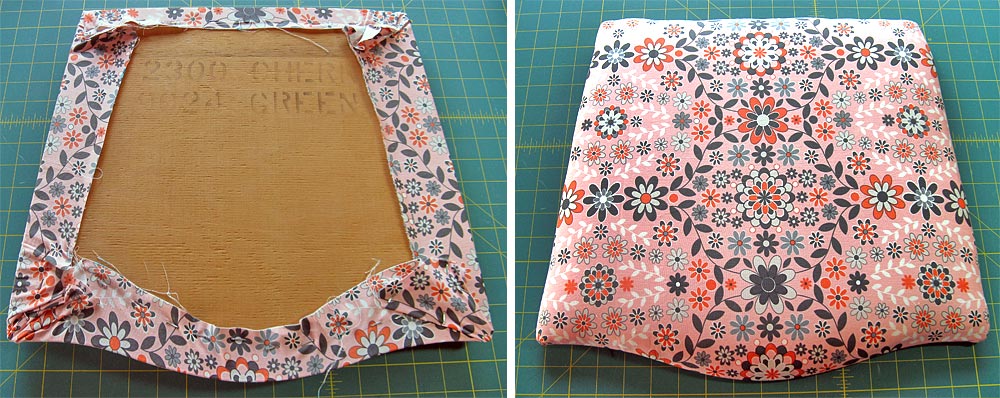
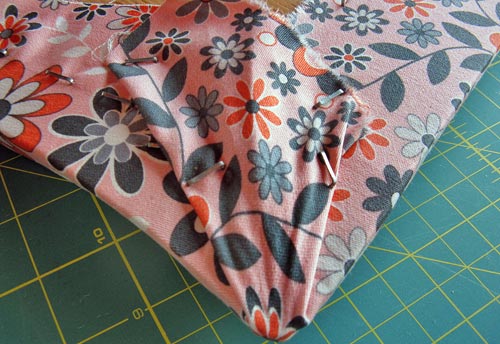
- Finally, pull the fabric around each corner. This takes a little futzing, but is not hard. Gather the corner fabric and pull back against the wood; you want to be able to see the edge of the seat so you can work along it. Adjust the gathers as you pull until they are even.
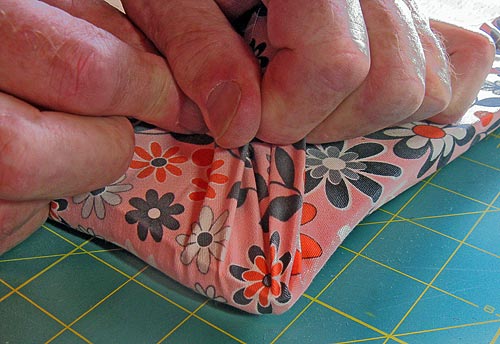
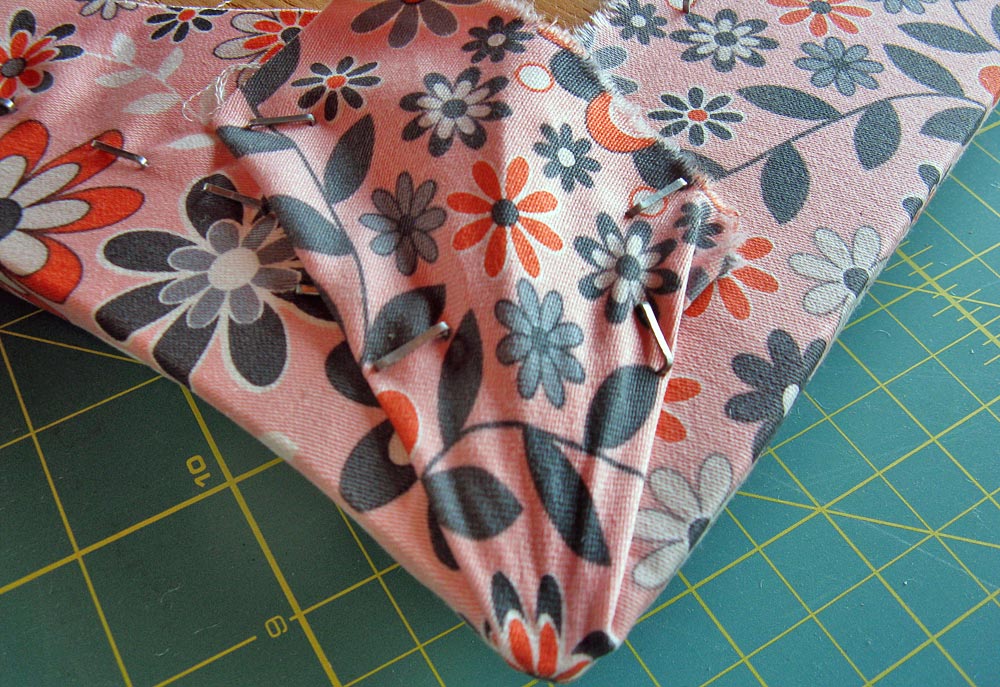
- Staple the finished corner into place through all the layers. Go ahead and put in several staples; you want the corner to stay nice and neat.
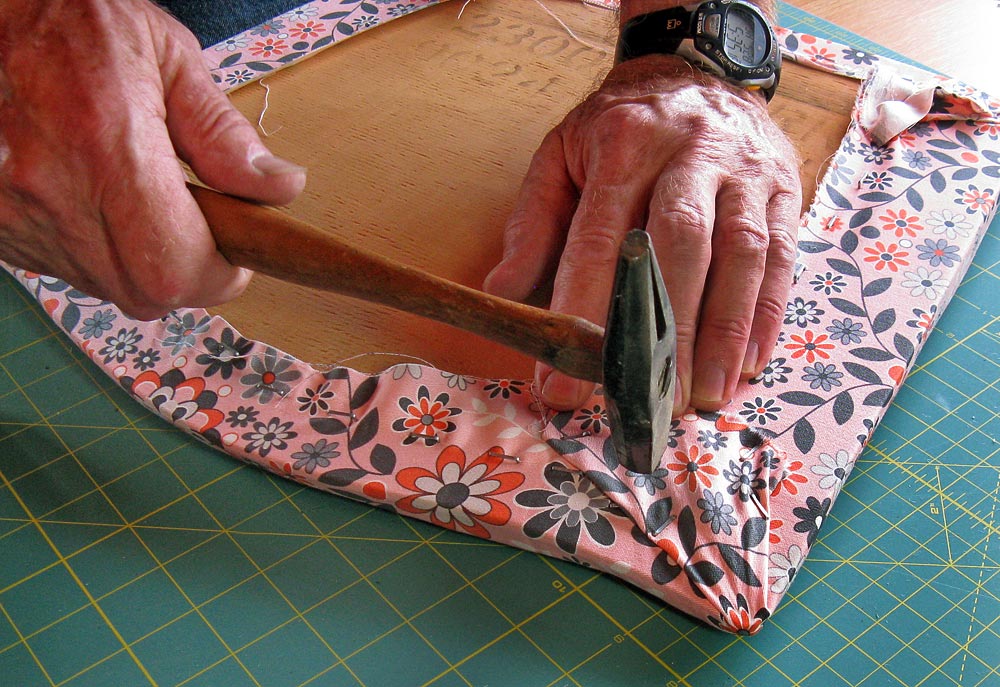
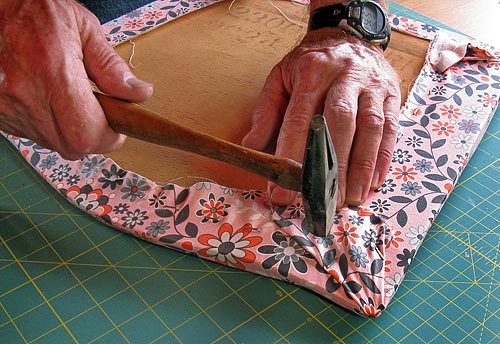
- When all your stapling is finished, you will likely need to go back over each one and flatten it into place with a small hammer. As I mentioned above, old wood can be very tough, so your staple gun is unlikely to be able to push the staple all the way flat.
- Trim back any excess fabric at the corners and you are good to go.
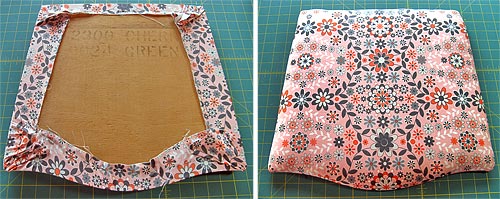
- Remember those screws you kept track of? Find them now and screw the new cushion into place. It’s a good idea to make a small slit or hole in your fabric at each screw hole. By doing this, driving the screws into place won’t pull or distort your nice new cushion.